Trump says he'll block asylum-seekers at Mexico border over coronavirus
The president said he would invoke a law that allows officials to turn away migrants.
Watch CBS News
The president said he would invoke a law that allows officials to turn away migrants.

Thursday's announcement will likely come as a relief for the Trump administration as it continues its efforts to deter migrants at the U.S.-Mexico border.

The agency still has not addressed calls to downsize its detainee population to prevent a coronavirus outbreak inside its scores of detention centers.
Under the deal, the Trump administration has deported more than 930 Honduran and Salvadoran asylum-seekers to Guatemala.

Advocates say the detainees, who have health conditions ranging from heart disease to epilepsy, are at risk of getting severely ill or dying.

The two Democratic presidential hopefuls drew sharp contrast with President Trump's stringent immigration policies.
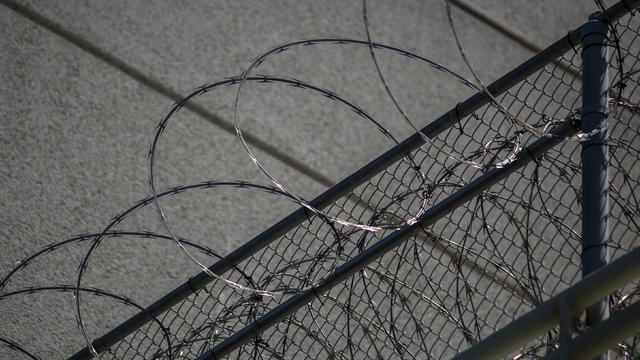
The move comes as the agency faces growing calls to release asylum-seekers in its custody who do not pose a threat to public safety.

A federal appeals court had found the policy illegal, saying migrants subjected to it "risk substantial harm" and "even death."

Maria Celéste Ochoa Yoc de Ramírez died after six months in ICE custody.

The small uptick in apprehensions in February could be a sign of the limits of the administration's deterrence policies.

A scathing Inspector General report finds the Department of Health and Human Services failed to plan for tremendous overcrowding caused by family separation, despite repeated warnings.

It's unclear how the order will affect Ken Cuccinelli's current role at the Department of Homeland Security.

An appeals court initially blocked the controversial border policy on Friday. But Trump administration lawyers rushed to fight the order and convinced the court later in the day to temporarily pause it.

The stringent requirement in the regulation are expected to dramatically limit immigration from Africa, Asia and Latin America.

David Hernandez Colula died Thursday at a hospital in Youngstown, Ohio.

A migrant family from Guatemala reunited last month, and advocates hope to find hundreds more parents who were deported to Central America without their children.

The move marks yet another escalation in the Trump administration's feud with cities that limit their cooperation with federal immigration authorities.

The money was originally allocated for military weapons and hardware.

The U.S. has shipped nearly 400 Honduran and Salvadoran asylum-seekers to Guatemala, requiring them to choose between seeking refuge there or returning home.

The expansion will ban most immigration from Myanmar, Kyrgyzstan, Eritrea and Nigeria, Africa's most populous country.

Up until now, the U.S. had only placed asylum-seeker from Spanish-speaking Latin American countries in the controversial "Remain in Mexico" program.

The filing is the latest salvo in the government's stalled attempt to eliminate a 1997 agreement governing the care of unaccompanied migrant children and families.

The death of Ben James Owen on Saturday evening is also the third apparent self-inflicted strangulation of an ICE detainee since October.

The high court allowed U.S. officials to implement a sweeping rule that critics warn will shut America's doors to low-income immigrants and people of color. The merits of the case will continue to be argued in lower courts.

"The Trump administration is clearly attempting to scale up its crackdown on asylum at the U.S.-Mexico border," an immigration expert told CBS News.