Hydroxychloroquine shouldn't be used to stop COVID, WHO says
A panel of World Health Organization experts said the drug may even increase the risk of adverse effects.
Watch CBS News
A panel of World Health Organization experts said the drug may even increase the risk of adverse effects.

As coronavirus cases continue to rise, officials at the World Health Organization say people face a "parallel pandemic" with mental health. Psychiatrist Dr. Sue Varma speaks to "CBS This Morning" to share tips to deal with stress and anxiety and teach relaxation exercises.

The U.S. is ramping up vaccination efforts as infection rates fall and variants continue to spread. Dr. Teresa Amato, the director of emergency medicine at Long Island Jewish Forest Hills, joins CBSN with more on how to get a handle on the pandemic.

Of all the possible origins of the coronavirus, international team says it leaking from a lab is the least likely, to the extent that it merits no further investigation.

Dr. Maria Van Kerkhove, the World Health Organization's technical lead for COVID-19, says vaccination is "critical" but "not enough" to fully defeat the virus.

The following is a transcript of an interview with Maria Van Kerkhove, WHO COVID-19 technical lead, that aired February 7, 2021 on "Face the Nation."

A new PBS Frontline documentary, "China's Covid Secrets," examines 54 days from the first symptomatic coronavirus case reported in Wuhan, China to the city's first lockdown, and the extraordinary measures government officials took to keep the rest of the world in the dark. Documentary filmmaker Jane McMullen joins CBSN's "Red and Blue" anchor Elaine Quijano with more on the experience of gathering interviews and facts for the film despite the country's tight control on information.

Delegates from the World Health Organization were released from quarantine in Wuhan, China on Thursday. They are in the central Chinese city to investigate the origin of COVID-19. Ramy Inocencio reports.

The CDC projects that up to 85,000 Americans could die over the next three weeks from COVID-19. Dr. Leo Nissola spoke with CBSN's Anne-Marie Green and Vladimir Duthiers about what's driving these numbers up so high, the science behind the World Health Organization's investigation into the origins of the coronavirus, and whether or not you should take over-the-counter pain meds before getting the vaccine.

World Health Organization investigators are out of quarantine and ready to begin work in Wuhan, China, where they are hoping to learn more about the origins of the coronavirus. CBS News foreign correspondent Ramy Inocencio joins "CBSN AM" to talk about the probe.

As the team urges patience and an open mind after months of delay by Chinese authorities, one expert says it's still a valuable mission.

As the coronavirus pandemic continues to wreak havoc globally, concerns over unequal access to vaccines around the world are also intensifying. Oxfam America senior adviser Niko Lusiani joined CBSN to discuss the calls for a "people's vaccine"

Sealing borders to non-residents and quarantining anyone who does come in has been "critical" to Australia's success, says an expert who calls the U.S. response "painful to watch."

As President Biden signed executive orders to ramp up federal efforts to fight the coronavirus pandemic, the World Health Organization is updating its guidance on how to interpret COVID-19 test results. Dr. Bob Lahita spoke with CBSN's Anne-Marie Green and Vladimir Duthiers to break down the latest guidance, and what the CDC says to do if you can't get your second shot of the vaccine on time.

Russian opposition leader Alexey Navalny told supporters to take to the streets after he was arrested upon his return to Moscow. Also, Italy's prime minister is barely holding onto power, and China and the World Health Organization are coming under fire for not acting quicker to contain the COVID-19 pandemic. Meanwhile, some tennis players aren't being allowed to leave quarantine to practice for the Australian Open because passengers on their flights tested positive for the coronavirus. CBS News foreign correspondent Ian Lee joins CBSN AM from London with those stories.

Director-General Tedros Adhanom Ghebreyesus said that most vaccine makers have targeted locations where "profits are highest."

Ten scientists from the World Health Organization have landed in Wuhan, China, to investigate how the novel coronavirus jumped from animals to humans. U.S. Ambassador to the U.N. Kelly Craft met virtually with Taiwan's leader, despite anger from China. Ugandans went to the polls for a presidential election. CBS News foreign correspondent Imtiaz Tyab has today's headlines from around the world.

Given that it took China a year to let the international scientists in, don't count on any quick, definitive answers on where the coronavirus came from.

The U.S. is moving onto its next phase of coronavirus vaccinations, with major expansions to immunization sites at stadiums and convention centers. The efforts come as the country's seven-day average of COVID-19 deaths now stands at over 3,000 a day. Dr. Dyan Hes, founder of Gramercy Pediatrics, joined CBSN to discuss the latest on vaccinations and what we are learning from new studies on immunity and traveling during a pandemic.

China has blocked a World Health Organization team of experts conducting an investigation into the origin of the coronavirus from entering the country. In Hong Kong, police arrested at least 53 pro-democracy activists. And U.S. intelligence agencies have formally named Russia as the likely source of the massive cyber-hack revealed in December 2020. CBS News foreign correspondent Roxana Saberi joins CBSN AM from London with those stories.

Highways in and out of Shijiazhuang are shut and schools are closed as millions are tested for the virus, which China has largely beaten with strict control measures.

Foreign Ministry says China must complete unspecified "procedures and make relevant arrangements" before the long team of experts can be welcomed.
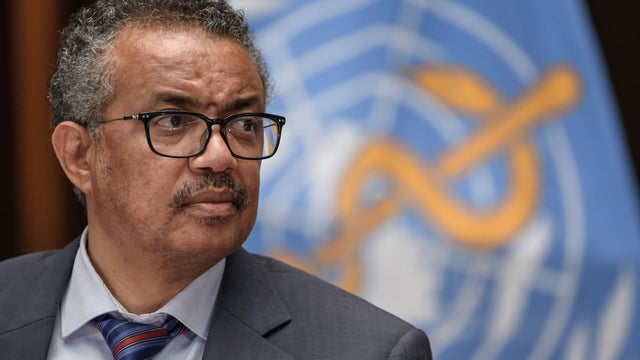
Nearly 77 million people around the world have been diagnosed with COVID-19 since the beginning of the pandemic.

China and Russia have a head start in the race to offer coronavirus vaccine options for mass distribution in developing countries. A Washington Post report looks at how the two countries are using their vaccines to expand their political and economic influence globally. Washington Post foreign affairs reporter Emily Rauhala joined CBSN to discuss.

According to the World Health Organization, heart disease is the top killer globally. But a new study finds that a single daily polypill can dramatically reduce the risk of heart attacks, strokes and other heart-related deaths. Dr. Luiza Petre joins CBSN AM with more.