Blinken: NATO members have "green light" to send fighter jets to Ukraine
The secretary of state says the U.S. is considering providing fighter jets to Poland if the country sends its own to Ukraine.
Watch CBS News
The secretary of state says the U.S. is considering providing fighter jets to Poland if the country sends its own to Ukraine.

No one can possibly know for sure what Russia's leader, who has launched an invasion of neighboring Ukraine, may do next. But how might Americans be forced to sacrifice in hopes of saving Ukraine's fragile young democracy?

But Ukraine noted some of the routes led to Russia and its ally Belarus. The latest move came after two similar setups broke down due to shelling each side blamed on the other.
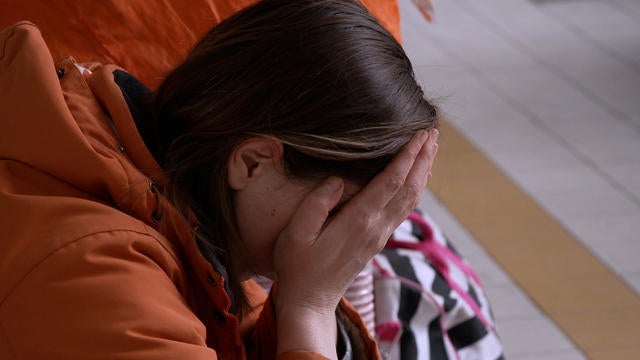
Scott Pelley reports from a gateway to and from the war in Ukraine, the train station in Przemysl, Poland. Ukrainians there are defiant.
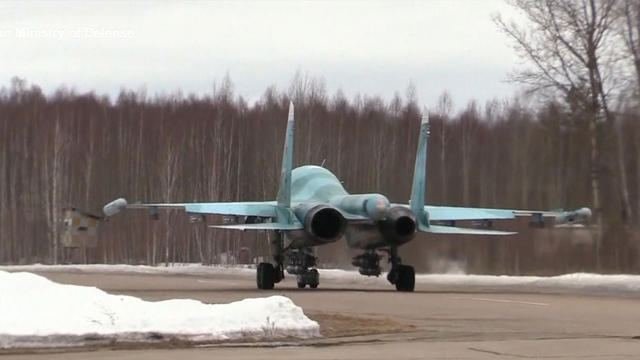
Secretary of State Antony Blinken says the U.S. will help replenish NATO allies who supply Ukraine with fighter jets. The U.S. is also considering a ban on Russian oil. Natalie Brand reports.
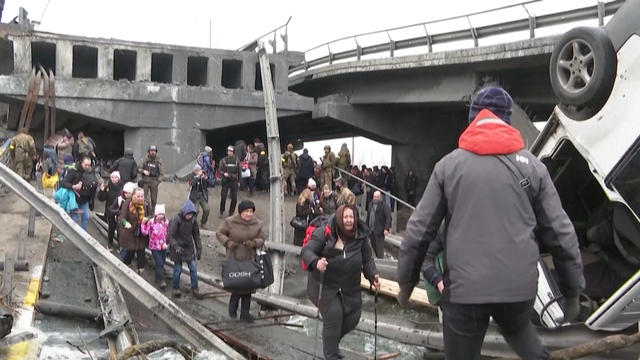
Over 1 million Ukrainian refugees have fled to neighboring countries since Russia’s invasion began. Many face a difficult journey to find safety. Christina Ruffini reports from Poland.

Even as their countries fight, a troupe of Russian and Ukrainian dancers continues to perform, offering hope for the future. CBS Minnesota’s Adam Duxter reports.

Across the U.S., people are showing their support for Ukraine. But some of that support has turned to hostility against businesses like Russian restaurants, some of which even have Ukrainian staff and owners. Michael George reports.

A temporary cease-fire meant to allow for the safe evacuation of as many as 200,000 Ukrainians was broken by renewed shelling for the second day in a row. Ukraine and Russia have both blamed each other for breaking the agreement. Charlie D'Agata reports.

Ukraine's ambassador to the U.S. said Sunday that Ukraine is "ready for any option" to take back the plants, suggesting that a no-fly zone should be established.

Missed the second half of the show? The latest on bipartisan support to ban Russian oil and gas, U.N. high commissioner for refugees Fillippo Grandi, former U.S. ambassador to NATO Kurt Volker, and what the slow return to normalcy will look like in the U.S. as COVID-19 restrictions ease.

Scott Pelley reports from a gateway to and from the war in Ukraine, the train station in Przemysl, Poland. Ukrainians there are defiant.

Filippo Grandi, the U.N. high commissioner for refugees, says 1.5 million people have fled Ukraine since the Russian invasion began.

Kurt Volker, the former U.S. ambassador to NATO and special representative for Ukraine, says the U.S. could implement a limited no-fly zone to protect civilians while mitigating the risk of direct conflict with Russia.

Oksana Markarova, the Ukrainian ambassador to the U.S., says the country needs fighter jets and other equipment "as soon as possible" to fend off Russian forces.

Secretary of State Antony Blinken says the U.S. is considering replacing Polish fighter jets if the Polish government decides to send aircraft to Ukraine.

Democratic Representative Adam Schiff, the chairman of the House Intelligence Committee, says lawmakers of both parties support banning the import of Russian oil and natural gas over the country's invasion of Ukraine.

CBS News national security correspondent David Martin reports on the latest Russian troop movements inside Ukraine.

Russia was supposed to be a master of online propaganda and cyber-warfare. But in their war against Ukraine, scrappy Ukrainians are running rings around their vastly larger opponent, using social media platforms to humiliate the invaders, inform the populace, and win support from the rest of the world. Correspondent David Pogue reports.

Correspondent Mo Rocca looks into the Biblical tale of David and Goliath, and talks with Rabbi Steve Leder about how it is evoked in Ukrainian President Volodymyr Zelensky's defiant stand against Russian President Vladimir Putin, whose military is attempting to crush his neighboring country.

CBS News' Christina Ruffini reports from Poland, where thousands of Ukrainians have fled to escape the Russian invasion.

CBS News' Charlie D'Agata reports from Kyiv as efforts to evacuate civilians from besieged Ukrainian cities have halted for the second day in a row.

The Ukrainian president's defiance against the invading Russian army has done more than just help protect his country; it has helped bolster the strength of other democracies much older than Ukraine's.

No one can possibly know for sure what Russia's leader Vladimir Putin – who has launched a full-scale invasion of neighboring Ukraine – may do next. But how might Americans be forced to sacrifice in hopes of saving Ukraine's fragile young democracy? And will Putin's weapons of warfare (cyber or nuclear) target the U.S. and the West? "Sunday Morning" senior contributor Ted Koppel talks with Russia experts Fiona Hill and Nina Khrushcheva (great-granddaughter of Nikita Khrushchev), retired Gen. Keith Alexander, and former Secretary of Defense Leon Panetta.

This week on "Face the Nation," we’ll have full coverage of Russia’s invasion of Ukraine and talk to the voices directly involved in the conflict for perspective on what happens next. We're joined by Secretary of State Antony Blinken, Ukrainian Ambassador to the U.S. Oksana Markarova, U.N. High Commissioner for Refugees Filippo Grandi and more.