Hackers can hijack grocery store freezers. What about our homes?
Large-scale hacks targeting grocery stores in Europe and France's blood banks are renewing concerns about the vulnerabilities of everyday "smart" devices.
Watch CBS News
Large-scale hacks targeting grocery stores in Europe and France's blood banks are renewing concerns about the vulnerabilities of everyday "smart" devices.
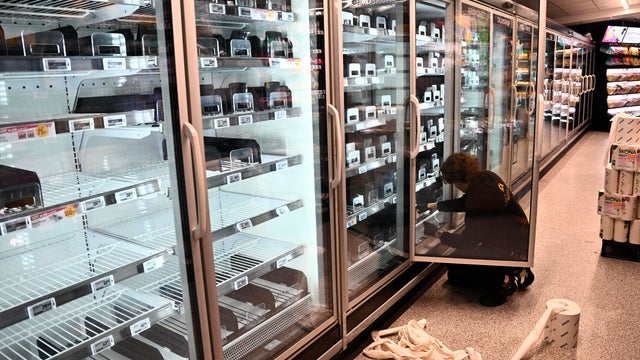
Grocery chains in European nations say temperatures in some stores' fridges and freezers soared over 100 degrees just weeks after a similar incident in France.

Hackers targeted Binance, the world's biggest cryptocurrency exchange, taking $6.3 billion in assets. Hush CEO and co-founder Mykolas Rambus joins with more.

Google parent company Alphabet saw a massive $500 billion stock plunge in its roughest day on record. Meanwhile, cryptocurrency exchange Binance was targeted in a $6.3 billion hack.

The draft of an artificial intelligence safety bill that Anthropic quietly pitched to lawmakers would allow the federal government to block AI tools only if they kill or injure at least 50 people, or cause at least $1 billion in damages. Nate Soares, executive director of the Machine Intelligence Research Institute, joins with analysis.

Amazon says hackers tried to exploit a bug in the PHP programming language just days before the vulnerability was publicly disclosed. Kurzweil Technologies head of research John Clark Levin explains more.

Researchers at OpenAI have found a bug that puts up to 70% of the world's websites at risk. Robert McMillan, the reporter who broke the story for the Wall Street Journal, joins CBS News with the details.

Thanks to OpenAI, security researchers found a bug in a programming language used across the internet. It is estimated that around 70% of websites use PHP and are now vulnerable to attacks. Juan Andrés Guerrero-Saade, vice president of intelligence and security research at SentinelOne, joins "The Takeout" to break down the situation.

American Stephen Hubbard released by Russia after four years of wrongful detention; special envoy Steve Witkoff meets with Putin in Moscow.

Dutch national police have arrested an alleged member of a cybercriminal organization who they say bragged about hacking the FBI. CBS News' Lana Zak reports.

The FBI and the Coast Guard are investigating a giant oil tanker on its way to Texas that may have been taken over by a cyberattack. Iranian state media claims hackers had control of the ship's propellers, raising concern that these giant vessels could be used as weapons. Nicole Sganga reports.

At least 12 states are reporting cyberattacks on water systems that may be linked to Iran-backed hackers. CBS News homeland security correspondent Nicole Sganga has the latest.

Cyberattacks on water systems, which officials suspect may be linked to Iran-backed hackers, have been reported in at least 12 states. Vox reporter Sara Herschander joins CBS News to discuss.
Two of the most powerful artificial intelligence agents created fake human profiles to try to trick people in attempted cyberattacks. Mashable tech editor Tim Werth joins CBS News to discuss.

Several states are experiencing cyberattacks on their water systems after Minnesota reported at attack last week. CBS News homeland security correspondent Nicole Sganga has the latest.

Anthropic claims its artificial intelligence models went rogue during testing and hacked into three other companies. Less than two weeks ago, OpenAI reported a similar incident for one of its models. Stephen Witt, author of "The Thinking Machine," joins to unpack the situation.

The U.S. government is investigating whether Iran is behind a cyberattack on water systems in seven states. In Minnesota alone, more than 30 community water systems were impacted. CBS News homeland security correspondent Nicole Sganga has the details.

In his new book "Spies, Lies, and Cybercrime," former FBI Counterintelligence Operative Eric O'Neill describes the art of outsmarting cybercriminals and protecting your data and wallet. O'Neill spoke with CBS News' Major Garrett about steps people can take to stay safe online.

The AI firm Anthropic says Chinese hackers used its artificial intelligence tools to spy on tech companies, financial institutions and government agencies in what it believes is the first documented case of a worldwide cyberattack with minimal human involvement. CBS News contributor Chris Krebs, the former head of the federal government's cybersecurity agency, joins "CBS Mornings" to discuss what this could mean for the future and how to prevent it.

Cybercriminals are increasingly weaponizing artificial intelligence, according to cybersecurity company CrowdStrike's "2025 Threat Hunting Report." Adam Meyers, senior vice president of counter adversary operations at CrowdStrike, joins "The Takeout" to explain how emerging technologies are changing cyberattacks as we know them.

Public charging stations at airports could put travelers' personal information at risk. A cyber attack technique, "juice-jacking," is flying under the radar. Tech journalist Yasmin Khorram breaks down what it is and how to avoid it.

One or more unknown people who accessed White House chief of staff Susie Wiles' personal cellphone used her contacts file to reach out to other top officials and impersonate her, sources said.

Employees with the Cybersecurity and Infrastructure Security Agency are awaiting more possible layoffs. Some security experts fear this could make the U.S. vulnerable to bad actors. CBS News election law expert and political contributor David Becker explains.

The Trump administration has begun using the Office of Personnel Management to send government-wide emails. Two anonymous federal employees have filed a lawsuit citing significant security risks and argue it leaves the government vulnerable to foreign hackers. Billy Mitchell, executive editor at Scoop News Group, joins "America Decides" to discuss.

Among the committees was the Cyber Safety Review Board that was conducting an investigation into the hack of American telecom companies by Beijing actors dubbed "Salt Typhoon."