Video shows Mt. Shasta "poking its head" through wildfire smoke
The Caldor Fire, which had grown to over 106,500 acres, has destroyed more than 400 homes.
Watch CBS News
The Caldor Fire, which had grown to over 106,500 acres, has destroyed more than 400 homes.

It's been 30 years since a hurricane made a direct landfall in New England. But there's some chance that streak will end later this weekend.
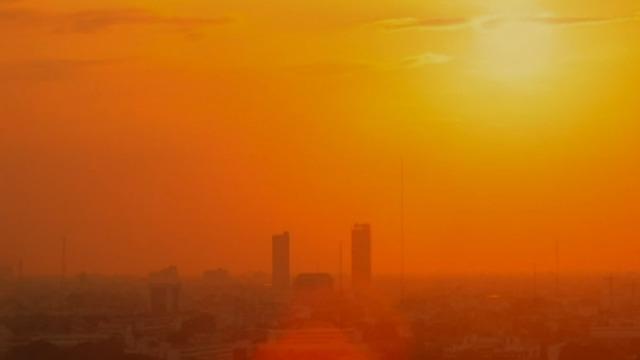
It's "very likely" that 2021 will be among the world's 10 warmest years on record.

Officials are forecasting 15 to 21 named storms instead of the 13 to 20 it predicted in May. Hurricane season lasts through the end of November, with its peak running from mid-August to mid-October.

As CBS News' Mola Lenghi reports, drought conditions in the Western U.S. are historic and point to what could be a catastrophic wildfire season. CBS News meteorologist and climate specialist Jeff Berardelli then joins CBSN's Elaine Quijano with more.

The National Oceanic and Atmospheric Administration is forecasting another active hurricane season. It follows a record-breaking number of storms that swarmed the Atlantic in 2020. CBS News meteorologist and climate specialist Jeff Berardelli joins CBSN's Elaine Quijano with more on the season's outlook.

The National Oceanic and Atmospheric Administration is predicting an above-normal 2021 Atlantic hurricane season, with 13 to 20 named storms and 6 to 10 hurricanes. CBS News meteorologist and climate specialist Jeff Berardelli breaks down what we can expect this year.

The U.S. could be in for another active hurricane season in the months ahead.

Every 10 years, NOAA releases updated temperature and rainfall averages based on thousands of weather stations from across the country. Meteorologist and climate specialist Jeff Berardelli joins "CBS This Morning: Saturday" to explain why the latest normals are anything but normal.

Updated maps show how U.S. temperatures and rainfall patterns are shifting – and reveal some clues about the future.

The National Oceanic and Atmospheric Administration on Tuesday released new data projecting that warmer temperatures are the new "normal" for the U.S. The country has warmed by nearly two degrees over the last 100 years. CBS News meteorologist and climate specialist Jeff Beradelli joins CBSN's Lana Zak to discuss what these rising temperatures mean.

Scientists are predicting historically dry conditions this summer after a big part of the country dealt with its worst fire season ever. CBS News meteorologist and climate specialist Jeff Berardelli joins CBSN's Lana Zak with the details.

The rise happened despite an estimated 7% reduction in global emissions due to the pandemic, according to the National Oceanic and Atmospheric Administration.

On Monday, the Biden administration unveiled a major offshore wind plan for expansion of the industry. Washington Post senior national affairs correspondent Juliet Eilperin joins CBSN's Lana Zak with her analysis.

Seals are typically resilient and adaptable to their environment, but a new study found that rapid warming in the past decade is causing a rampant physical decline in seals and their pups.

A report out this week by the National Oceanic and Atmospheric Administration says that the Arctic is changing even faster than scientists had previously predicted. CBS News meteorologist and climate specialist Jeff Berardelli explains what that means for climate action and why the U.S. may break its previous billion-dollar disaster record as climate change stirs up extreme weather and wildfires in 2020.

A team of NOAA oceanographers confirmed their discovery of a new type of comb jelly. The creature was first seen just off the coast of Puerto Rico. It's the first time NOAA has discovered a new species based solely off high definition video footage. Dr. Michael Ford was part of the team that made the discovery. He joined CBSN's Elaine Quijano to discuss.

Iota is expected to bring "potentially catastrophic winds, life-threatening storm surge and extreme rainfall," the U.S. National Hurricane Center says.

A fast-strengthening Hurricane Iota intensified into an extremely dangerous Category 5 storm as it swept over the western Caribbean. The storm was approaching the same part of Central America battered by Hurricane Eta just over a week ago. CBS News meteorologist and climate specialist Jeff Berardelli joins CBSN's Tanya Rivero with the latest.

At least four people are dead, dozens were rescued and several are unaccounted for after the tropical storm slammed the South.

Tropical Storm Eta dumped torrents of blustery rain on Florida's west coast as it moved over the state after making landfall north of the Tampa Bay area.
Tropical Storm Eta made landfall in Florida for a second time. Eta brought dangerous storm surge to the state's west coast overnight after hitting some places with heavy rain and ferocious winds as it moved up the coast. CBS News correspondent Mireya Villarreal reports from Gainesville, Florida.

Florida Governor Ron DeSantis issued an expanded emergency declaration to include 13 counties along or near the Gulf Coast.

This is storm number 29, breaking the record of 28 tropical storms set in the memorable season of 2005.

Cars were stranded and entire neighborhoods were swamped as flash floods rose in areas where the water had no place to drain.