Singer Parastoo Ahmadi's flogging is far from a unique case as women in Iran face targeted violence

Helia Fattahi told her parents she was pregnant. She was not married. They allegedly killed her.
Iranian police arrested both parents after the killing on Nov. 21 in Sanandaj, a city in the mountains of western Iran. According to local media, they confessed, citing the shame they believed their daughter had brought upon the family.
The provincial police chief, however, described the motive in more prosaic terms, calling it "family disputes," and the parents have not been charged with any crimes.
Two days later, in the holy city of Qom, another Iranian woman was violently punished for a different act of defiance.
Parastoo Ahmadi, a celebrated singer, and four members of her production team each received 74 lashes over a concert she had performed nearly two years earlier without wearing a headscarf.

One woman had defied the conventions of her family. The other had defied the laws of the state.
Both cases, along with a spate of killings of young women across Iran in recent weeks, illuminate the sharp and still fragile limits to the modest freedoms Iranian women have secured since a popular uprising shook the Islamic Republic four years ago.
At the heart of that struggle are questions about who gets to decide how Iranian women live — what they wear, whom they love, and whether they can marry who they choose.
The protests first erupted in 2022 after Mahsa Amini, a 22-year-old Kurdish woman, died in police custody after being arrested for wearing her headscarf improperly. Her family told CBS News she was tortured in custody.
Women discarded their hair coverings, challenged the authority of Iran's morality police, and asserted freedoms that had long been denied to them as they chanted "Women, Life, Freedom."

Still many women walk around in public in Iranian cities with their hair uncovered, but the changes visible on the streets tell only part of the story.
Fereshteh, 27, lives with her partner in what Iranians call a "white marriage," an arrangement in which couples live together without being legally married.
Her family accepts the union. She considers herself fortunate.
One of her friends was not so lucky. After her relationship was revealed, Fereshteh told CBS News her friend was beaten by relatives and threatened with death by her father and brothers. She later fled to Europe to seek asylum.
Fereshteh, who spoke with CBS News online using technology to circumvent Iran's internet restrictions, said the dangers like those her friend faced are particularly acute in smaller towns and rural communities.
In recent days, reports from northern Iran have painted a grim picture of what can happen when young women seek to make their own choices about marriage.
In Gilan province, Sadaf Haghbin, 23, was fatally shot by her former boyfriend at her birthday party. Her refusal to marry him was a possible motive, according to the Iranian news outlet Khabar Online.
In northwest Iran, Zahra Jeddi, 16, was killed by a man she had been religiously married to as a child and whom she was trying to leave, according to Hengaw, a Kurdish human rights organization based in Norway.
Hengaw has documented at least 159 femicides across 27 Iranian provinces over the past year alone. At least 23 were identified by the organization as so-called honor killings.
The figures offer only a partial picture of violence that often goes unreported.
Honor killings are hardly unique to Iran, nor did they originate with the Islamic Republic.
But in Iran, the authority that families exercise over women is, in some circumstances, reinforced by provisions in the country's penal code that can spare their killers the harshest punishments for murder.
Under Article 301 of Iranian law, a father or paternal grandfather who kills his child or grandchild is exempt from qisas, the Islamic principle of retribution under which convicted murderers can be sentenced to death.
Other perpetrators can escape that punishment if they are forgiven by the victim's legal heirs, who, in cases of honor killings, may belong to the same family as the killer.
An Iranian lawyer familiar with such cases told CBS News the problem lies as much in the attitudes of judges as in the letter of the law.
The lawyer, 44, who asked to be identified by the pseudonym Neyazi for fear of repercussions, said judges frequently show leniency toward men accused of killing female relatives in the name of family honor.
The latitude afforded to some men who kill female relatives stands in contrast to the penalties the state can impose on women for appearing in public without a headscarf.
When Ahmadi performed her concert in December 2024, she challenged two of the Islamic Republic's restrictions on women: rules governing how they dress, and rules limiting their ability to sing in public.
Her corporal punishment this week has drawn international attention at a time when Iranian authorities appeared to have relaxed enforcement of some restrictions on women amid the pressures of war with the U.S.
But the laws remain in place.
Women who go unveiled are still vulnerable to prosecution, surveillance, and even the confiscation of their personal vehicles. Businesses that serve women risk being shuttered, according to Human Rights Watch.
Inside Iran, a longstanding debate about the state's responsibility to protect women, particularly those whose lives are known to be in danger, has been revived. The reformist newspaper Shargh, in an article published this month, questioned the failure of public institutions to intervene in such cases.
Few episodes have illustrated the consequences of that failure as starkly as the killing of Romina Ashrafi, a 14-year-old girl whose death in 2020 horrified many Iranians.
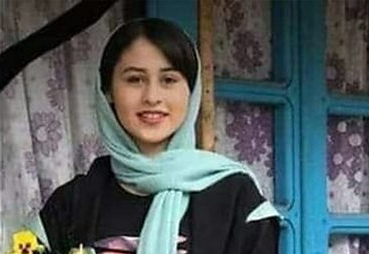
Romina had run away from her home in Gilan province with her 35-year-old boyfriend after her father objected to their marriage. Police found the pair and returned Romina to her family, despite her telling officers that she feared for her life, according to reports of what happened.
Her father subsequently killed her in her bedroom, decapitating her with a sickle, according to the local news outlet Gilkhabar. He confessed to the killing and was sentenced to nine years in prison.
Iranian government spokeswoman Fatemeh Mohajerani has indicated that legislation intended to boost criminal penalties for murder and physical violence against women could be submitted to Iran's parliament.
It is known as the Romina Bill.
In the six years since her death, Iranian women have taken to the streets, defied the morality police and forced the easing of restrictions on the compulsory hijab.
But the legislation bearing Romina's name has yet to become law.