Takeaways from Trump comments on Hormuz
President Trump took questions Monday on the Strait of Hormuz during an impromptu news conference at the White House. CBS News' Charlie D'Agata has more.
Watch CBS News
President Trump took questions Monday on the Strait of Hormuz during an impromptu news conference at the White House. CBS News' Charlie D'Agata has more.

President Trump was asked what a deal with Iran might look like while taking questions Monday. Mr. Trump took the moment to talk about the country's use of disinformation and artificial intelligence.

President Trump spoke to reporters about the Iran war Monday, taking one question related to Israel's potential use of nuclear weapons if the war escalates. Mr. Trump said, "Israel wouldn't do that."

Retired Lt. Gen. H.R. McMaster, former national security adviser in the first Trump administration, and a CBS News contributor, weighs in on the Pentagon's deployment of additional service members to the Middle East.

President Trump told reporters Sunday night that he thinks NATO allies should help with reopening the Strait of Hormuz. German officials responded by saying it's "not NATO's war" and pointing out that the U.S. and Israel didn't consult their allies before striking Iran. CBS News' Nancy Cordes has more.
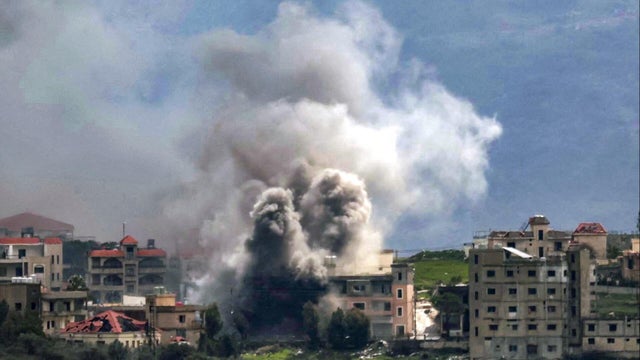
Israel attacked Tehran overnight as explosions continue across Lebanon against Hezbollah. Meanwhile, Iran and Hezbollah launched one of their most intense rocket and missile strikes across Israel since fighting began. Charlie D'Agata has the latest on the Iran war.
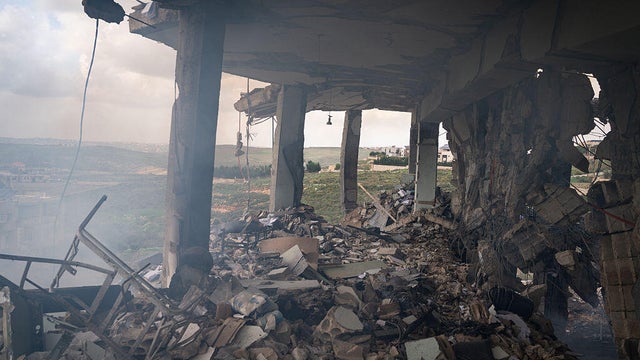
The war, which shows no signs of ending soon, has disrupted oil exports from the region, driven fuel prices far higher worldwide and upended global air travel.

With week three of the war underway, Iran launched one of the heaviest waves of missile strikes in a 24-hour period since fighting began. Charlie D'Agata reports.

Sen. Mark Warner, the vice chair of the Senate Intelligence Committee, told "Face the Nation with Margaret Brennan" that in the 2025 worldwide threats briefing, "there was no imminent threat to the United States and I don't believe there was even an imminent threat to Israel from Iran."

This week on "Face the Nation with Margaret Brennan," amid new strikes from Israel and Iran in the Middle East, Margaret Brennan speaks to Iranian Foreign Minister Abbas Araghchi and Trump economic adviser Kevin Hassett. Plus, Rep. Dan Crenshaw and Sen. Mark Warner join.

Qatar, home to the largest U.S. military base in the Middle East, has been hit by Iranian retaliatory strikes amid the U.S.-Israeli war. Dr. Majed Mohammed Al-Ansari, who is the official spokesperson of Qatar's Ministry of Foreign Affairs, told CBS News' Imtiaz Tyab that the region needs "an end to this as soon as possible," warning, "a prolonged conflict in this region will have a profound impact" on the energy industry.

Ayman Mohamad Ghazali made two purchases at a Phantom Fireworks store in Livonia, Michigan. He told the store staff the fireworks were for the end of Ramadan.

On Nov. 29, 1973, CBS News aired a special report titled "Making It Through This Winter," spotlighting the ways Americans were making do amid the oil crisis. Watch the program in full.

A total of 13 U.S. service members have been killed in the joint Israeli war with Iran, including the six who died in a plane crash in Iraq. Meanwhile, pro-government protesters took to the streets in Iran despite waves of airstrikes. CBS News chief correspondent Matt Gutman reports on the war's latest and Sumantra Maitra, founder of CLIO strategic consulting, has more.
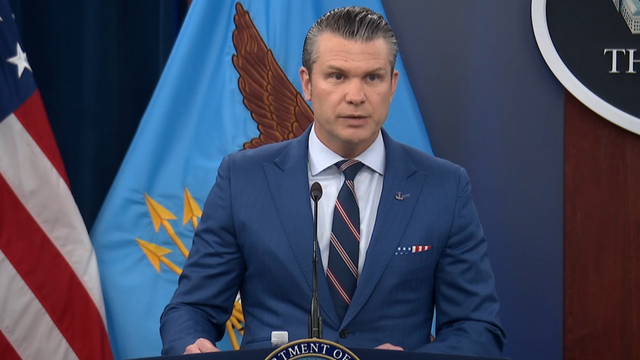
Defense Secretary Pete Hegseth and Joint Chiefs Chairman Dan Caine briefed on Operation Epic Fury in Iran Friday.
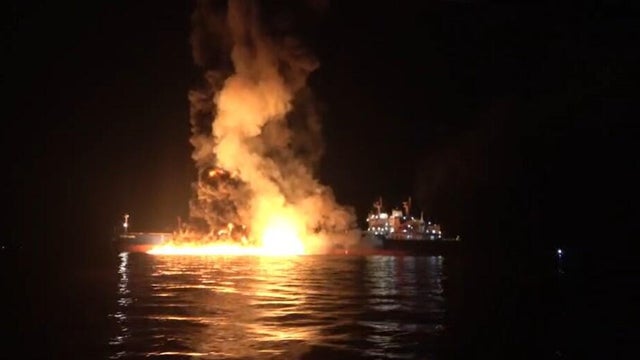
Iran's relentless attacks on Gulf states and infrastructure appear to be overshadowing interventions by the U.S. and its allies aimed at easing energy prices.

Treasury Secretary Scott Bessent said Thursday that the U.S. will escort ships through the Strait of Hormuz as Iran ramps up attacks on the crucial shipping channel. Republican Rep. Rick Crawford of Arkansas, chair of the House Intelligence Committee, joins "The Takeout" to discuss the state of the war.

Officials in Lebanon say more than 630 people have been killed during the war with Iran, including 91 children. Former Israeli Ambassador to the U.S. Michael Oren joins "The Takeout" to explain the relationship between Lebanon and the Iran war.

CBS News has learned that despite the U.S.-Israeli war, for the first nine days of March, Iran exported about 30% more oil than in the first nine days of February. Matt Gutman has more.

Iranian state media say the country's new Supreme Leader Mojtaba Khamenei, in his first public statement, has called for the Strait of Hormuz to remain shut.

CBS News journalists offer international perspectives from leaders and citizens in a number of countries as the Iran war nears the two-week mark.

Iran has attacked multiple tankers near its territory and is striking oil facilities in nearby countries. Meanwhile, U.S. and Israeli warplanes and missiles are continuing to hit targets across Iran. In its first week alone, the Iran war has cost more than $11 billion, according to lawmakers briefed by the Pentagon. Charlie D'Agata has the latest.

President Trump says he'll end the war soon, when he wants to, as Iran hits ships in and near the Strait of Hormuz and warns U.S.-linked banks will be next.

Trump says there's "practically nothing left" to target on Day 12 of war in Iran; legislative blockade threatened over SAVE Act.

"I think, overall, what's accomplished is remarkable," Sen. John Fetterman told CBS News chief White House correspondent Major Garrett in an interview Wednesday.