Stocks fall as fears of recession increase
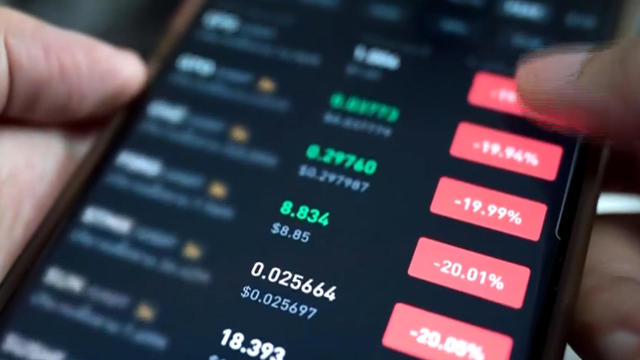
The stock market took a big slide Monday following a lackluster jobs report and growing fears of a recession in the next year. Jo Ling Kent breaks down what it all means.
Watch CBS News
The stock market took a big slide Monday following a lackluster jobs report and growing fears of a recession in the next year. Jo Ling Kent breaks down what it all means.
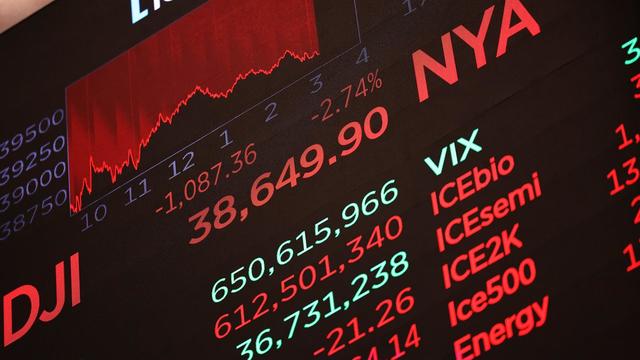
Fears of a U.S. economic slowdown sent markets falling at the start of the trading week on Monday, with markets in Asia and Europe falling as well. CBS News senior business and tech correspondent Jo Ling Kent has more from New York.
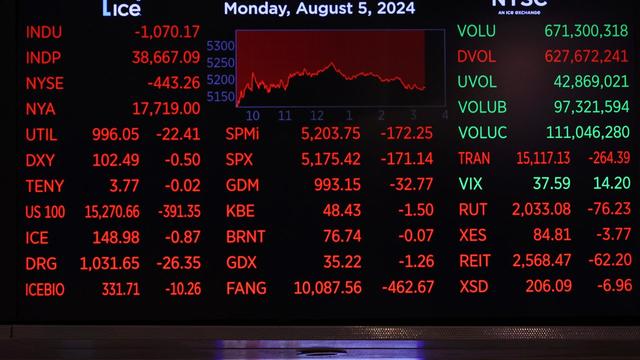
Stocks plunged Monday amid fears that the U.S. is entering the early stages of a recession, with the Dow Jones falling 2.6 percentage points. CBS News senior business and tech correspondent Jo Ling Kent examines what's driving the global economic uncertainty.
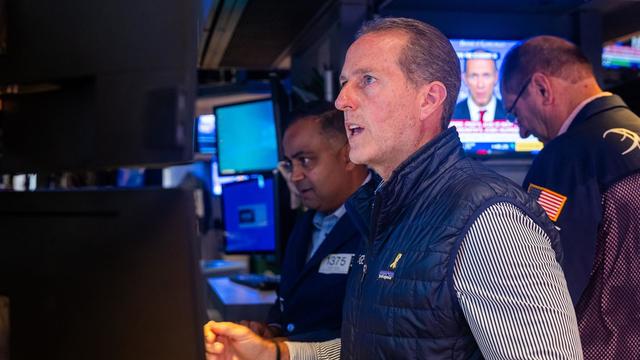
U.S. markets are taking a hit Monday with the Dow falling over 1,000 points to start the day and semiconductor stocks like Nvidia and Intel dipping over 7%. Overseas, Japan's market had the worst day in its history, dropping over 12%. CBS News contributor J.D. Durkin has more.
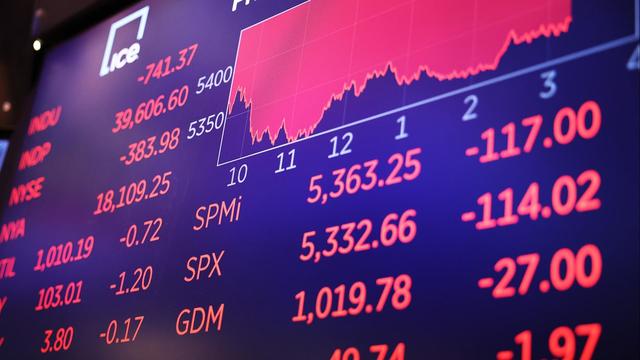
The stock market plunged Friday after a weaker-than-expected July jobs report raised fears of a slowing economy. But should Americans actually be worried about the sell-off? CBS News contributor JD Durkin joins to discuss.
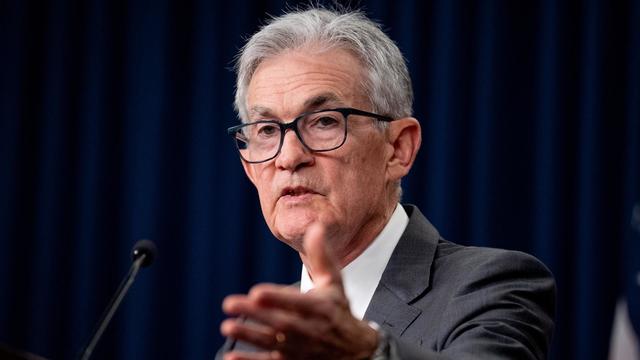
The Federal Reserve said Wednesday it is leaving its benchmark interest rate unchanged. The announcement means policymakers will hold the federal funds rate between 5.25 and 5.50%, the highest level in 23 years. Martin Baccardax, senior editor and chief markets correspondent for TheStreet, joins CBS News to examine the decision.

The Federal Reserve is leaving its benchmark interest rate unchanged as investors look for signals that a cut is imminent.

The Federal Reserve left the benchmark federal funds rate unchanged Wednesday. Experts still believe the Fed's September meeting could lead to cuts. CBS News business analyst Jill Schlesinger and CBS News contributor Javier David break down the decision.

Federal Reserve Chairman Jerome Powell will announce the agency's decision on interest rates Wednesday with cuts not yet expected. Jeanna Smialek, Federal Reserve and U.S. economy reporter for the New York Times, joined CBS News to discuss the Fed.
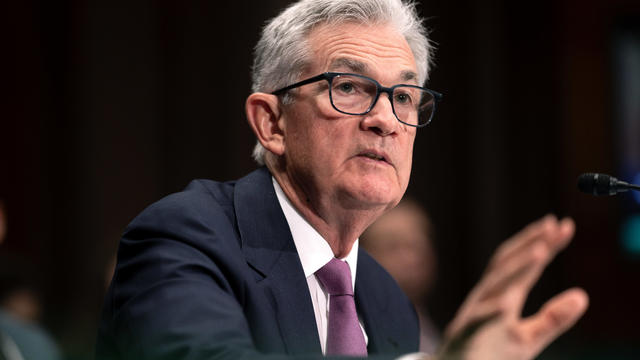
The Federal Reserve is meeting July 30-31 to discuss its benchmark rate. Here's what economists say about the impact on your money.

After years of soaring housing costs, renters are getting some relief as the Federal Reserve looks to extinguish inflation.

The Commerce Department says the nation's gross domestic product, or GDP, rose at an annual rate of 2.8% from April through June. That's more than the 1.9% rate economists had expected for the second quarter. Jeff Stein, White House economics reporter for The Washington Post, joins CBS News to explain what the GDP growth says about the economy, and how the Federal Reserve could read the data.

The U.S. economy grew more than expected in the second quarter of 2024, according to new data, although it is still down compared to the second half of last year. CBS News senior business and tech correspondent Jo Ling Kent breaks down the numbers.

The U.S. economy grew more than expected in the second quarter of 2024, according to the latest gross domestic product data. Jeanna Smialek, a Federal Reserve and U.S. economy reporter with The New York Times, joins CBS News with more.

Two major stock indexes, the S&P 500 and Dow Jones Industrial Average, are up over 15% compared to a year ago. Financial analysts point to this as an example of the U.S. economy's health, but the benefits are not accessible to all Americans. CBS News' Lindsey Reiser explains.

Labor Department data released Thursday showed the annual inflation rate cooled from 3.3% in May to 3% in June. That's lower than the 3.1% rate some economists had projected. Jeanna Smialek, Federal Reserve and U.S. economy reporter for The New York Times, joins CBS News to unpack the report.
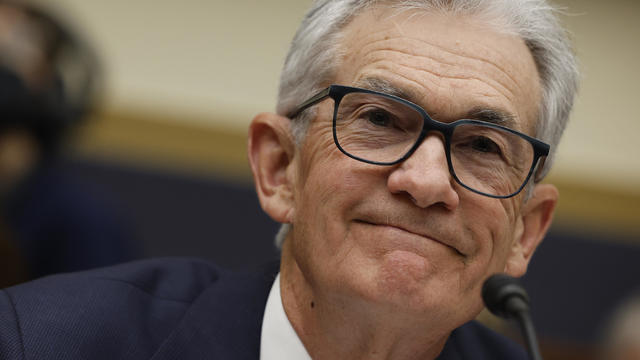
Federal Reserve Chair Jerome Powell told a Senate panel that the economy has returned to its pre-pandemic level: "strong, but not overheated."

The U.S. added 206,000 jobs in June and the unemployment rate rose to 4.1%, according to new data from the Labor Department's Bureau of Labor Statistics. CBS News senior business and technology correspondent Jo Ling Kent breaks down the numbers and if they mean a potential interest rate cut in the fall.

Forecasters expect job numbers on Friday to show slower hiring in June, clearing the way for the Fed to cut interest rates later this year.

Millions of Americans are being priced out of home ownership, according to a new study by the Harvard Joint Center for Housing Studies. Chris Herbert, managing editor with the center, joins CBS News with more details on the research.

There are some indications that prices are falling in some parts of the U.S. economy. This comes after the Federal Reserve's announcement to hold interest rates steady for now. CBS News contributor Javier E. David looks at some key economic indicators as inflation slows slightly.

The Federal Reserve left interest rates unchanged Wednesday after the government announced consumer prices in May rose 3.3% year over year. The central bank has been hesitant to cut rates due to inflation. Ben Casselman, economy reporter for The New York Times, joins CBS News to unpack the data.

The Federal Reserve is leaving interest rates unchanged for now as it awaits a more sustained period of declining inflation in the U.S. economy. CBS News contributors J.D. Durkin and Javier E. David break down the decision.

The Federal Reserve is meeting again to determine if interest rates should remain steady or be altered. The latest data by the Department of Labor shows inflation cooled slightly in May but some consumer prices, including for shelter and food, continued to rise. CBS News' Jo Ling Kent has more.

Price increases in the U.S. were up 3.3% from last year in May's Consumer Price Index, a smaller increase than was predicted by economists, while month-over-month prices stayed the same. CBS News business analyst Jill Schlesinger has more.