Economists expect a major downward jobs revision from BLS today
Economists expect the Bureau of Labor Statistics to revise its jobs data downward for the year ended in March 2025. Here's why.
Watch CBS News
Economists expect the Bureau of Labor Statistics to revise its jobs data downward for the year ended in March 2025. Here's why.

For six years, Mackenzie Bruegge worked in medical billing. But with two young children at home, she says the math just didn't add up. Her decision to quit reflects a national trend. Lana Zak reports.
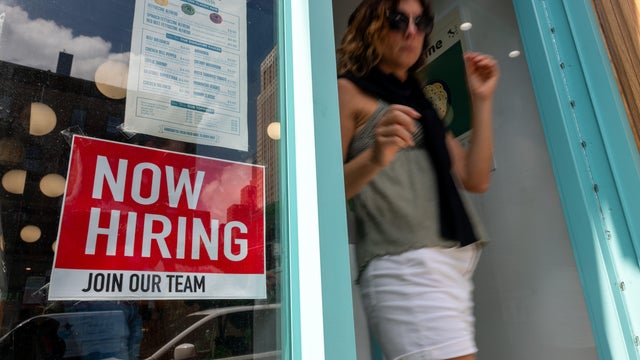
Americans' confidence in finding a new job fell to the lowest measure on record, new government survey shows.
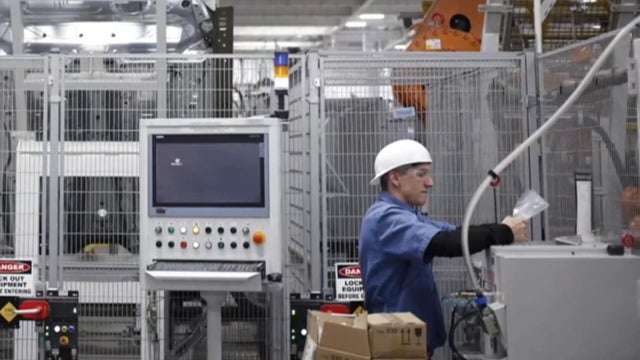
Despite solid output and productivity growth for manufacturing, the sector has lost about 78,000 jobs this year. Can President Trump deliver on his promise for a manufacturing renaissance? "CBS Evening News" co-anchor John Dickerson explains.
The economy added just 22,000 jobs in August, which was well below expectations. The Dow reacted by falling 220 points. Economist Michael Strain of the American Enterprise Institute gives his take.
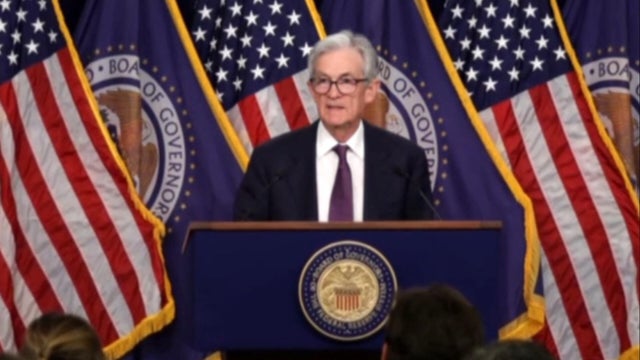
Employers across the U.S. added 22,000 jobs in August, falling short of economists' muted expectations and signaling the labor market is facing sharp headwinds from mounting economic uncertainty amid the Trump administration's wide-ranging tariffs. Jo Ling Kent has the biggest takeaways.

The U.S. economy added 22,000 jobs in August -- well below expectations. Kelly O'Grady has more.

The August jobs report fell short of economists' muted expectations. The Labor Department said U.S. employers added 22,000 new jobs last month. Economists had expected a number closer to 80,000. The unemployment rate also ticked up slightly to 4.3% in August. CBS News MoneyWatch correspondent Kelly O'Grady reports.
The U.S. economy added 22,000 non-farm jobs in August, below the 75,000 forecast by leading economists. Unemployment ticked up to 4.3%. CBS News' Jo Ling Kent reports and Justin Wolfers, an economics professor at the University of Michigan, joins "The Takeout" to discuss.
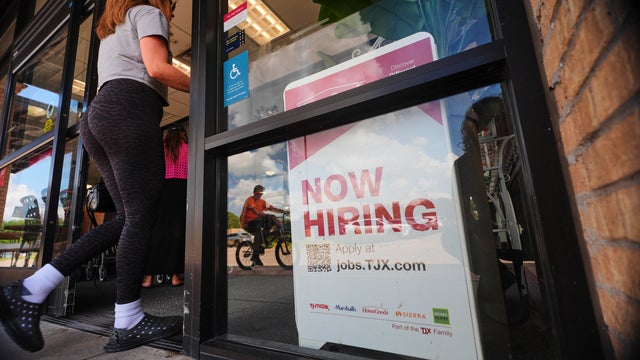
After President Trump expressed "shock" over the pace of hiring in July, much is riding on the employment data for August.

Artificial intelligence is growing at a rapid pace, leaving some young workers wondering what the technology means for their future. According to a report from Wired, economists at Stanford University say they've found the strongest evidence yet that AI is starting to eliminate certain jobs for young people. Will Knight, senior writer at Wired and author of the A.I. Lab newsletter, joins CBS News to discuss.
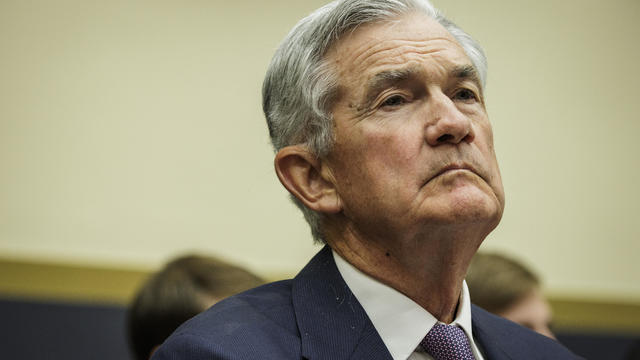
Federal Reserve Chair Jerome Powell cited risks to the labor market in opening the door to cutting interest rates. Here's what job-seekers should know.
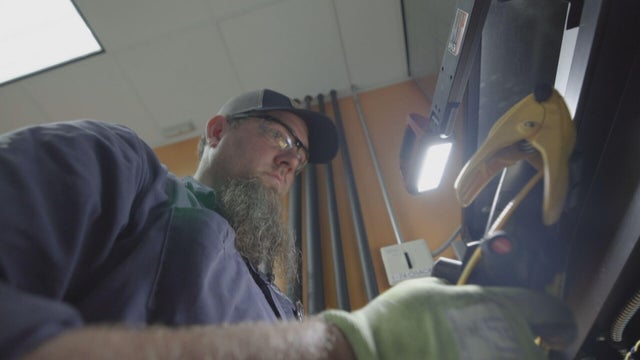
With roughly 400,000 trade jobs unfilled in the U.S., data centers powering the AI boom face a staffing crisis.
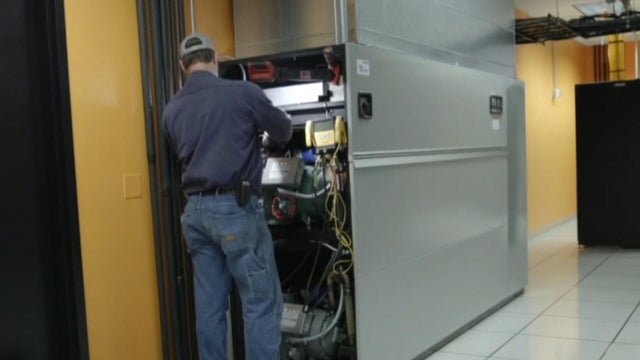
With roughly 400,000 trade jobs unfilled in the U.S., data centers powering the artificial intelligence boom face a staffing crisis. Mark Strassmann reports.

Four years after the pandemic caused prices to increase, a new study found that U.S. wages have still not caught up with inflation. Sarah Foster, a U.S. economy reporter and analyst for Bankrate, the service that released the report, joins "The Daily Report" to discuss.
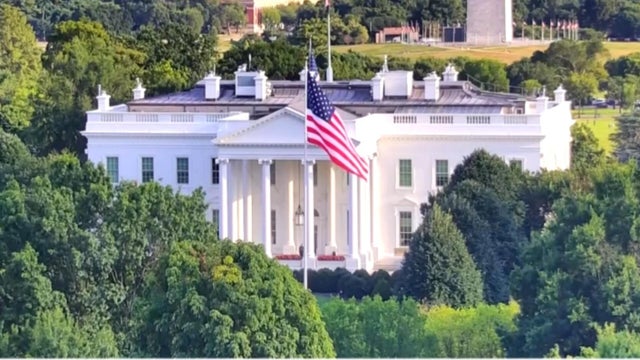
When President Trump fired the head of the Bureau of Labor Statistics earlier this month, he accused her, without evidence, of producing fake job numbers before the last presidential election. Julia Lane, a professor at New York University's Wagner Graduate School of Public Service, joins "The Daily Report" to discuss more.

A new article from The Wall Street Journal details how young, educated Americans struggling to break into the workforce are some of the earliest victims of artificial intelligence. One of the story's co-authors, Lindsay Ellis, joins "The Takeout" to discuss how AI is impacting college graduates' job searches.

President Trump has announced E.J. Antoni, the Heritage Foundation's chief economist, as his pick to run the U.S. Bureau of Labor Statistics after the previous chief was fired amid a weaker-than-expected jobs report. Antoni on Monday criticized the monthly jobs report as flawed and suggested it be replaced with "more accurate, though less timely, quarterly data." James Bennet, D.C. bureau chief for The Economist, joins "The Takeout" with analysis.
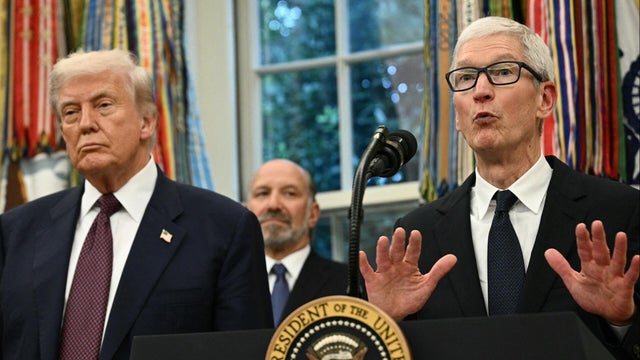
President Trump and Apple CEO Tim Cook announced a new $100 billion commitment to U.S. manufacturing on Wednesday. Peter Kafka, Business Insider chief correspondent, joins CBS News with analysis.
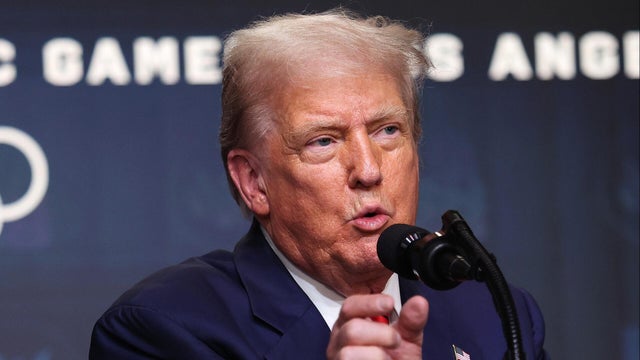
While phoning into CNBC on Tuesday morning, President Trump defended his decision to fire the labor statistics commissioner following a disappointing jobs report. CBS News MoneyWatch correspondent Kelly O'Grady has more on the fallout.

The advent of AI in the workplace is one factor behind a spike in layoffs this year, new labor data shows.
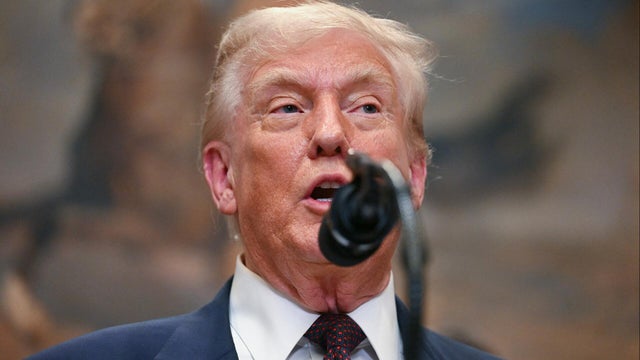
The White House is defending President Trump's decision to fire the head of the Bureau of Labor Statistics following a weaker-than-expected July jobs report. CBS News' Olivia Rinaldi and Kelly O'Grady have the latest.

President Trump fired the Bureau of Labor Statistics commissioner on Friday. The reason cited, though it lacked evidence, was that last week's job report was "rigged." Katharine Abraham, who held the position from 1993 until 2001, joins "The Takeout" to discuss.

Friday's unexpectedly weak jobs report signals that some sectors are cutting back on hiring amid economic uncertainty.
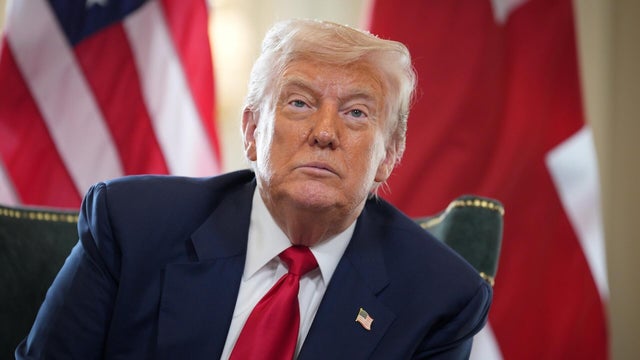
President Trump explained why he fired Bureau of Labor Statistics Commissioner Erika McEntarfer on Friday. Government data showed fewer jobs were added to the U.S. economy last month than expected.