U.S. coronavirus hospitalizations surpass 100,000
Hospitals are being hit by a tidal wave of new coronavirus cases, with predictions of it only becoming worse. Adriana Diaz reports.
Watch CBS News
Hospitals are being hit by a tidal wave of new coronavirus cases, with predictions of it only becoming worse. Adriana Diaz reports.

After months of holding out for another $2 trillion dollar coronavirus stimulus package, House Speaker Nancy Pelosi is backing a smaller plan in an effort to move things along before key programs expire this month. CBS News political correspondent Ed O'Keefe and Politico White House correspondent and associate editor Anita Kumar join CBSN's "Red & Blue" host Elaine Quijano to discuss the likelihood more aid could be coming before the end of the year.

The league did not disclose the names of players who tested positive.

The U.K. has become the first country to approve Pfizer's coronavirus vaccine, with mass immunizations expected to begin next week. Charlie D'Agata has details.

The Centers for Disease Control and Prevention said Americans need to quarantine for seven to 10 days after being exposed to the coronavirus, a decrease from its earlier recommendation of 14 days. The outbreak in the U.S. has gone from bad to catastrophic with nearly 2,600 people dying from COVID on Tuesday, the country's second-highest single-day death toll since the pandemic began. Dr. Teresa Murray Amato, chair of emergency medicine at Long Island Jewish Forest Hills hospital in New York City, joined CBSN to discuss.

Without immediate assistance, Americans will lose their homes and small businesses will fail, Fed chair warns.

"In the grand scheme of things, canceling a big wedding isn't the worst thing that could happen," the bride said.

The U.K. is the first country in the West to authorize emergency use of a coronavirus vaccine. Health officials there have already ordered 40 million doses. CBS News foreign correspondent Charlie D'Agata joins CBSN with the latest on the distribution plans.
The U.K. has become the first country to grant Pfizer emergency use of its coronavirus vaccine. Its first 800,000 doses will arrive in just a few days. CBS News foreign correspondent Charlie D'Agata reports.

Award-winning actor Bryan Cranston joins "CBS This Morning" live to discuss his role in the new Showtime limited series, "Your Honor." Cranston shares how he prepared for the role and what kind of parts he is drawn to. He'll also discuss his COVID-19 diagnosis earlier this year and how he still has yet to fully recover his sense of taste and smell.

Researchers' "best case scenario" points to 15% plunge in GDP, a bigger hit than seen during the Great Recession.

"I wouldn't do it again if I knew then what I know now. It weighs on me and it will continue to weigh on me until everyone is 100% better," the event organizer said.
The U.K. has become the first country in the world to approve Pfizer's coronavirus vaccine for distribution. U.K. officials said they'll be ready to start administering the vaccine as early as next week. CBS News foreign correspondent Charlie D'Agata joined "CBSN AM" to explain how the U.K. was able to move ahead without the European Union and what happens to the AstraZeneca vaccine being tested by Oxford.

China and Russia have a head start in the race to offer coronavirus vaccine options for mass distribution in developing countries. A Washington Post report looks at how the two countries are using their vaccines to expand their political and economic influence globally. Washington Post foreign affairs reporter Emily Rauhala joined CBSN to discuss.

Protesters shouted as deputies arrested Danny Presti, the co-owner of Mac's Public House on Staten Island.

Complaints about pet scams have roughly doubled from last year, according to a new Better Business Bureau report, and Americans have lost more than $2 million.
With only about 40 million COVID-19 vaccine doses available, a CDC advisory panel suggested priority be given to seniors in long-term care and frontline health care workers while officials also work to update quarantine protocols. David Begnaud reports.
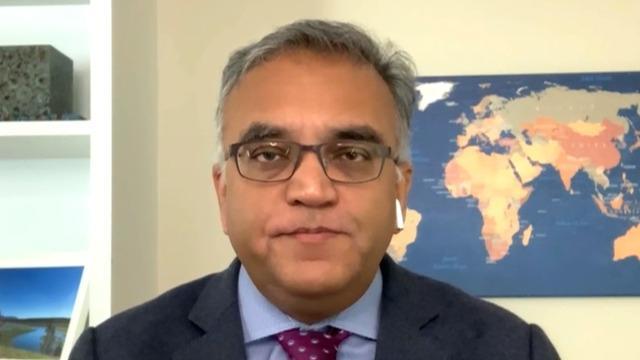
On Tuesday, A CDC advisory panel voted to recommend that health care workers and long-term care facility residents and employees should be the first people in the United States to receive coronavirus vaccines. Dr. Ashish Jha, the dean of Brown University's School of Public Health, joins "CBS This Morning" to discuss the rising coronavirus cases and the latest vaccine news

As more states report record coronavirus hospitalizations, battle-weary health care workers say they are physically and mentally fatigued.

This comes one day after Governor Ron DeSantis held a press conference where he denounced mask mandates.
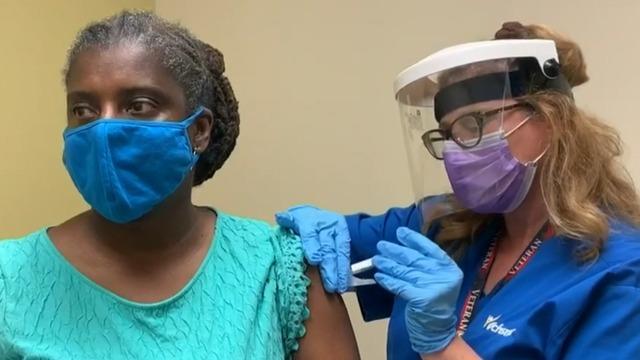
A CDC panel recommended on Tuesday that health care workers and nursing home residents should be first to receive the coronavirus vaccine. Those initial doses from Pfizer and Moderna, which have not yet been FDA approved, could be distributed in two weeks. CBS News correspondents Mola Lenghi and David Begnaud have the latest details, and Dr. Uzma Syed, an infectious disease specialist, joins CBSN's Elaine Quijano to discuss what she will be looking at once the vaccines are out in the public.
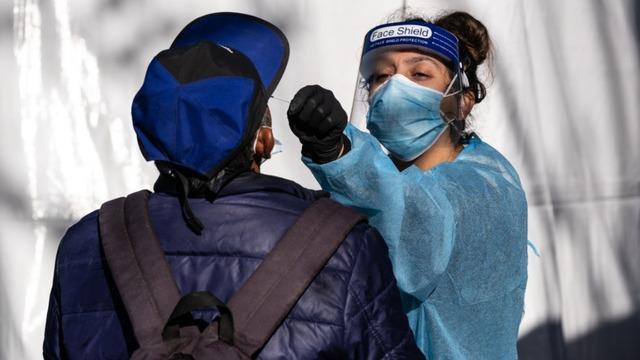
California Governor Gavin Newsom is warning of "drastic actions" to curb a growing surge surge in new coronavirus infections. Hospitalizations have increased by 89% in two weeks. Jeremy B. White, co-writer of Politico's California Playbook, joins CBSN's Elaine Quijano with the latest on local efforts to combat the spread.
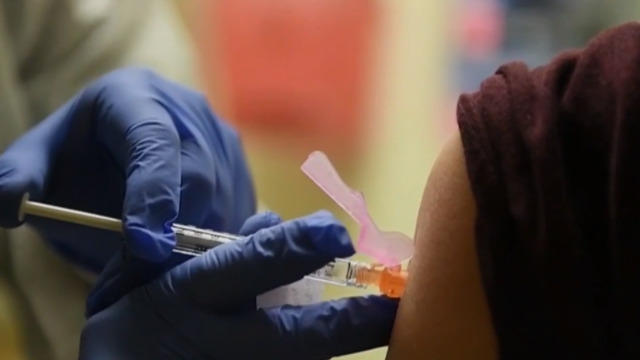
A CDC advisory panel has voted that the first people to receive the coronavirus vaccine should be health care workers and nursing home patients. Distribution could begin as early as December 15. Mola Lenghi has more.

The coronavirus pandemic has not stopped a 13-year-old boy from carrying out his charity's mission of providing blankets to children in need. Janet Shamlian shares his story.

"We strongly believe the vaccine distribution process could begin as soon as the week of December 14," Pence said.