Will I have to wear a mask once I get the COVID vaccine?
A doctor explains why wearing masks will still be necessary for a while even after vaccines arrive.
Watch CBS News
A doctor explains why wearing masks will still be necessary for a while even after vaccines arrive.

Coronavirus cases are exploding in California. The state set new records on Tuesday, including more hospitalizations than ever before. CBSN's Tanya Rivero spoke about the current situation in California with Jeremy White, the co-author of Politico's California Playbook newsletter.

CBS News chief medical correspondent Dr. Jon LaPook answers viewers' questions about the coronavirus vaccine, including allergic reactions by two people who got the shot in the U.K., and when it may be safe to travel again after being immunized.

With just nine days to go until the Senate adjourns until 2021, time is running out for more pandemic aid to be passed before key unemployment programs and eviction protections lapse at the end of December. CBS News political correspondent Ed O'Keefe, CBS News chief congressional correspondent Nancy Cordes, and Politico White House reporter and associate editor Anita Kumar spoke to "Red and Blue" host Elaine Quijano about where negotiations stand, plus the breaking news on a tax investigation into Hunter Biden.

England's National Health Service says people "with a history of a significant allergic reaction to a vaccine, medicine or food" should not get the Pfizer shot.
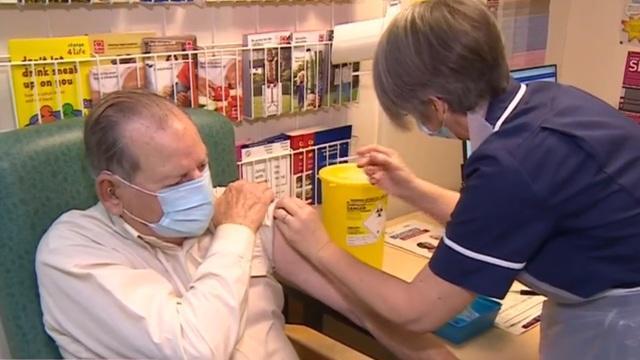
England's National Health Service is urging people with a history of severe allergies that they should not get the Pfizer coronavirus vaccine following two health care workers who had allergic reactions after receiving the shot. Nikki Battiste has the details.

More than one-third of all Americans live near hospitals that are critically short of intensive care unit beds.

Hospitals across the U.S. are running out of beds for patients as the coronavirus pandemic rages. Jonathan Vigliotti reports.
Roughly 1 in every 22 Americans have tested positive for COVID-19, and U.S. is now reporting an average 200,000 Americans are testing positive for coronavirus each day, the highest daily total the country has experienced. Emergency medicine physician and Yahoo News medical contributor Dr. Dara Kass joins CBSN to discuss the impact Pfizer's vaccine will have on the country once it is approved for distribution.

With many Americans struggling to make ends meet during these unprecedented times, the star has sparked some joy in the lives of two mothers in need this holiday season.

Pennsylvania Governor Tom Wolf has tested positive for COVID-19. In a statement on Wednesday, the 72-year-old said he has no symptoms and is feeling well. CBS Philadelphia has more.

President-elect Joe Biden outlined his plan to fight the COVID-19 pandemic, which emphasizes mask wearing, vaccine distribution and safely returning children to in-person schooling. It comes as he picks nominees to lead the Department of Housing and Urban Development and the Department of Agriculture. CBS News political correspondent Ed O'Keefe joins CBSN AM with the latest.

Pennsylvania Governor Tom Wolf and first lady Frances Wolf were quarantining at home after the governor's positive test result.

Newark, New Jersey completed a 10-day lockdown before Thanksgiving to slow the spread of COVID-19. That lockdown was initiated by Mayor Ras Baraka, who got some pushback from businesses. Baraka discusses the city's efforts to curb the virus with CBSN's Tanya Rivero.

As countries around the world look to inoculate citizens against COVID-19, bogus theories are in ample supply.

With the U.S. potentially just days away from the distribution of a coronavirus vaccine, top health officials are painting a dire picture of the country's case count and hospitalizations in the coming months. Dr. Neeta Ogden, an internal medicine specialist and immunologist, joined CBSN to discuss the vaccines being prepared around the world.

Pentagon officials announced Wednesday the Defense Department will get 40,000 doses of the Pfizer vaccine to begin its phased rollout of the COVID-19 vaccination program. First in line among defense personnel will be health care workers. Watch their remarks from a Pentagon news briefing.

Intensive care units across the country are nearing capacity as COVID continues to spread at unprecedented rates, and health officials say the vaccine won't reach most Americans until spring. Urgent care nurse practitioner Justin Gill joins CBSN AM to explain what he's seeing on the ground and what he thinks needs to happen for vaccines to be distributed properly in hospitals.

New York City Mayor Bill de Blasio told reporters people of privilege won't be allowed to "jump the line" ahead of those who have a greater need for a COVID-19 vaccine. The mayor's comments come as city officials expect to start receiving the first doses of a vaccine a few days after it's approved by the federal government. Watch de Blasio's remarks.

Lauren Schreider is an unemployed chiropractor in Illinois who owes almost $600,000 in student loans. She said Congress should grant her and other borrowers 12 months of payment forbearance while Americans recover from the coronavirus pandemic.

New York Governor Andrew Cuomo said Wednesday the state expects to receive 170,000 doses of a COVID-19 vaccine as soon as this weekend. Nursing home residents and staff will be prioritized for vaccinations followed by "high-risk" hospital workers. Watch his remarks.

Alabama hit a record for the number of people in state hospitals with COVID-19 with more than 2,000 people hospitalized.

"We've got to protect those who serve us and those who are most vulnerable, and we will enforce that rigorously," said Mayor Bill de Blasio.

The death toll from COVID-19 on three separate days last week was greater than the number of Americans killed in the attack on Pearl Harbor.

Nursing home residents and staff will be prioritized for vaccinations, following by "high-risk" hospital workers.