Notable Deaths in 2026
A look back at the esteemed personalities who left us this year, who touched us with their innovation, creativity and humanity.
By CBSNews.com senior producer David Morgan. The Associated Press contributed to this gallery.
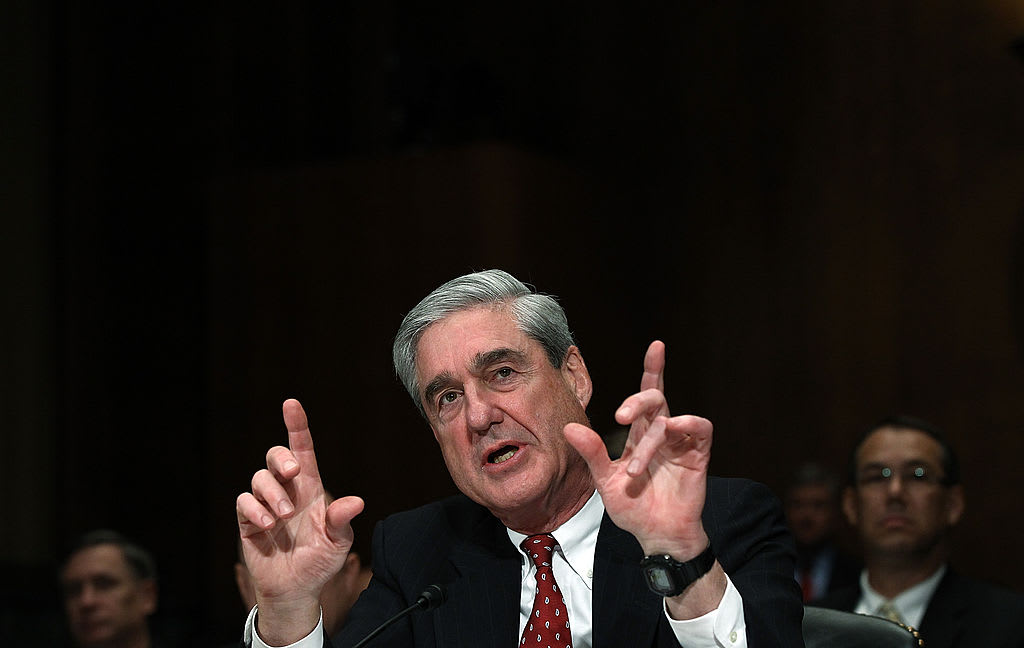
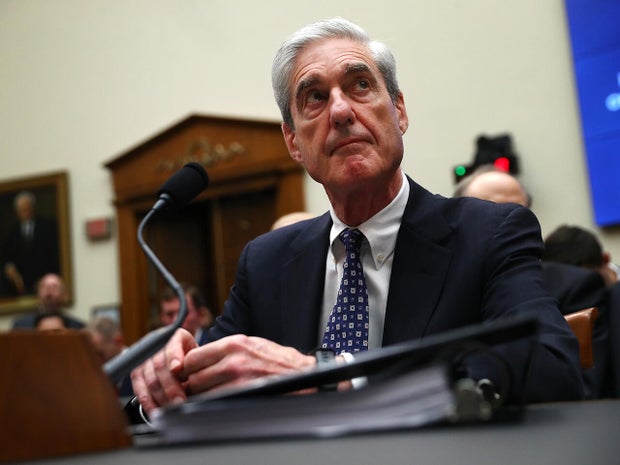
Robert Mueller (Aug. 7, 1944-March 20, 2026), a former Marine, served as a United States attorney, deputy attorney general, and director of the FBI. He investigated white collar crimes, bank fraud, and state-sponsored terrorism, and led prosecutions of mob boss John Gotti, Panamanian leader Manuel Noriega, and the bombing of Pan Am Flight 103. But his most high-profile role was as a special counsel, tasked to investigate Russian interference in the 2016 presidential election and its possible connections with the campaign of President Trump.
His probe, which was completed in 2019, operated under restrictions imposed by a White House legal counsel opinion that a sitting president could not face criminal charges. Mueller, however, reiterated that a president could be charged once he'd left office. His team did not depose Mr. Trump, however, fearful that court fights over a subpoena would have delayed the investigation further.
Mr. Trump claimed that the report, released in a redacted form in the spring of 2019, cleared him of wrongdoing. However, Mueller wrote in an introduction about whether Mr. Trump had obstructed justice: "If we had confidence after a thorough investigation of the facts that the President clearly did not commit obstruction of justice we would so state. … [W]hile this report does not conclude that the President committed a crime, it also does not exonerate him."
Federal charges were levied against 34 people, including 25 Russian nationals, and three Russian companies.
In his report, Mueller wrote that while the evidence did not establish that Mr. Trump was involved in an underlying crime, "the evidence does point to a range of other possible personal motives animating the President's conduct. These include concerns that continued investigation would call into question the legitimacy of his election and potential uncertainty about whether certain events—such as advance notice of WikiLeaks's release of hacked information or the June 9, 2016 meeting between senior campaign officials and Russians—could be seen as criminal activity by the President, his campaign, or his family."
He added, "The President launched public attacks on the investigation and individuals involved in it who could possess evidence adverse to the President, while in private, the President engaged in a series of targeted efforts to control the investigation."
In July 2019, Mueller was called to testify before congressional panels. He merely reiterated the report's findings – that the investigation did find that "the Russian government interfered in the 2016 presidential election in sweeping and systematic fashion," through disinformation and document leaks whose goal was "supporting the Trump campaign and disparaging candidate Hillary Clinton."
Mueller did confirm that Trump campaign officials (including Carter Page, George Papadopoulos, Michael Flynn, Donald Trump Jr., Jared Kushner and Paul Manafort) all had contacts with Russians. However, he did not establish that they "conspired or coordinated" with the Russian government.
Regarding a June 2016 meeting at Trump Tower in New York City, during which Donald Trump Jr., Paul Manafort and Jared Kushner discussed the release of potentially damaging information about Clinton with a Russian lawyer, Mueller said he could not prove the participants knew their conduct was illegal at the time the meeting took place. He said shifting explanations about why the meeting took place had been made to "avoid political consequences."
Republicans called the FBI's investigation into Trump's ties with Russia, which had predated Mueller's probe, politically motivated, accusations Mueller denied, calling the investigation and the people who conducted it "fair and independent." He chose to let the report speak for itself, and rarely gave interviews. But in 2024, he provided the introduction to a book, "Interference: The Inside Story of Trump, Russia, and the Mueller Investigation," written by lawyers who'd served on his team.
"The evidence was clear that the Russian government engaged in multiple, systematic attacks designed to undermine our democracy and favor one candidate over the other," Mueller wrote. "We were not prepared then and, despite many efforts of dedicated people across the government, we are not prepared now. This threat deserves the attention of every American. Russia attacked us before and will do so again."
Chuck Norris
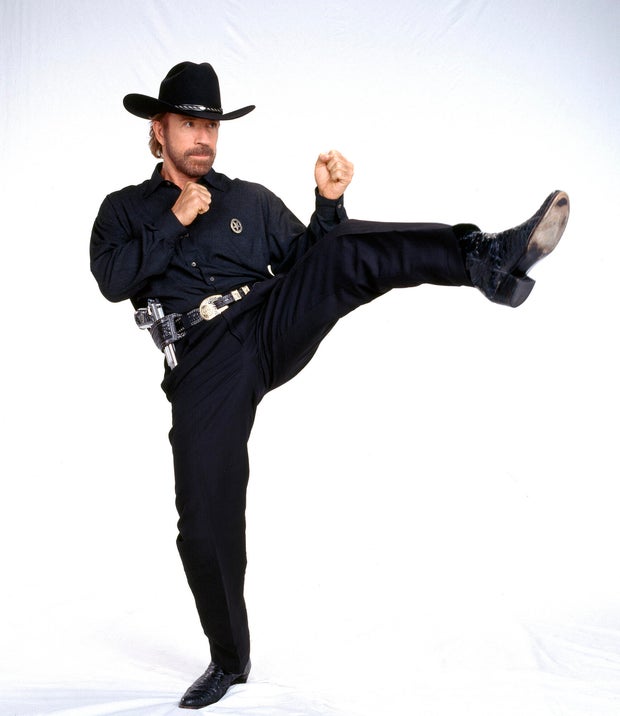
Martial arts grandmaster and action hero Chuck Norris (March 10, 1940-March 19, 2026) started his training in judo and Tang Soo Do while deployed with the Air Force as an MP in Korea. He became a six-time undefeated world professional middleweight karate champion and launched a movie and TV career that spanned more than 30 action films and the long-running CBS series "Walker, Texas Ranger."
After receiving his honorable discharge in 1962, Norris worked at Northrop Aircraft as a clerk and opened a martial arts studio in Redondo Beach, Calif. He developed his own Korean-based American hard style of karate, known sometimes as Chun Kuk Do. The studio became a chain. One student, Steve McQueen, encouraged him to get into acting.
After an uncredited role as a bodyguard in the Dean Martin film "The Wrecking Crew," he received his first credited role in the Hong Kong martial arts film "The Way of the Dragon," opposite Bruce Lee, followed by "Yellow-Face Tiger," playing a San Francisco drug lord. He was then top-billed in a string of popular movies, including "Breaker! Breaker!," "Good Guys Wear Black," "A Force of One," "The Octagon," "An Eye for an Eye," "Forced Vengeance," "Lone Wolf McQuade," "Missing in Action," "Code of Silence," and "The Delta Force." Meanwhile, in the late 1970s he'd founded the United Fighting Arts Federation.
In 1985 he told CBS News' "West 57th," "Think of this: Here I was, a kid who never excelled in any sports in school. I was too small. So, I get into karate and I become a world karate champion. Here's a kid who could not even get in front of a class and give a book report, all the way through school, and now I'm an actor."
For nine seasons, beginning in 1993, he starred in the CBS series "Walker, Texas Ranger," which he described to the Associated Press as "fighting injustice with justice, good vs. bad."
He followed the advice of McQueen, who'd told him, "Don't talk unless there's something to say." "I don't like dialogue that much anyway," Norris told CBS. "It's not in me to be a Dustin Hoffman or a Laurence Olivier. I enjoy the action, because I'm physical. And I enjoy the basic heroic image that I project, that I think is a good image for kids to see.
"The difference between violence and action is the philosophy when you use it," he said. "What I mean there is, if I provoke something, and I get into a physical thing because I've provoked it, I consider that violent. But if I'm put into a position where I have no way of getting out of it except through action or fighting, then there's a certain philosophy there, because the kids say, 'Well, he didn't look for it.'"
While his "tough guy" image made him an icon, it also sparked internet parodies. The viral "Chuck Norris Facts" posed absurd statements alluding to Norris' tough-guy image, such as "When the Boogeyman goes to sleep every night, he checks his closet for Chuck Norris;" and "Chuck Norris can slam a revolving door."
He ultimately embraced the ridiculousness of the memes and penned "The Official Chuck Norris Fact Book," which raised money for a nonprofit (co-founded with President George H.W. Bush) to promote martial arts instruction for children. "To some who know little of my martial arts or film careers but perhaps grew up with 'Walker, Texas Ranger,' it seems that I have become a somewhat mythical superhero icon," he wrote. "I am flattered and humbled."
In 2012 Norris joined fellow action movie stars Sylvester Stallone, Arnold Schwarzenegger, Bruce Willis, Jet Li and Jean-Claude Van Damme in "The Expendables 2." With a wink to his internet memes, Norris' character, a retired military operative named Booker, confirmed that he'd once been bitten by a king cobra: "But after five days of agonizing pain, the cobra died."
Alexander Butterfield
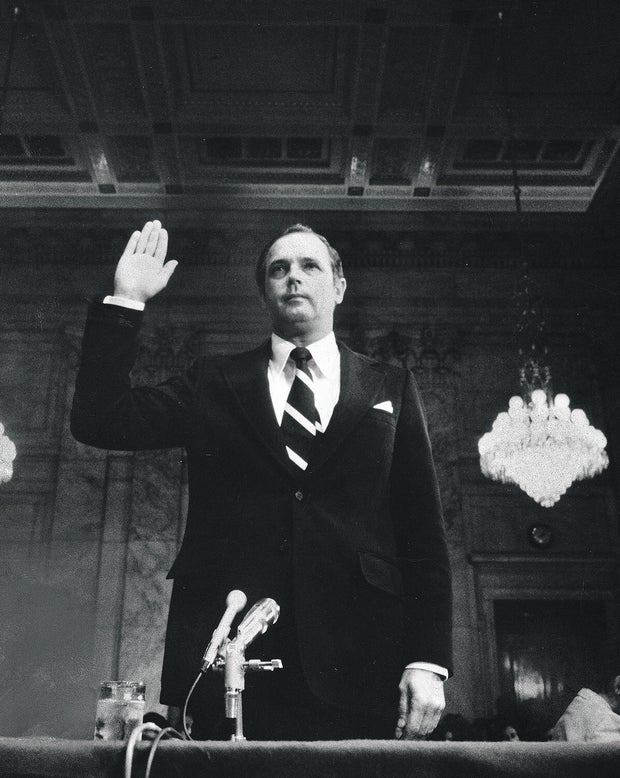
In July 1973, White House aide Alexander Butterfield (April 6, 1926-March 9, 2026) gave dramatic testimony to a Senate committee investigating Watergate. When asked if he was aware of any listening devices in the Oval Office, Butterfield replied, "I was aware of listening devices, yes, sir."
Butterfield, who served as deputy assistant to President Nixon, actually oversaw the secret, voice-activated taping system that was installed in the White House, in Nixon's office in the Executive Office Building, and at the presidential retreat at Camp David. According to Butterfield, it was known only to himself, Nixon, chief of staff H.R. Haldeman (an old college friend of Butterfield's) and several Secret Service agents.
Washington Post reporter Bob Woodward had tried and failed to interview Butterfield, and so he passed his name on to the Congressional committee, who brought him in to testify. Woodward told "Sunday Morning" in 2015 that, had Butterfield not revealed the recording system documenting Richard Nixon's coverup of the break-in at the Democratic National Committee Headquarters, it might never have become known. The revelation of the White House tapes, implicating Nixon, led to the president's resignation.
Butterfield accepted that his admission presaged the president's fall. "I didn't like to be the cause of that, but I felt that I was, in a lot of ways," he said in a 2008 oral history for the Nixon Presidential Library and Museum.
After Butterfield retired to California, he offered Woodward 20 boxes of notes and materials he'd taken from his days at the White House. He also sat for 40 hours of interviews, which became the basis of Woodward's 2015 book, "The Last of the President's Men."
That book would become a beacon for Cassidy Hutchinson, a young Trump White House aide, who, in 2022, was called to testify before the Congressional committee investigating Jan. 6 and the president's actions during the assault on the Capitol. Hutchinson, who said she struggled with the thought of betraying her coworkers, ultimately dropped her legal representation (paid for by a Trump PAC) and testified before Congress.
Hutchinson, who later befriended Butterfield, told "Sunday Morning" that his experience during and after Watergate "really was the source of strength for me, and gave me the perspective not only that I could do this, but that there was life on the other side of it."
Asked by "Sunday Morning" if he would do anything differently with regard to revealing the Nixon taping system, Butterfield replied, "No, I've thought of that a lot. I regret absolutely nothing. I didn't do everything right. But I satisfied myself that I didn't tell a lie."
"Country Joe" McDonald
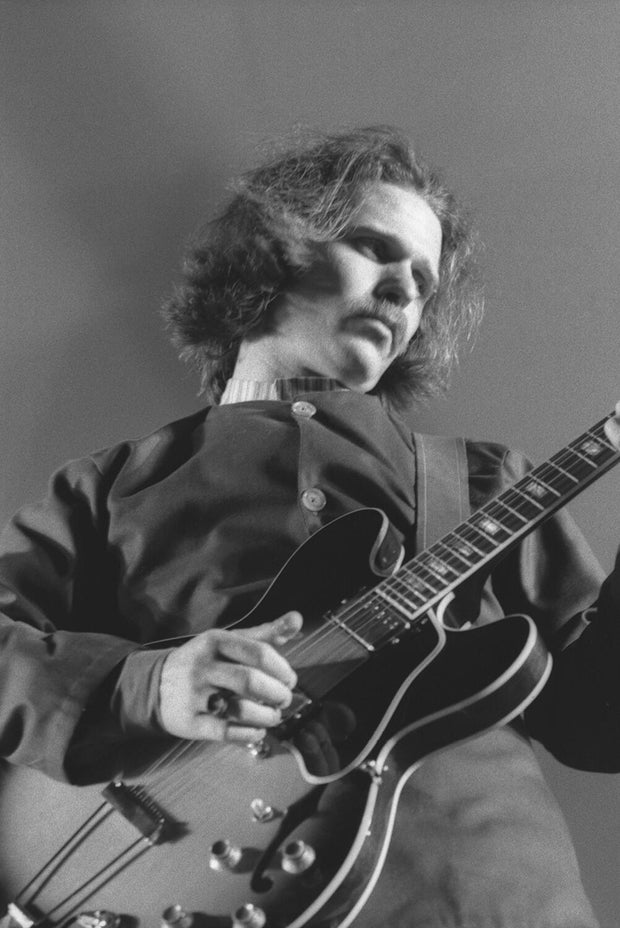
A longtime presence in the Bay Area music scene whose peers included the Grateful Dead, Jefferson Airplane, and Big Brother and the Holding Company, rock star "Country Joe" McDonald (Jan. 1, 1942 – March 7, 2026) wrote or co-wrote hundreds of songs, and was a founding member of Country Joe and the Fish.
Attending college in L.A. following three years in the Navy, McDonald met banjo/guitar player Blair Hardman, and their shared love of folk music figures like Woody Guthrie led McDonald to learn guitar. They recorded an album, "The Goodbye Blues." Moving to Berkeley, he teamed up with Barry "The Fish" Melton, and as Country Joe and the Fish released nearly a dozen albums and EPs, blending protest songs, folk and psychedelic rock, with openly political content.
McDonald would become best known for his 1965 song, "I-Feel-Like-I'm-Fixin'-To-Die Rag," which he performed during Woodstock in 1969. It became an anthem for Vietnam War protesters:
And it's one, two, three,
what are we fighting for?
Don't ask me, I don't give a damn
Next stop is Vietnam.
And it's five, six, seven,
open up the pearly gates,
Well, there ain't no time to wonder why,
Whoopee! We're all gonna die!
The song originally opened with McDonald leading the audience in a four-letter cheer ("F-I-S-H"). Gradually, that chant became a different four-letter word, which led to a cancelled appearance on "The Ed Sullivan Show" and an arrest and fine for using the cheer at a concert in Worcester, Mass.
When he was called as a witness in the trial of the Chicago Seven, he even began performing the song on the stand. The judge interrupted, telling McDonald, "No singing is permitted in the courtroom." He recited the words instead.
When the group disbanded, McDonald continued writing protest songs for different wars ("Support the Troops" was written in response to the Iraq War), as well as on such themes as the environment ("Save the Whales," "Blood on the Ice"), hunting ("Wilderness Trail"), and onetime girlfriend Janis Joplin ("Janis"). His albums included "Thinking of Woody Guthrie," "War War War," "Country Joe," "Paradise With an Ocean View," "Superstition Blues," "Carry On," "Time Flies By" and "50." He also made appearances in movies (including the 1971 "psychedelic western" "Zachariah"), and wrote music for the Danish film "Quiet Days in Clichy," based on a Henry Miller novel.
He had an affinity for nurses ("Lady with the Lamp"), and even dedicated a portion of his website to Florence Nightingale. For nurses serving during the war and caring for veterans, he composed "The Girl Next Door":
She grew up in America, just the girl next door
Never thought to question what we were fighting for
They sent her off to war and showed her death and pain
And the girl next door will never be the same …
She's everybody's savior but her own,
the Army combat nurse,
but who will save her now?
"I'm sort of the Greek chorus," he told The Street Spirit in 2016. "I just ask these questions, and give a voice to people who don't have a voice."
McDonald was conflicted about his anti-war music. The son of parents who were ardent Communists, he'd served in the Navy in Japan, and identified both with protesters and the military serving overseas. He stood, dressed in Navy whites, alongside members of Vietnam Veterans Against the War in Washington, D.C. He also helped organize the construction of a Vietnam Veterans Memorial in Berkeley, which was unveiled in 1995.
Neil Sedaka
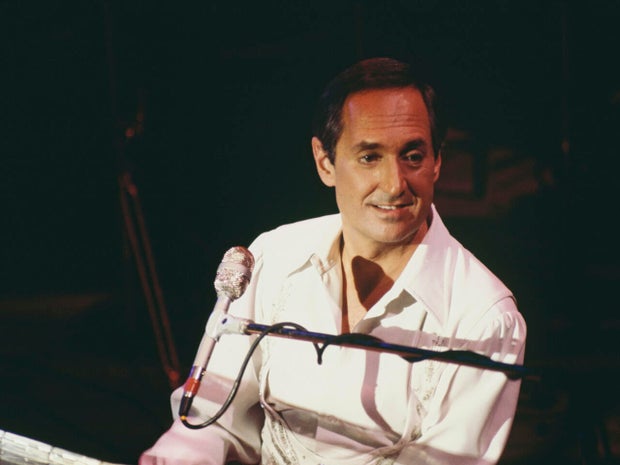
Singer-songwriter Neil Sedaka (March 13, 1939-Feb. 27, 2026) composed songs of love, longing and broken hearts in a career that spanned generations. His songs included the Billboard #1 hits "Bad Blood," "Breaking Up Is Hard to Do," and "Laughter in the Rain," while he also wrote songs recorded by the likes of Frank Sinatra, Elvis Presley and Cher.
Sedaka's rollercoaster career seems appropriate, given he grew up just down the boardwalk from Coney Island, in Brooklyn's Brighton Beach. His musical education began early. When he was 8, a schoolteacher – recognizing his talent – persuaded Sedaka's parents to buy him a second-hand piano. And he had dreams of success. "I used to buy the little 45 records," he told "Sunday Morning" in 2007, "and with a pen, I would scratch out the name of the artist and the songwriter and write down 'Neil Sedaka' to see how it looked."
At age 9, Sedaka received a scholarship to the Juilliard School of Music; he studied there through two years of college. But while playing the classics, he also formed a doo-wop group, The Tokens, with classmates from Brooklyn's Abraham Lincoln High School. He recorded two hit singles with them, including "While I Dream."
Sedaka teamed with a neighborhood friend, Howie Greenfield, and became one of the most successful songwriting duos of all time. Their first hit, recorded by Connie Francis, was "Stupid Cupid," which hit #14 on the charts in 1958.
And he was prolific. By his count, Sedaka wrote more than a thousand songs, including 30 Billboard 100 hits. Between 1958 and 1963, Sedaka sold 40 million records, with such songs as "Oh, Carol" (a tribute to his high school girlfriend Carole King), "Calendar girl," "Happy Birthday, Sweet Sixteen," "The Diary," "You Mean Everything To Me," and "The Dreamer." "It was mind-blowing," he said. "To turn on the radio, I was riding my Chevy Impala, 1959, white convertible with the fins, and I pushed three buttons on my car radio and I heard "Oh Carol" on three stations at the same time. It was like a dream."
And then came The Beatles. The British invasion changed the pop landscape. Sedaka stopped singing, but his songs continued to be sung by other artists, including Tom Jones, Elvis Presley, Frank Sinatra, The Monkees, and The Fifth Dimension.
Sedaka moved to England, which is where he met Elton John, who signed Sedaka to his new label, Rocket Records, and in late 1974, he released the album, "Sedaka's Back." The single "Laughter in the Rain" became Sedaka's signature tune, while his song "Love Will Keep Us Together," became a monster hit for The Captain and Tennille.
Sedaka continued performing into his 80s, and in 2007 released an album, "The Definitive Collection," that debuted at #22 on the Billboard charts.
In 2020 "Sunday Morning" asked Sedaka what makes a pop hit. "There are various notes that go with various chords," he replied. "And if the sentiment is right, it gives you that … in the groin, in the heart. You get those chills."
And he made it so that his music was reachable. "I write vocally," Sedaka said. "Usually not more than an octave and a couple of notes, so that it's singable. You can write songs that everyone knows, but you can't write songs that everyone sings."
Willie Colón

Musician and social activist Willie Colón (April 28, 1950-Feb. 21, 2026) was a trombonist, composer, arranger and singer who blended jazz and rock with classic Latin rhythms. An original talent in urban salsa, he recorded more than 40 albums over a six-decade career, selling more than 30 million copies worldwide.
Nominated for 10 Grammys and one Latin Grammy, he collaborated with a wide range of artists, including the Fania All Stars, Héctor Lavoe, David Byrne, Ismael Miranda and Celia Cruz. His 1978 album "Siembra," with Rubén Blades, was named by Rolling Stone the best salsa album of all time.
Born in the Bronx, Colón studied a variety of instruments from a young age, from the flute and bugle, to the trumpet and, finally, trombone. He began recording at age 16 for Fania Records, which was largely responsible for the burgeoning genre of salsa — a fusion of jazz, rock, funk, soul and R&B with old-school Cuban and Puerto Rican sounds such as Cuban son, cha-cha-cha, mambo, guaracha, jíbara and plena music.
In 2004 he received a special lifetime Grammy from the Latin Recording Academy.
Colón also fought for civil rights, and was part of various community groups, including the Hispanic Arts Association, the Latino Commission on AIDS, the Arthur Schomburg Coalition for a Better New York and the Congressional Hispanic Caucus Institute.
He ran unsuccessfully for Congress in a 1994 Democratic primary. He told The New York Times that he was seeking other challenges. "Sometimes writing a song is not enough," he said.
Eric Dane
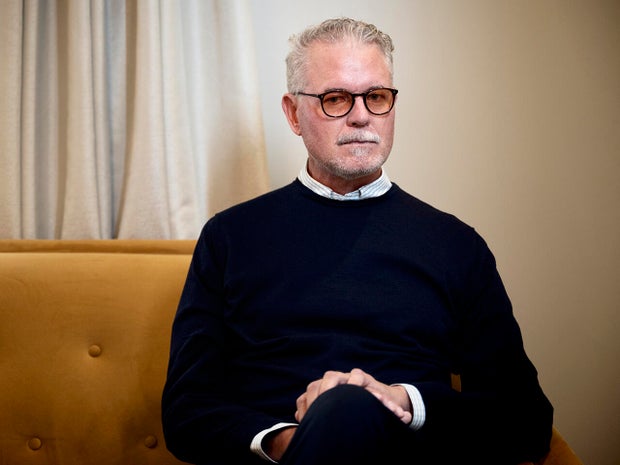
Actor Eric Dane (Nov. 9, 1972-Feb. 19, 2026) rose to fame playing Dr. Mark Sloan in the medical drama "Grey's Anatomy," a popular character dubbed "McSteamy." He later became an advocate for amyotrophic lateral sclerosis (ALS) awareness and research, after being diagnosed with the condition, which is also known as Lou Gehrig's disease.
Born and raised in Northern California, Dane moved to Los Angeles after high school to pursue acting. He earned credits on "Saved by the Bell," "Married...With Children," "Charmed," "Gideon's Crossing," and "X-Men: The Last Stand."
What was initially a guest appearance on "Grey's Anatomy" turned into a regular role that lasted seven seasons, before his character died from injuries suffered in a plane crash.
Beginning in 2019, he starred as Cal Jacobs in the HBO drama "Euphoria." After announcing his ALS diagnosis last year, he shot scenes for the show's third season in a wheelchair. He also made a guest appearance as a firefighter trying to hide his ALS diagnosis on the drama "Brilliant Minds."
Other credits include "Valentine's Day," "Burlesque," "The Last Ship," "The Fixer," and "Countdown."
A memoir, "Book of Days," is scheduled to be published in late 2026. "I want to capture the moments that shaped me," Dane said in a statement about the book. "The beautiful days, the hard ones, the ones I never took for granted, so that if nothing else, people who read it will remember what it means to live with heart."
Rev. Jesse Jackson
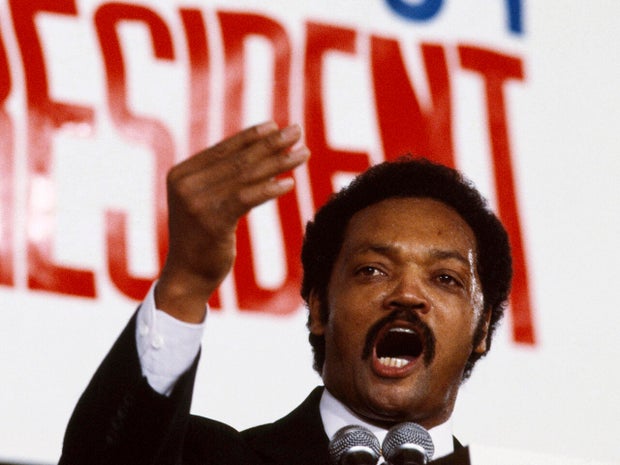
A protégé of Rev. Martin Luther King Jr. and an enthralling orator, Rev. Jesse Jackson (Oct. 8, 1941-Feb. 17, 2026) was an integral part of the civil rights movement, a stirring voice for economic justice and a trailblazing presidential candidate. His runs for the White House in the 1980s, and efforts promoting voter registration, helped set the stage for another politician from Chicago years later, Barack Obama.
Jackson started out as a staff member of the Southern Christian Leadership Conference. An ordained Baptist minister, he joined the voting rights march that King led from Selma to Montgomery, Alabama. King then sent Jackson to Chicago to launch Operation Breadbasket, which pressured companies to hire Black workers.
Jackson was with King on April 4, 1968, when the civil rights leader was assassinated. In 1971, Jackson broke with the Southern Christian Leadership Conference and founded the civil rights organizations PUSH (later the Rainbow/PUSH Coalition) and PUSH Excel in Chicago — groups focused on education and programs designed to secure jobs for Black Americans and business for Black-owned companies. PUSH used lawsuits, and threats of boycotts, to pressure corporations to commit to diversifying their workforces.
In the 1980s, he pursued the highest political office in the nation. He told "Sunday Morning" in 1984 about the desire for common ground — what he called a rainbow vote. "There are many levels where the interests of Blacks, Hispanics, women, teenagers, peace activists, unemployed people, our interests converge, and we must always struggle, it seems to me, to move from racial battleground and polarization to economic common ground," he said. "This is not a struggle for Blacks only. The industrial collapse of auto, steel, electronics, rubber and textile was not Blacks only. The need for a new fuel policy is not for Blacks only. This cry for health and education to be served based upon need, not just based upon wealth, is not Blacks only. So, I think that the coalition is being underestimated."
And even before he entered the Democratic Party's presidential nomination process, Jackson saw beyond the immediacy of a run for the Oval Office: "The energy that we're organizing now is not just focused on the White House," he said. "It's focused on every level of government. We'll be able to translate the energy of this national enthusiasm into higher voter registration, more participation, more coalition. We're not talking about just a person running; we're talking about many people running for Congress and state legislature and supervisor and sheriff and registrar and tax assessor and school board. We're not talking about a kind of one-horse race."
He achieved a few Democratic primary wins during his 1984 run — the first African American candidate to do so. Jackson's statements in support of the Palestinian Liberation Organization drew critics, while his challenging of establishment Democrats was also met with resistance. But in 1988, when Jackson mounted another run, almost 7 million Democratic voters picked him in the primaries and caucuses. He won 12 states, including Michigan and Virginia. (The nomination ultimately went to Massachusetts Gov. Michael Dukakis.)
Even as his health faltered in later years, Jackson continued to speak out against racial injustice. He appeared at the 2024 Democratic National Convention in Chicago, and supported a resolution backing a ceasefire in the Israeli-Hamas war.
He was also a voice in the Black Lives Matter demonstrations. "Even if we win," he told protesters in Minneapolis during the murder trial of the officer who was eventually convicted in the death of George Floyd, "it's relief, not victory. They're still killing our people. Stop the violence, save the children. Keep hope alive."
Frederick Wiseman
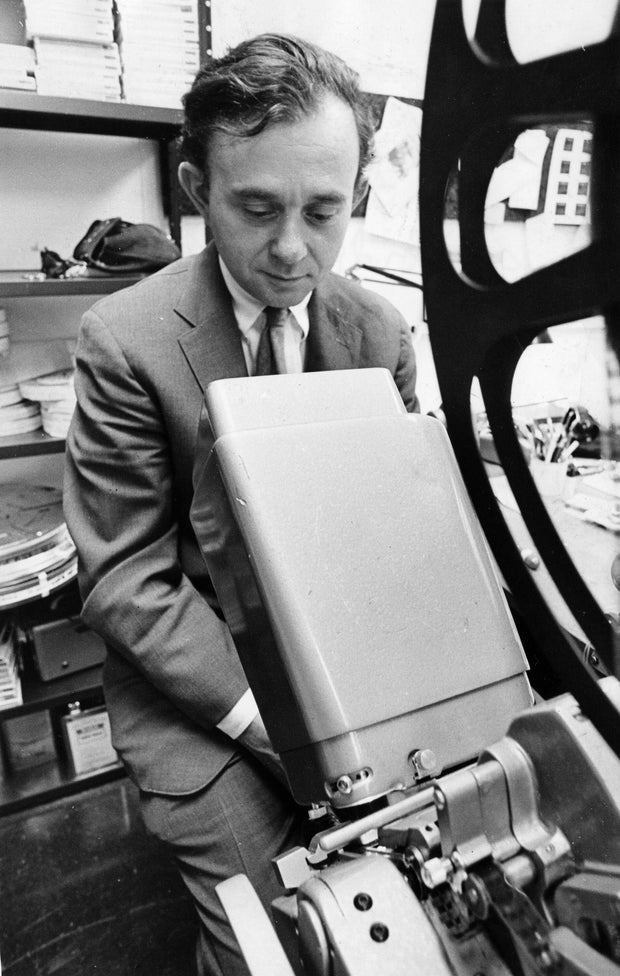
Filmmaker Frederick Wiseman (Jan. 1, 1930-Feb 16, 2026) helped redefine the art of documentaries, with a style that encompassed long, observational studies of institutions and people, usually without voiceover narration, and shot as unobtrusively as possible.
His subjects covered a vast range of society: a suburban high school, a horse racing track, a mental institution, the New York Public Library, a modeling agency, a Boston hospital, a juvenile court, meat production, a boxing gym, a 3-Michelin star restaurant. With no narrative devices imposed, Wiseman's leisurely films — many tip the scales at three, four, even six hours in length, edited down from hundreds of hours of footage — allow his subjects to speak for themselves, without the director passing judgments.
Wiseman told "Sunday Morning," "One of the things I'm trying to do in having done a group of movies is to show as many different aspects of human behavior as I can."
After studying law and producing the 1963 drama "The Cool World," Wiseman was in his mid-30s when he directed his first feature, the scandalous 1967 film "Titicut Follies," which he shot inside the Bridgewater State Hospital for the criminally insane in Massachusetts. The film, which depicts the abuse inmates suffered from sadistic guards, was screened at the New York Film Festival, but Massachusetts officials were successful in obtaining an injunction, claiming the privacy rights of the inmates had been violated. A judge ordered all copies of the film destroyed, but Wiseman won on appeal, though he was prohibited from showing the film outside of medical, legal or other related professional groups.
In the 1990s a Superior Court judge allowed the film's general release on First Amendment grounds, and it was aired on PBS. It has since been selected for the Library of Congress' National Film Registry.
In "High School" (1968), Wiseman recorded life in a suburban Philadelphia school, including an awkward sex education class. Other documentaries — "Hospital," "Public Housing," "Basic Training," "Boxing Gym" — were uncanny in how they invited viewers into the mindsets of the people captured on film. "The institution is also just an excuse to observe human behavior in somewhat defined conditions," Wiseman told The Associated Press in 2020. "The films are as much about that as they are about institutions."
His films could be despairing or hopeful. "I think it's as important to document kindness, civility and generosity of spirit as it is to show cruelty, banality and indifference," Wiseman said when he accepted an honorary Academy Award in 2016.
His film career had evolved after being drafted into the Army in 1955. Stationed in Paris, he began shooting street scenes with an 8mm camera. "I reached the witching age of 30 and figured I better do something I liked," Wiseman told the AP in 2016. "It was just a few years after the technological developments that it made it possible to shoot synchronous sound ... so that opened up the world for filmmaking. And there were so many good subjects that hadn't been filmed, as there still are."
Master Sergeant Juan Valdez

On April 30, 1975, as Saigon fell to the approaching North Vietnamese army, a massive evacuation was ongoing from the capital and surrounding area. At the U.S. Embassy compound, helicopters ferried more than 900 Americans, 1,120 Vietnamese, and third-country nationals to ships offshore. A Marine detachment, led by Master Sergeant Juan Valdez (1938-Feb 15, 2026), helped protect the operation.
Born in San Antonio to second-generation Mexican immigrants, Valdez joined the Marine Corps after high school, and served his first tour of duty in Vietnam beginning in 1965. He returned to the States and became a Company First Sergeant at Camp Pendleton, but in 1974 he was sent to Saigon as commander of the U.S. Embassy's Marine Corps forces.
But once American personnel were cleared from the Embassy during Saigon's fall, Valdez's Marine detachment, which had locked down elevators and barricaded the last door, were on the roof, finding that the last helicopter had departed without them.
"We thought for sure that we were going to be left there," Valdez told "Sunday Morning" in 2025. "You kind of swallow hard, you know, because by that time the tanks were passing by from the Vietnamese."
The compound walls were breached. But then, a CH-46 helicopter appeared to pick up the remaining Marines. Once it landed, Valdez ordered all remaining Marines onto the aircraft. It took off without him.
When a headcount was taken, the helicopter was ordered to the roof again, and three Marines grabbed Valdez and pulled him on board.
"I was the last one to go aboard," said Valdez. "Because I was in charge of them, and whether I stayed behind, so be it, you know, but you always take care of your men first."
He was the last American out of Saigon.
Robert Duvall
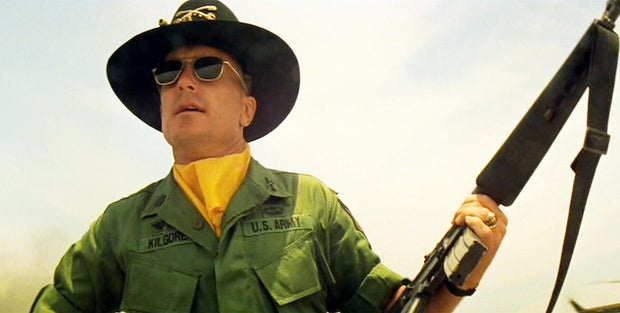
One of the best actors of his generation, Robert Duvall (Jan. 5, 1931-Feb. 15, 2026) starred in such classics as "The Godfather" and "The Godfather Part II," "M*A*S*H," "Apocalypse Now," and "Tender Mercies," for which he won the Academy Award.
In a career spanning nearly seven decades, Duvall was noted for his understated performances, subsuming himself into characters that manifested moral conflicts or ethical struggles — most notably as Tom Hagen, the Corleone family's consigliere, in the first two "Godfather" films; Mac Sledge, a country singer seeking to redeem himself, in "Tender Mercies"; and as Boo Radley, a shy man who befriends young Scout, in the 1962 adaptation of "To Kill a Mockingbird."
But Duvall could also go large, such as his full-throttle performance as Lt. Col. Kilgore in "Apocalypse Now," who leads a helicopter attack on a Vietnamese village in order to secure a safe zone for surfing; Bull Meechum, the overbearing Marine pilot and father in "The Great Santini"; and Frank Hackett, a corporate TV executive who runs roughshod over a news division in "Network."
Even in small parts, he could steal a movie. In 2004, he explained to "60 Minutes" that, whether his characters were heroic or villainous, down-to-earth or tenacious, there's a bit of Robert Duvall in all of them. "Has to be. It's you underneath," he said. "You interpret somebody. You try to let it come from yourself."
The son of a Navy rear admiral, Duvall studied acting in New York alongside Gene Hackman, Dustin Hoffman and James Caan, and after some early TV roles, he made his film debut in "To Kill a Mockingbird."
In "M*A*S*H," Robert Altman's 1970 satire of war, Duvall played Major Frank Burns, a by-the-book Army surgeon whose religious zeal didn't get in the way of his having an affair with the hospital's chief nurse, "Hot Lips" Houlihan (Sally Kellerman). Burns becomes a foil and butt of jokes of other doctors at the M*A*S*H unit, until he is literally driven into a straitjacket
Duvall followed with a lead role in "THX 1138," a science fiction film directed by one of Coppola's friends, George Lucas. But an even bigger role was Duvall's supporting turn in Coppola's "The Godfather." Cast opposite Marlon Brando, James Caan and Al Pacino, Duvall played an Irish lawyer who had been "adopted" into the Corleone family — his sole client. Balancing the wishes of Brando's Vito Corleone, the hot-headed antics of Caan's Sonny, and the resistance of Pacino's Michael, Tom Hagen was a tested voice of reason, a deliverer of bad news, and an instrument of revenge. He repeated the role in "The Godfather Part II." But when Coppola went to film Part III of his gangster saga, Duvall and the studio couldn't come to terms on salary, and so Tom Hagen was killed off.
One of his most celebrated roles was in Coppola's "Apocalypse Now," playing Lt. Col. Kilgore, who heads a helicopter attack on a suspected Viet Cong village, blaring Wagner on loudspeakers. Kilgore's bare-chested speech ("I love the smell of napalm in the morning … it smells like victory"), as a forest is incinerated nearby, articulated the brutality and insanity of war, and became one of cinema's iconic moments. Duvall took his role seriously, even as explosives were discharged all around him. "I played a guy that didn't flinch, so I didn't flinch. You know what I mean?" he told Esquire magazine in 2014. "I played that kind of guy — a non-flinching guy. If you flinch when the script says not to flinch, you should be fired."
For "Tender Mercies," playing an alcoholic country singer trying to make a spiritual and professional comeback, he sang every song himself. "They were trying to get around it," Duvall told "Sunday Morning" in 2006, "but I said, 'No, no. This has to be part of it. You cannot dub [another singer] later. I have to do that.'"
Duvall had said his favorite role was Gus McCrae, the Texas Ranger turned-philosopher cowboy, in the 1989 TV miniseries "Lonesome Dove." He directed three films: "Angelo, My Love"; "The Apostle," in which he played a Pentecostal preacher on the run from the law; and "Assassination Tango," which was his tribute to Argentine dance.
The qualities of Duvall's work, from the histrionic to the silent, were evident in the naturalness of his delivery. As he said to "Sunday Morning," "What makes what I do work? It's this, what we're doing right now: talking and listening. … That's the beginning and the end. The beginning and the end is to be simple."
James Van Der Beek
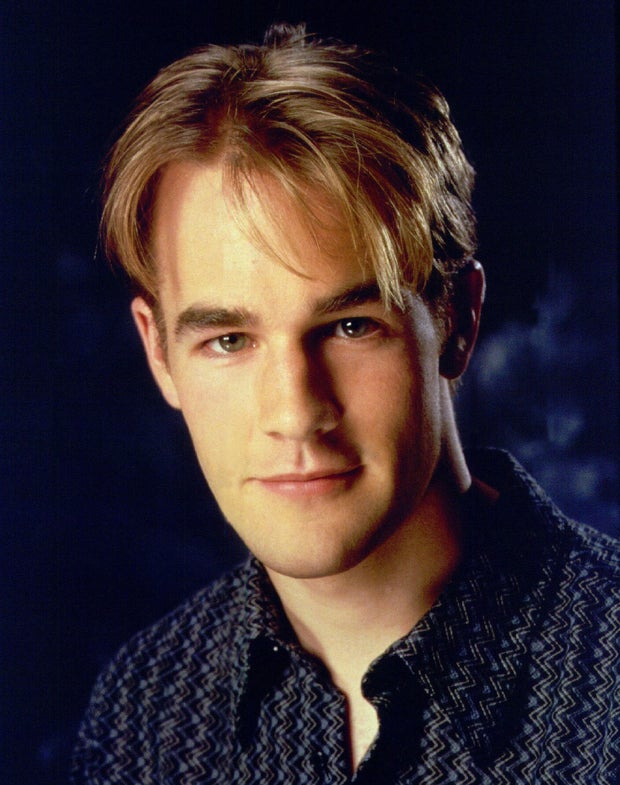
James Van Der Beek (March 8, 1977-Feb. 11, 2026) became a star, at age 20, as the lead in the drama series "Dawson's Creek," playing Dawson Leery, a teenager and aspiring filmmaker in a budding romantic relationship with a neighbor, Joey (played by Katie Holmes). The show, chronicling the ups-and-downs of their romance, ran on The WB for six seasons.
"It's tough to compete with something that was the cultural phenomenon that 'Dawson's Creek' was," he told Vulture in 2013. "It ran for so long. That's a lot of hours playing one character in front of people. So, it's natural that they associate you with that."
Raised in Cheshire, Connecticut, Van Der Beek began acting after suffering a concussion playing football at 13, and starred in a school production of "Grease." He landed an off-Broadway role, at age 16, in Edward Albee's "Finding the Sun." He also appeared in a revival of the musical "Shenandoah" at the Goodspeed Opera House.
Post-"Dawson's Creek" credits included "Varsity Blues," "Texas Rangers," "The Rules of Attraction," "One Tree Hill," "Mercy," "Downsizing," "Jay and Silent Bob Strike Back," "How I Met Your Mother," "CSI: Cyber," and "Criminal Minds." He also appeared in Funny Or Die videos, and in the Viceland mockumentary satire "What Would Diplo Do?"
"The more you make fun of yourself and don't try to go for any kind of respect, the more people seem to respect you," he told Vanity Fair in 2011. "I've always been a clown trapped in a leading man's body."
Bud Cort
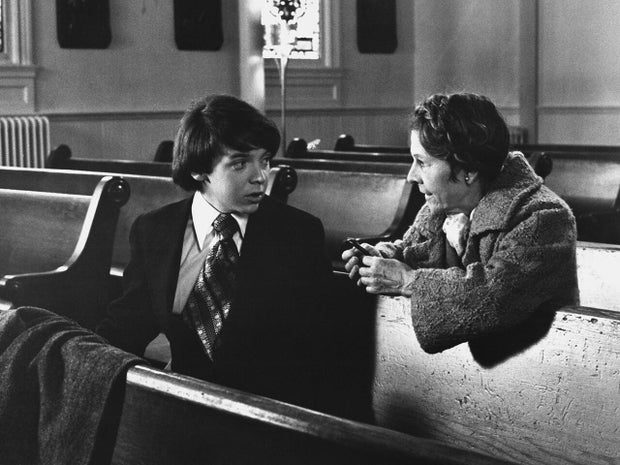
Character actor Bud Cort (March 29, 1948-Feb. 11, 2026) was most famous for a role he played in his youth, in the 1971 cult hit "Harold and Maude," Hal Ashby's dark comedy about a morbid young man who begins a relationship with a geriatric free spirit (played by Ruth Gordon). The quirky romance earned him Golden Globe and BAFTA nominations.
Born Walter Cox, he adopted a stage name courtesy of New York's Cort Theatre. He appeared in films by Robert Altman ("MASH," "Brewster McCloud"), Michael Mann ("Heat"), Wes Anderson ("The Life Aquatic with Steve Zissou"), Tobe Hooper ("Invaders From Mars"), Ed Harris ("Pollack"), and Keith Gordon ("The Chocolate War").
His career was disrupted by a near-fatal car crash in 1979, when he suffered multiple fractures, facial lacerations and a concussion.
Cort was the voice of a computer in the comedy "Electric Dreams," Sigmund Freud in "The Secret Diary of Sigmund Freud," and God in Kevin Smith's "Dogma." In 1991 he directed, co-wrote, and starred in "Ted and Venus." Other credits included "And the Band Played On," "Arrested Development," "Ugly Betty," and "Criminal Minds."
In 2010 he talked with The New York Times about how his role as the death-obsessed Harold Chasen became something of a curse: "I didn't make a film for five years because everything I was offered was that same kind of a character," he said. "Because I worked so hard on that performance, everyone assumed I was that person. I've been through the whole thing of being followed around. People used to come to my hotel and leave tombstones and pictures of dead babies. I try to talk to them, tell them they missed the point of the movie."
Demond Wilson
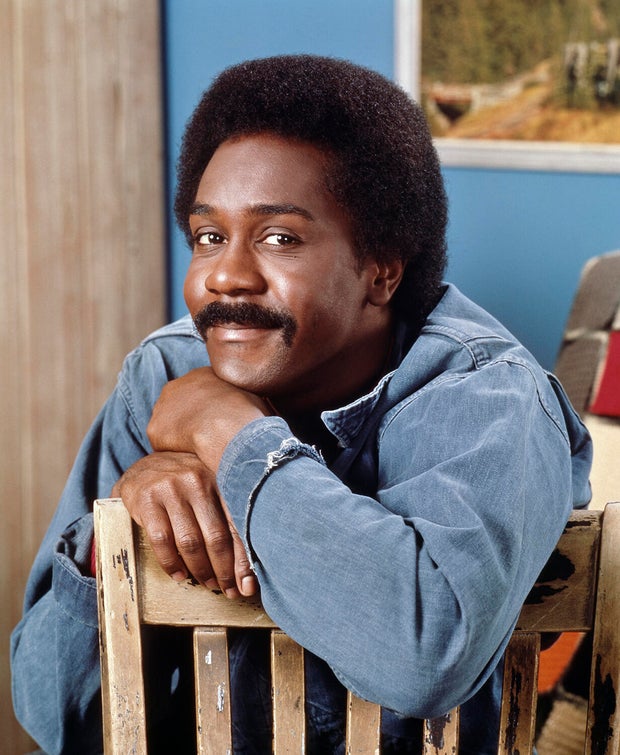
Demond Wilson (Oct. 13, 1946-Jan. 30, 2026) was best known for playing Redd Foxx's son Lamont on "Sanford and Son" in the early 1970s. Adapated by Norman Lear from the British comedy "Steptoe and Son," about a grumpy and irascible junk man and his aspirational adult offspring, "Sanford and Son" was one of the earliest American sitcoms to feature a predominantly Black cast, and was for many years NBC's top-rated show.
Born in Valdosta, Georgia, Wilson grew up in Harlem. As a child he appeared on radio and danced on the stage of the Apollo Theatre. As a teenager, a ruptured appendix led him to promise to devote himself to God.
He was wounded while serving with the Army in Vietnam, and upon his return to New York began acting off-Broadway, before going to Hollywood. After a guest role on Lear's "All in the Family," he was hired for one of the leads in "Sanford and Son." In 2022, Wilson told the Associated Press that he was competing with Richard Pryor for the role opposite Foxx. "I said, 'C'mon, you can't put a comedian with a comedian. You've got to have a straight man,'" he said he told producers.
Debuting in 1972, the show ran on NBC for six seasons, and spent most of its run in the Nielsen Top 10 (frequently second only to Lear's "All in the Family"). The series ended when ABC lured Foxx away to host his own variety show.
Wilson later starred in the TV shows "Baby I'm Back" and "The New Odd Couple" (playing Oscar Madison). He also appeared in "Girlfriends" and the film "The Organization." But he did not find acting fulfilling, and in the 1980s he became an ordained minister. "Show business did not come out of me. I came out of show business," he told Jet Magazine in 1985.
He also founded Restoration House of America, an organization that helps rehabilitate prison inmates and the formerly incarcerated, and wrote several books, including children's stories.
Catherine O'Hara
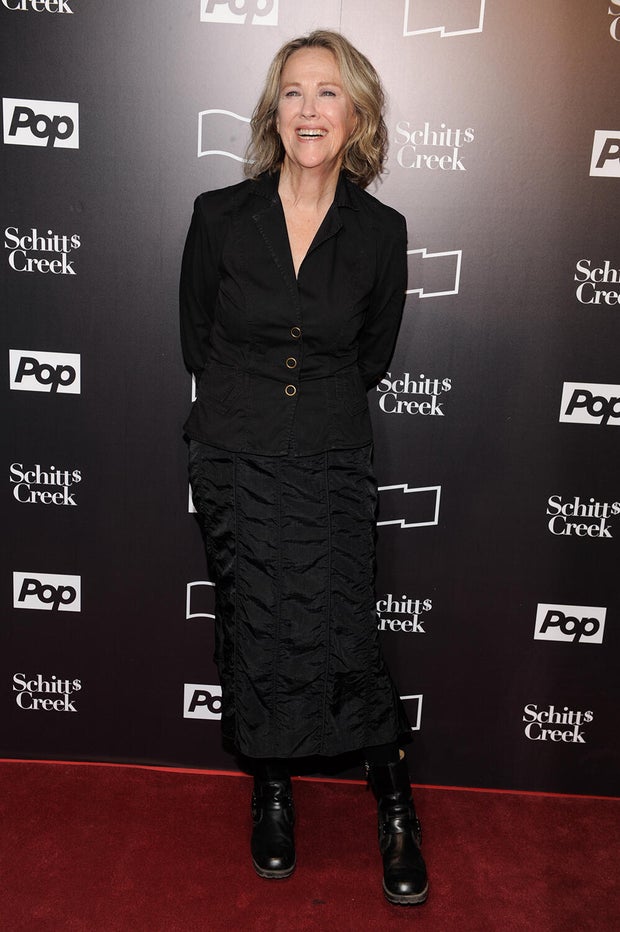
Emmy-winning actress Catherine O'Hara (March 4, 1954-Jan. 30, 2026) was best-known for her roles on the sketch comedy series "SCTV," "Schitt's Creek," and the films "Home Alone" and "Beetlejuice."
Born in Toronto, O'Hara grew up in a family that encouraged being funny, she told The New York Times in 2016: "My dad would tell jokes, and my mom would tell stories and imitate everyone within the stories. I think everyone is born with humor, but your life can beat it out of you, sadly, or you can be lucky enough to grow up in it."
A member of the Second City improv troupe, where she originally understudied for Gilda Radner, O'Hara helped create the Canadian series "SCTV," for which she played a multitude of characters alongside cast members John Candy, Joe Flaherty, Eugene Levy, Andrea Martin, Dave Thomas and Harold Ramis. O'Hara dropped out of the cast for its third season, but rejoined after the show moved from syndication to NBC and then Cinemax. She won an Emmy as a co-writer.
Among her movie roles, O'Hara played quirky supporting characters in Martin Scorsese's "After Hours" and Tim Burton's "Beetlejuice," and was also featured in "Dick Tracy," "The Paper," "Wyatt Earp," and "Orange County." But her most recognized role was as Macaulay Culkin's mother in "Home Alone." She was also part of Christopher Guest's ensemble in his improvisational mockumentaries, including "Waiting for Guffman," "Best in Show," "A Mighty Wind," and "For Your Consideration."
Her biggest splash was as flamboyant matriarch Moira Rose in "Schitt's Creek." The show, created by her "SCTV" costar Eugene Levy and his son Dan, centers on a wealthy family losing all their money and being forced to live in a motel in a small town.
In 2016 O'Hara told "CBS This Morning" she had some initial reservations about doing the series. "You never know how long it'd go, and to lock into one character, that's kind of scary," she said.
"Schitt's Creek" ran for six years, and in its final season won nine Emmys.
In addition to winning for playing Moira Rose in "Schitt's Creek," she was also Emmy-nominated for "Temple Grandin," "The Last of Us," and "The Studio."
O'Hara shared with The New York Times her improv secret: "My crutch was, in improvs: when in doubt, play insane. Because you didn't have to excuse anything that came out of your mouth. It didn't have to make sense."
Dr. William Foege
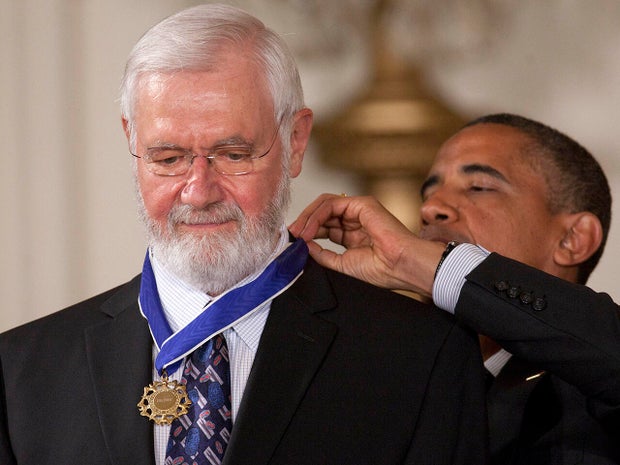
Dr. William Foege (March 12, 1936-Jan. 24, 2026), a physician and epidemiologist, was a leader in the global eradication of smallpox — one of humanity's greatest public health victories.
His interest in global health was an outgrowth from his time when, at age 15, he was stuck in a body cast for three months. "We did not have television at that time," he said in a 2021 interview for Exemplars in Global Health. "So, I was forced to read, and came across Albert Schweitzer, and became interested in Africa, and in medicine."
Following medical school, and years before he served as director of the Centers for Disease Control and Prevention, Foege was a member of the CDC's Epidemic Intelligence Service, as well as the Peace Corps, and studied at Harvard School of Public Health, where his interest in smallpox took hold.
Smallpox vaccination campaigns were well established by that time. In fact, the disease was no longer seen in the U.S. But infections still occurred elsewhere.
As a medical missionary in Nigeria in the 1960s, Foege and his colleagues developed a "ring containment" strategy, in which a smallpox outbreak was contained by identifying each smallpox case and vaccinating everyone with whom the patients might come into contact. The method relied heavily on quick detective work and was born out of necessity; there simply wasn't enough vaccine available to immunize everyone, Foege wrote in his 2011 book "House on Fire."
It worked, and was instrumental in ending the spread of the disease. The last naturally-occurring case of smallpox was spotted in Somalia in 1977. Three years later, the World Health Organization declared smallpox eradicated for good.
From 1977 to 1983, Foege was director of the CDC. He was later executive director at The Carter Center, and senior fellow at the Bill and Melinda Gates Foundation. In 2012, he received the Medal of Freedom from President Barack Obama. He was called "the Father of Global Health" by Duke University President Richard Brodhead.
Foege said in the 2021 interview that he advises students to think about editing their own obituary every day:
"'You won't realize it, but if you wake up in the morning knowing that you're going to edit your obituary, it makes a difference what you will try to do that day.' Is there a unifying field theory in all this? Yes. We belong to a group of optimists who believe that we can change the future. So, you wake up every morning knowing that you're changing the future."
"Uncle Floyd" Vivino
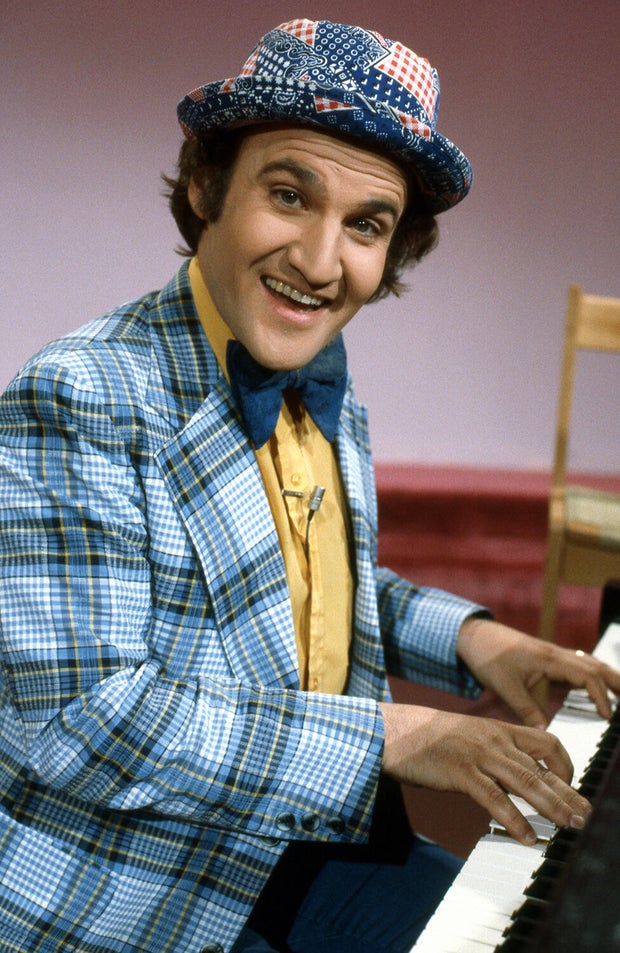
Beginning in the mid-1970s, "The Uncle Floyd Show" was a low-rent affair, broadcast from a UHF station whose studios were housed in an actual house in West Orange, New Jersey. Hosted by comedian and piano player Floyd Vivino (Oct. 19, 1951- Jan. 22, 2026), with a puppet named Oogie and a menagerie of vaudevillian sidekicks, the series — filled with corny jokes and skits, honky-tonk piano, musical acts, and letters from viewers — was ostensibly a children's variety show, but it played more as a parody of kids show hosts like Soupy Sales (and presaged later ironic kids shows like "Pee-Wee's Playhouse").
"We produced the shows without a script and never a rehearsal," he told NJ Arts in 2024.
The show appealed to older kids and to punk artists (Cyndi Lauper, Bon Jovi and The Ramones were musical guests). When David Bowie met Vivino backstage at a New York appearance, he told him he'd learned of "The Uncle Floyd Show" from John Lennon. Bowie even name-checked Uncle Floyd in his song "Slip Away."
"The Uncle Floyd Show" developed a cult following. A broadcast window on NBC's late-night schedule in the early '80s, airing after David Letterman, was short-lived, and the show returned to cable until 2001.
Vivino, who hailed from a theatrical family and attended the American Academy of Dramatic Arts in New York, wore his love for all things New Jersey on his sleeve. (His anthem was "Deep in the Heart of Jersey.") In addition to his live revue shows and charity events, he hosted radio broadcasts and podcasts, and made a few film appearances, including playing an Armed Forces Radio DJ opposite Robin Williams in "Good Morning, Vietnam."
In a 2011 newspaper interview, Vivino described giving a performance while a high school student in Glen Rock, N.J. in 1968: "The orchestra was playing 'Everything Is Coming Up Roses' and I felt the rush of 600 people clapping for me. It was then and there that I knew I was going to be an entertainer. I did not belong on the basketball court or in the science lab."
Valentino
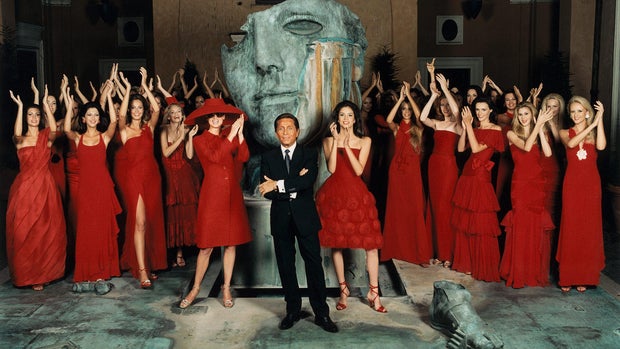
The designs of Valentino Garavani (May 11, 1932-Jan. 19, 2026) were fashion-show staples for nearly half a century. Known by his first name, Valentino clothed royals, first ladies and movie stars, from Jackie Kennedy Onassis, Princess Diana and Queen Rania of Jordan, to Julia Roberts and Cate Blanchett.
Born into an affluent family in the northern Italian town of Voghera, his love of movies — and movie stars — lead him to fashion. He studied in Milan and Paris, and worked for designers Jean Desses and Guy Laroche, before launching his own firm in Rome in 1959.
"Why I ever thought I could go out on my own like that, God only knows," Valentino told The New Yorker in 2005. "But my parents gave me a little money and I started. I had no idea what I was getting into. Sometimes ignorance is a wonderful thing."
Besides his trademark shade of red, Valentino's recognized flourishes included bows, ruffles, lace and embroidery.
Valentino's firm would expand to include ready-to-wear, menswear and accessories. In 1998, he and his partner, Giancarlo Giammetti, sold the label to an Italian holding company for an estimated $300 million, with Valentino remaining in a design role until 2008.
In a 2016 interview with The Talks, Valentino said beauty was the most important thing to him: "Since I was a child I loved the way a dress looks, I admired a great face, a lovely body. I enjoy the beauty in a woman, in a man, in a child, in a painting. Beautiful things are important and make life important. Since I was a kid, I've been encouraging myself to appreciate beauty."
Bob Weir
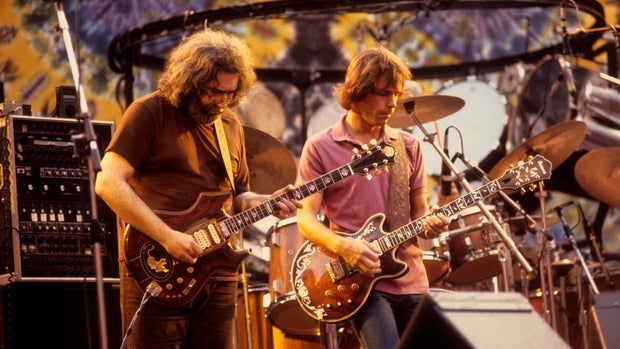
In 1963, Jerry Garcia met singer and musician Bob Weir (Oct. 16, 1947-Jan. 10, 2026) in a Palo Alto, California, music shop. Weir was 16, struggling in school but showing promise on the guitar. With drummer Bill Kreutzmann, bassist Phil Lesh and keyboardist Ron "Pigpen" McKernan, they soon founded what became one of the world's most beloved bands, creating improvisational jams of blues, jazz, folk, country and psychedelia.
The Grateful Dead grew into a touring powerhouse, playing for an army of loyal fans as they built a presence spreading from the San Francisco Bay Area. Over three decades they only had one Top 10 hit (1987's "Touch of Grey"), but at their peak, they took in $50 million or more a year from live shows. In the days before social media and viral marketing, "Deadheads" were encouraged to record concerts and trade tapes, creating an archive of performance art unparalleled in the music industry.
"Longevity was never a major concern of ours," Weir said during the 2025 Grammys, when the Dead received the MusiCares Persons of the Year honor. "Spreading joy through the music was all we ever really had in mind, and we got plenty of that done."
It looked like the "long, strange trip" would end when Garcia died in 1995 at the age of 53. But the Dead continued — and Weir was instrumental in keeping the sound of San Francisco's counterculture alive. The remaining band members played together and, in collaboration with guitarist John Mayer, also toured as Dead & Company. Weir also released live albums with Wolf Bros., and even performed Dead music with symphony orchestras — truly classic rock. Weir also founded the Tamalpais Research Institute, a high-tech studio for streaming live audio and video on the internet.
In 2024 the Grateful Dead were named Kennedy Center Honorees.
"A song is a living critter," Weir told "Sunday Morning" in 2022. "If I may wax hippie metaphysical for you, the characters in those songs are real. They live in some other world, and they come and visit us through the musicians, through the artists who have dedicated their lives to being that medium and inviting those critters from other worlds to come and visit our world and entertain the folks, because that's all they want to do. It's they just want to meet us and we meet them, and that's what we do."