Urban Assembly Maker Academy's Teens for Food Justice hydroponic farm fills an educational and nutritional void

The Teens for Food Justice Hydroponic Farm at the Urban Assembly Maker Academy is a triumph.
From the moment the switch was flipped in January of 2025, this endeavor has grown exponentially. Rows of fresh vegetables, from cucumbers to kale to basil to arugula, are all grown there, and the kids are responsible for it.
"There's not a lot of healthy alternatives to eat in schools"
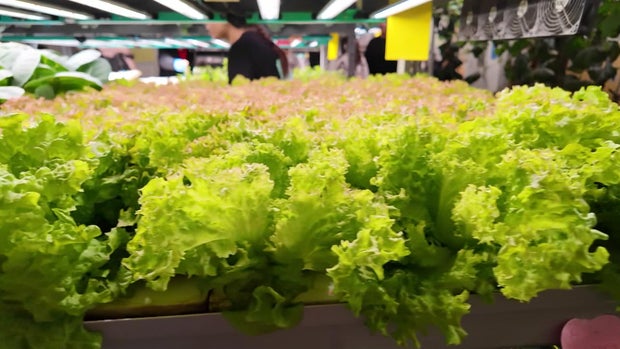
"I've been working with the hydroponics clubs since freshman year, and in the beginning we had a much smaller operation upstairs in a classroom with, like, only two little towers. And now to have this much expansion is really impressive, because it just shows how much the scale can move towards, you know, increasing production. And then also it's much faster at growing," student Winter Collin said.
The students recognized a nutritional void.
"Usually in a lot of schools, especially in New York City, there's not a lot of healthy alternatives to eat in schools or not even just in schools in your community. There's not lot of healthy alternatives," student Fama Sall said.
"Everyone deserves a chance at good, high quality, healthy, clean produce"
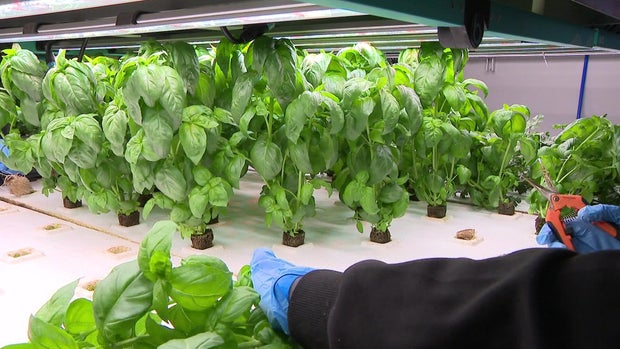
At the school, the definition of a "maker" is "when we see a human need that is not being met, we make things." The hydroponic farm will grow 10,000 pounds of produce annually for free community distributions with their partners at Gotham Park, which provides fresh produce to NYCHA houses. They fill the cafeteria salad bar, and for families of Maker students.
"One of our key things that we have to keep in mind whenever we're doing this kind of work is food justice. And it's the idea that no matter who you are or where you are, everyone deserves a chance at good, high quality, healthy, clean produce. So in a city where, as I said before, inequality is visible, it's definitely valuable. And it makes me happy to do this kind of work," student Marcus Perez said.
"Twice a month, we get produce [to] the entire campus. So all four schools, staff, janitors, the police guards, anybody can come and get a full bag of produce. Every single Thursday, we give to Gotham Park, which is our community partner. They run the park right underneath the two bridges, and they give away to the elderly, the seniors, anyone with assisted living in the neighborhood. And we also do after school programming," student Francesca Whitecross said.
"A great opportunity for expanding what we're learning"
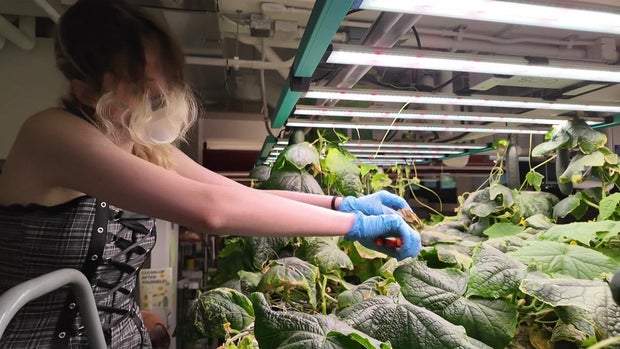
The deep-rooted level of interest and involvement of the students, the ability to see a problem and fix it is the kind of growth Maker students experience. On the big harvest day. The bags of fresh vegetables on the move seem endless. The assembly line of fresh produce is then en route to those in need.
"It's incredible. I think having a resource like this is really impressive and very unique for our high school, but also a great opportunity for expanding what we're learning outside of just typical math, science, history," Collin said.
Instead, they are making history. The in-school hydroponic farm has grown rows of produce and greens as far as the eye can see, and all of the students see to it that no one is left out.
"It makes like all these students, I feel they can make a change, like, especially through harvesting," said Sall.
"It's honestly astounding the amount of progress that we've made in this school as, you know, an educational institution. It is great to give people from all across this city this type of opportunity," Perez said.
"We got a lot of interesting takes about kohlrabi, or collards, or arugula, and then coming out of the classroom saying, hey, actually, I'm going to come back during lunch and get some more. Or I'm gonna come back after school and take some extra basil to bring home to my family and show them how I cooked it in class. And that's felt really good," said Whitecross.