As animals freeze and starve in extreme cold, a Long Island nature center works around the clock to save them

New York wildlife volunteers say cries for help are pouring in about animals struggling in the record cold and persistent snow this winter.
In response, Long Island's Sweetbriar Nature Center has been working around the clock to save starving, freezing and injured animals in the harsh weather.
Red-tailed hawk rehabs from starvation
At the Smithtown nature center, a red-tailed hawk is fighting his way back after a volunteer found the bird face down and starving last week in the snow around Northport.
"She was literally able to walk over, pick him up and put him in a box," said Janine Bendicksen, director of wildlife rehabilitation at Sweetbriar. "He was thin, very thin, meaning that he wasn't finding food."
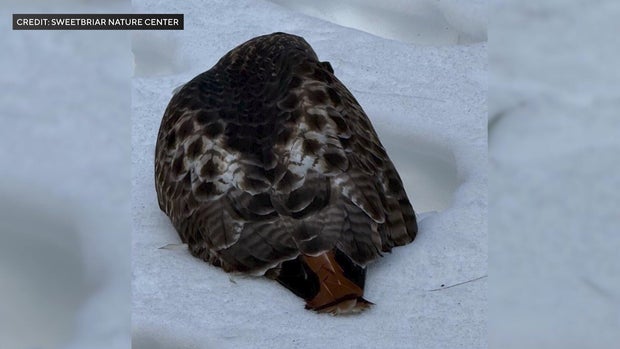
Bendicksen said the hawk was suffering from starvation, not bird flu, but it was quarantined just in case.
"His eyes were very puffy and swollen. He was kind of off, a little bit," she said.
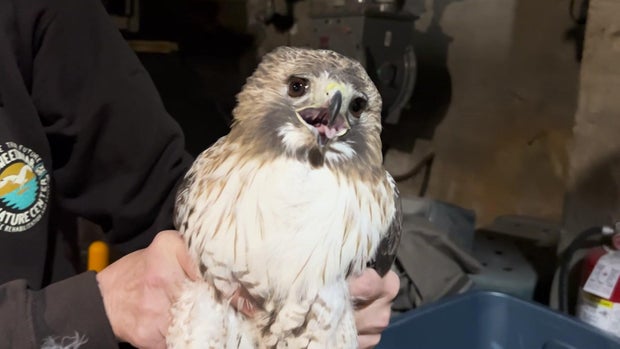
The hawk is expected to recover and be released back into the wild depending on his strength and the weather conditions, but experts say many other animals won't be as lucky.
Skyrocketing calls about animals too weak to survive
Sweetbriar said calls have jumped up to 100 per day about animals too weak to survive on their own.
"People are finding animals everywhere," Bendicksen said.
The center now has an entire room filled with birds saved from the cold. All were thin and hungry and will stay until conditions improve.
"This is the longest ground cover that we've had in a long time," Bendicksen said. "It's just difficult for everybody to find food."
Patches of food are finally emerging as the snow slowly melts, but after weeks of hunger, experts say those small openings are turning into battlegrounds.
Another volunteer rushed in with a young swan found hungry, weak and bloodied after a fight in Oakdale.
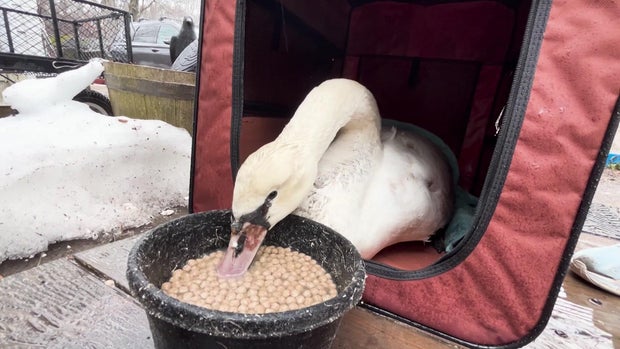
"They're claiming these parts for themselves, so they're more likely to be aggressive toward the other swans," volunteer Nancy Prior said.
As winter slowly loosens its grip, the animal rehabilitators hope rising temperatures will ease the strain on wildlife.
"This time of the year, it's so hard for them," Prior said.