Developer of unstable building in NYC says it was never in danger of collapse

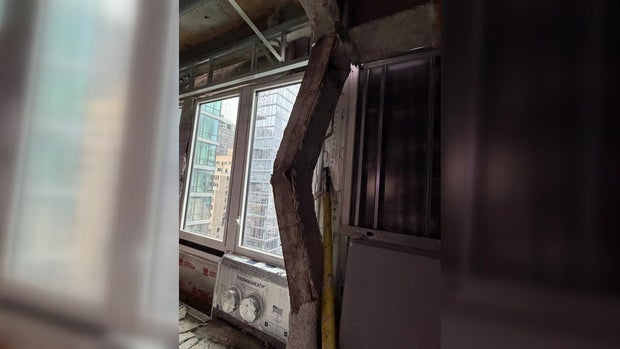
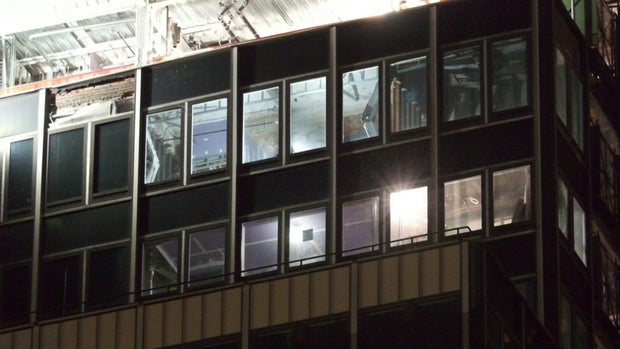
Construction crews have been working night and day to stabilize a building on 42nd Street that had two columns buckle and several floors begin to sag.
The former Pfizer headquarters, which is in the process of being converted from office to residential use, remains under close watch as engineers continue investigating what caused the failure.
The project involves adding more stories to an existing building.
Crews have been reinforcing the building since those two structural columns buckled.
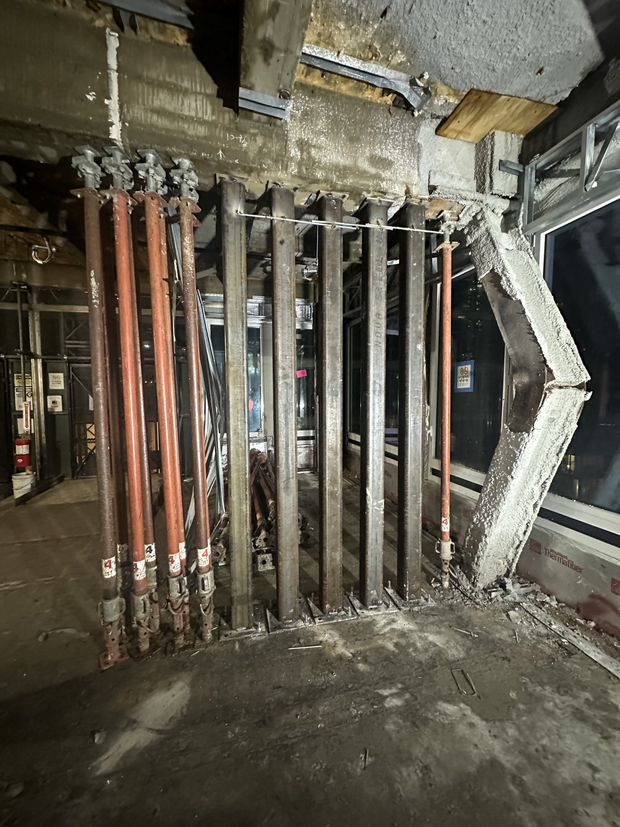
Officials say significant progress has been made in stabilizing the building. Department of Buildings inspectors and engineers remain on site around the clock. There's been no movement of the building in the last 24 hours, officials say.
Supports are being added to every floor from the ninth floor up to the roof. Large carts of pipe columns could be seen outside the building Wednesday.
Four other buildings remain evacuated as a precaution. Wednesday afternoon, 42nd Street between Second and Third avenues reopened to vehicular traffic.
Gus Manessis, owner of a nearby pizzera, said his business is suffering and is not even half of what it would typically be.
"Of course it is an inconvenience to me, but you live in New York City, you're ready for anything," area resident Elinor Ruskin said.
"He's trying to cut corners"
Nathan Berman, the principal and founder of developer MetroLoft, spoke with CBS News New York's Lisa Rozner extensively about what he thinks may have gone wrong.
He said the building was never at risk of collapsing, adding the worst he thinks would've happened is the sagging would have increased by "another four or five inches."
The union blamed the two failing columns and sagging floors on the fact that most of the job was done by non-union workers.
Outside the building Wednesday, a moving billboard reading "Shame on MetroLoft" could be seen.
"OK, he's trying to cut corners," said Anthony Williamson of Construction and General Building Laborers' Local 79.
"We're not fully union, and we're not fully non-union. But we do have union labor on site. That's number one. Number two, it's a little self-serving for the unions now to pile on and claim safety concerns when we've clearly identified the issue," Berman said.
The shoring-up work should be completed by Wednesday night or Thursday morning, he said.
"We may have missed the two columns that buckled"
So what does Berman think caused the issue?
"It's not a design issue. This issue is strictly structural, has nothing to do with the conversion aspect of it. It is very strictly structural. We put more load on the columns than they could support," he said.
Berman pointed to possible human error.
"A certain section of a new addition in the building, in this massive building, having added a certain amount of load to the existing building and having reinforced most of the other columns, we may have missed the two columns that buckled," he said. "We may have not reinforced them properly, or we may have missed them."
"This building never was in any risk of any sort of collapse"
Berman said the impacted area encompassed 18,000 square feet in a building that's 950,000 square feet.
"It is a small section of the building that has a problem, and in terms of the overall building, it is less than three or four percent of the building. So in reality, this building never was in any risk of any sort of collapse or any portion of this building was at any risk of collapse," he said.
Berman praised the city's response to the situation.
"They did absolutely the right thing by blocking traffic to make sure they have time to secure the site and do their proper inspection, which they have," he said.
"Being blown out of proportion"
Berman said the project will still go forward and will be completed in a year, on schedule.
He said he thinks future renters in the building will understand "when something is being blown out of proportion." He said that person will also understand the quality of construction of office buildings that are being converted to residential use is "far superior to anything you can afford to build today ground up."
Berman said buildings constructed in the 1950s and 1960s "were built to different loads, to much higher loads than is required today for residential use" and are "sturdier than anything you could afford to build today."
The buildings have taller ceilings and "will outlast" any recent new construction, according to Berman.


