As Legionnaires' disease spreads in NYC, doctor explains the science behind the outbreak
The Legionnaires' disease outbreak in New York City is now blamed for another death and continues to spread. Three people have died and at least 64 others have gotten sick since the outbreak was first reported on July 25.
CBS News New York spoke with one doctor who explained anyone can be diagnosed with the disease, and some people are more at risk.
"Unfortunately, there's nothing that one can do to prevent it if it is around and you're breathing it in," said Dr. Aaron Glatt, Chair of Medicine and Chief of Infectious Diseases at Mount Sinai South Nassau Hospital. "However, fortunately, most people don't get it, and, fortunately, most people, if they do get it, don't get extremely sick from it.
"But people that are at higher risk -- people that have underlying lung diseases, people who have other medical problems -- they can be much more susceptible to serious Legionnaires' disease."
What's Legionnaires' disease and how to prevent it?
Legionnaires' doesn't spread from person to person or from drinking water, but it can be inhaled through mist in the air.
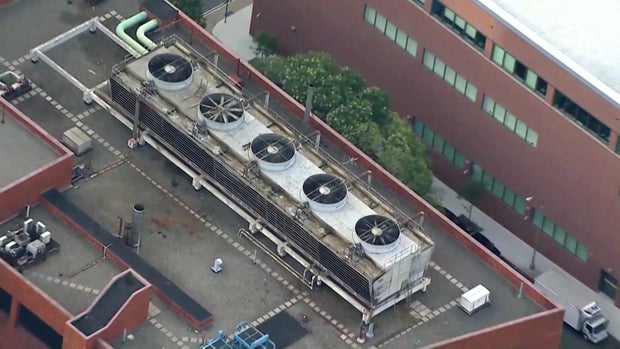
It's caused by a bacteria, known as the species Legionella pneumophila. NYC health officials say this outbreak was traced to 11 buildings in Central Harlem with contaminated cooling towers.
"These large air conditioning systems, they sometimes can have Legionella growing inside of them. There is a special maintenance that each of these facilities uses and does on a regular bases, they prevent the colonization of their water systems with Legionella, but sometimes, even despite the best maintenance, this can still be a problem," Dr. Glatt explained.
"For most people, this isn't a problem. It's only these large systems where they have special cooling with water as part of the centralized air conditioning system," he added. "So a person with their own private system, this isn't the problem. And, usually, it's not a problem even in these large systems because they're maintained properly."
Acting Health Commissioner Dr. Michelle Morse said Tuesday crews are working to test and clean the towers, and the city has launched a public awareness campaign in the area.
"Unfortunately, until that's done, there can be aerosolization with the water in the air, and people who are walking nearby can, unfortunately, get infected by that method," said Dr. Glatt.
Legionnaires' disease symptoms to watch for
Legionnaires' is a severe form of pneumonia, and health officials urge people to look out for any flulike symptoms. Glatt says the top two are shortness of breath or a cough.
People with lung diseases, like emphysema, COPD or severe cases of asthma, and people with other major medical conditions or who are of older age will be at higher risk.
"The good news is if it is diagnosed early, then there are good antibiotic treatments that one can take that can mitigate or really make the disease not usually a fatal disease," Dr. Glatt said. "But again, in some people, it will be a serious infection."
CLICK HERE for more information about Legionnaires' disease from the New York City Department of Health.