RFK Jr.'s new food pyramid emphasizes protein, healthy fats. Here's what to know about the dietary guidelines.
The Trump administration has unveiled a new food pyramid and dietary guidelines for Americans that call for "prioritizing high-quality protein, healthy fats, fruits, vegetables and whole grains" while avoiding highly processed foods and refined carbohydrates.
"As secretary of Health and Human Services, my message is clear: Eat real food," HHS Secretary Robert F. Kennedy Jr. said at a White House briefing announcing the changes alongside Agriculture Secretary Brooke Rollins and other health officials. Kennedy called it "the most significant reset of federal nutrition policy in history."
A White House official told CBS News the new guidelines are "science-driven." In a fact sheet, the administration said the new guidelines would restore "science and common sense" and put "real food back at the center of health."
Here's what to know about the new dietary guidelines.
First recommended limits on highly processed foods
For the first time, the recommendations are calling for Americans to avoid eating highly processed foods.
A recent report from the Centers for Disease Control and Prevention found that 55% of the U.S. population receives more than half of their daily calories from ultra-processed foods. The previous 2020-2025 dietary guidelines did not mention highly processed or ultra-processed foods.
The new guidelines call for avoiding "highly processed packaged, prepared, ready-to-eat, or other foods that are salty or sweet," as well as avoiding sweetened beverages including soda, fruit drinks and energy drinks.
Research has shown diets high in ultra-processed food are associated with an increased risk of 32 damaging health outcomes, according to a review published in The BMJ medical journal in 2024.
Limits on sugars, artificial flavors and dyes
The guidelines also say that "no amount of added sugars" are recommended for Americans, especially children.
At most, a meal should contain no more than 10 grams of added sugars, according to the new guidance. The former guidance said children under 2 should not consume added sugars and that Americans should aim to have less than 10% of their daily calories come from added sugars.
People should also limit foods and beverages that include artificial flavors, dyes, low-calorie non-nutritive sweeteners and artificial preservatives, the new guidelines said.
Naturally occurring sugars are not considered added sugars and can be part of a recommended diet under the new guidelines.
Fighting chronic disease and supporting gut health
Dietary guidelines are used as the baseline for federal food programs, including SNAP and school meal programs. The fact sheet for the new guidelines says public adherence to the new guidelines "will dramatically lower chronic disease — and healthcare costs — for Americans."
The fact sheet said the U.S.'s high level of health-related spending and a life expectancy that is five years less than other developed countries is "predominantly due to chronic conditions tied to food." It also said that lowering rates of obesity, Type 2 diabetes, heart disease and Alzheimer's disease would cut about $600 billion in annual healthcare costs. Previous studies have also shown a possible link between diet and Alzheimer's.
"The most expensive thing we can do as a country is continue government incentives for food that sickens Americans and drives up healthcare costs," the fact sheet said.
The new guidelines point out the importance of gut health and the microbiome inside a person's intestines. The gut microbiome includes trillions of bacteria, viruses and fungi whose balance is important for good health. The new guidelines call for the consumption of vegetables, fruits, fermented foods and high-fiber foods to support a diverse gut microbiome.
"Ending the war on healthy fats"
The fact sheet for the new guidance calls for "ending the war on healthy fats" and getting the bulk of dietary fats from whole food sources. That includes meat, poultry, eggs, seafood, nuts, full-fat dairy and avocados, the guidelines say.
People should aim for three servings of dairy a day, in line with the 2020-2025 guidelines. The new guidelines say people should prioritize full-fat options, while the previous guidelines recommended fat-free or low-fat products.
The new guidelines also recommend olive oil, butter or beef tallow for preparing meals. Kennedy has previously criticized seed oils and extolled tallow, at odds with long-standing recommendations.
"We are ending the war on saturated fats," Kennedy said.
In total, saturated fat consumption should not exceed more than 10% of a person's daily calories, according to the new guidelines. The 2020-2025 guidelines also had similar recommended limits on saturated fats, though they noted a "healthy dietary pattern" could include vegetable oils.
A focus on protein and "real" foods
The new guidelines recommend "high-quality, nutrient dense protein foods" including eggs, poultry, seafood, red meat, and plant-based proteins like beans, nuts and seeds in every meal.
Under the guidelines, Americans should aim to eat 1.2 to 1.6 grams of protein per kilogram of body weight every day. Proteins should be served with no or limited added sugars, chemical additives, refined carbohydrates or starches, the guidelines say.
"What we're stressing is that people should be eating protein," Kennedy said in an interview with CBS News chief White House correspondent Nancy Cordes.
FDA Commissioner Marty Makary noted at the briefing that the new guidelines increase the recommended amount of protein for children.
"Kids need protein," Makary said. "The old protein guidelines were to prevent starvation and withering away. These new protein guidelines are designed for American kids to thrive."
Fruits, vegetables and whole grains
The new guidelines also recommend people eat at least three servings of vegetables and two servings of fruit per day, in line with the previous 2020-2025 dietary guidance.
People should eat a variety of fruits and vegetables, preferably in their original form. Frozen, dried or canned products with no or very limited added sugars "can also be good options," according to the fact sheet. People should limit consumption of 100% fruit or vegetable juices.
Americans should also prioritize fiber-rich whole grains and reduce the consumption of highly processed, refined carbs, the guidelines say. People should aim for between two and four servings of whole grains per day.
A new food pyramid
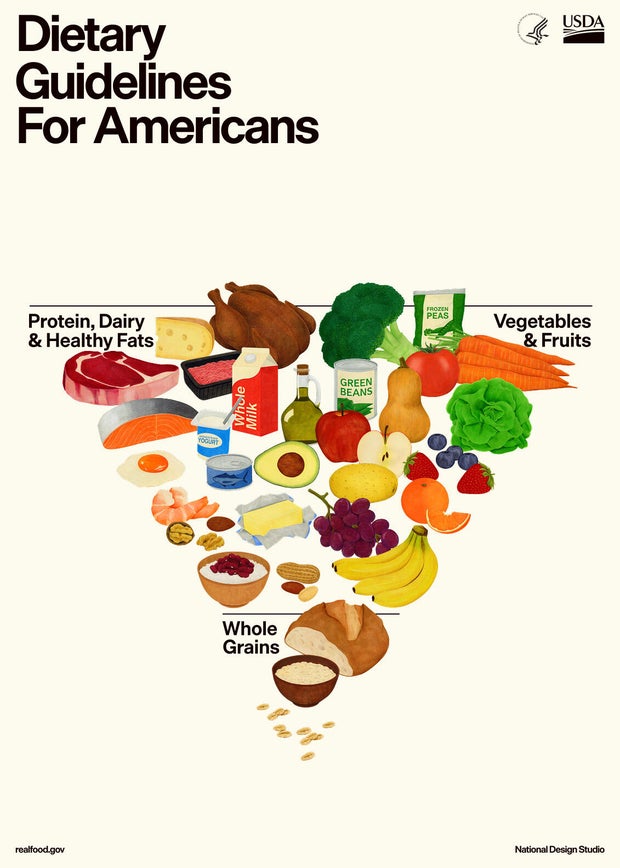
Officials introduced a new version of the food pyramid, with protein, dairy, healthy fats making up one of the top corners, fruits and vegetables in the other, and whole grains at the bottom.
Consume less alcohol
The guidelines recommend that Americans should "consume less alcohol for better overall health."
People in certain categories are urged to completely avoid alcohol, including pregnant women, people who are recovering from alcohol use disorder or are unable to control the amount they drink, and people taking medications or with medical conditions that can interact with alcohol.
Previous guidelines said that Americans should not drink or drink in moderation. The recommended limits were 2 drinks or less per day for men and 1 drink or less per day for women on days when alcohol is consumed.
Dr. Mehmet Oz, administrator for the Centers for Medicare and Medicaid Services, said the new guidelines are meant to encourage moderation but acknowledge the social benefits that some may experience.
"There is alcohol on these guidelines, but the implication is don't have it for breakfast," Oz said.
Reactions to new dietary guidance
The American Medical Association said in a statement that it "applauds" the Trump administration's new dietary guidelines.
"The guidelines affirm that food is medicine and offer clear direction patients and physicians can use to improve health," Dr. Bobby Mukkamala, the president of the AMA, said in the statement. Kennedy thanked Mukkamala in his briefing.
The AMA said it will launch a collection of educational resources and hold a series of roundtable discussions with doctors and experts to "strengthen nutrition education and clinical competency." It also pledged to work with Congress to incentivize the consumption of nutrient-dense foods, expand food labeling efforts, define ultra-processed foods and increase investment in nutrition research.