How To Navigate The Minneapolis-St. Paul International Airport
These four hints may help you get around the Minneapolis–Saint Paul International Airport.
Watch CBS News
These four hints may help you get around the Minneapolis–Saint Paul International Airport.
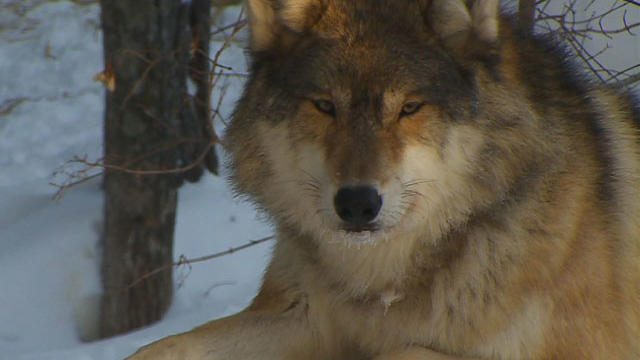
A Minnesota congressman says a push is underway to include language in a catchall spending bill to return responsibility for managing wolf populations in the western Great Lakes region to Minnesota, Wisconsin and Michigan. Courts have overturned federal efforts to remove the region's wolves from the endangered list. The legislation would bypass the courts.

A group of scientists is taking issue with colleagues who want the federal government to remove gray wolves in the Great Lakes region from the endangered species list.

Two U.S. senators announced a renewed push Thursday to strip federal protection from gray wolves in the western Great Lakes region and Wyoming — and to prohibit courts from intervening in those states on the embattled predator's behalf. Legislation introduced this week would order the Department of the Interior to reissue orders from 2011 and 2012 that dropped wolves in Michigan, Minnesota, Wisconsin and Wyoming from the endangered species list.
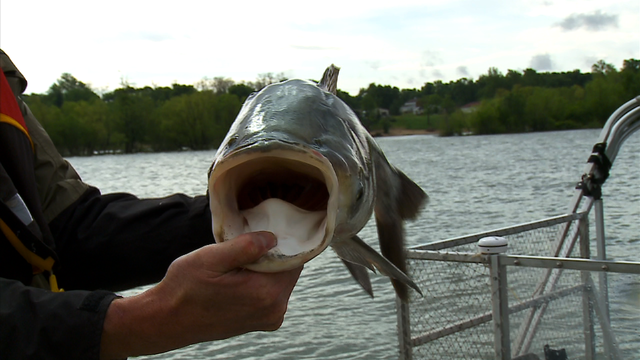
Federal crews have discovered two Asian carp in the Illinois River, 12 miles closer to Lake Michigan than where others of that size previously were seen.
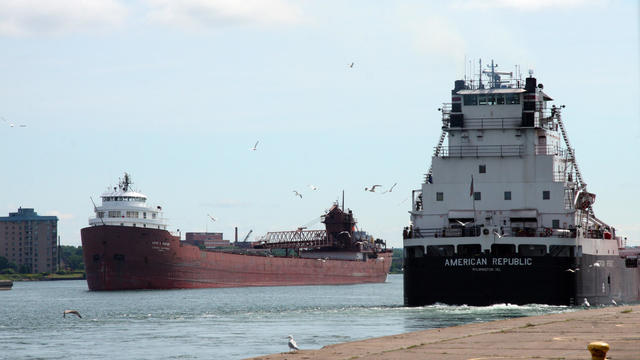
State and federal agencies are teaming with pipeline operator Enbridge Energy Partners for an oil spill response exercise in the area where crude is piped beneath the Great Lakes.

Populations of invasive, fish-killing sea lampreys have fallen to their lowest point in decades across the Great Lakes, showing that control measures costing millions of dollars a year are paying off, officials said Wednesday. Lamprey numbers have reached a 30-year low in Lake Huron and a 20-year low in Lake Michigan, according to the Great Lakes Fishery Commission, a U.S.-Canadian organization. Numbers also are down significantly in the other lakes.

Oil and gas industry watchers said Wednesday prices at the pump have jumped across the Great Lakes region because of the unexpected, partial shutdown of a large Indiana oil refinery, and those increases could continue.

Government agencies plan to spend nearly $60 million over the next two years in the battle to prevent invasive Asian carp from reaching the Great Lakes, where scientists say they could unravel food chains and harm native fish.

The group of state Department of Natural Resources scientists that Republican lawmakers targeted for cuts has been working on a number of politically charged issues in recent years, including climate change, pollution and mining.

A panel of experts will study proposals to allow fish farming in Michigan's Great Lakes waters.
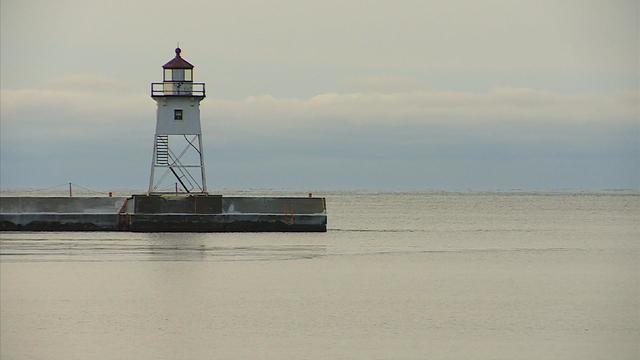
Scientists specializing in the Great Lakes are going to be hearing about the challenge plastic pollution poses for the lakes during a conference at the University of Vermont.
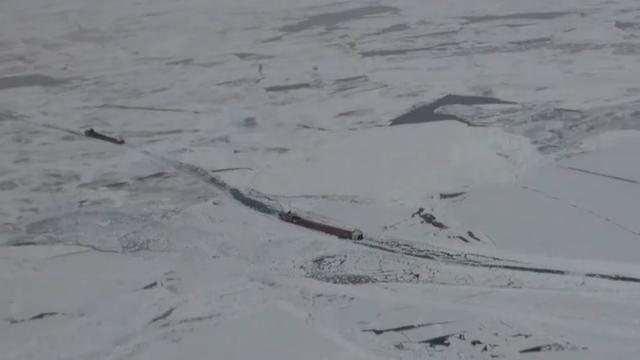
U.S. and Canadian crews are working to clear a path through ice on eastern Lake Superior that's left freighters unable to move, including one that had a hole punched in its hull. The Canadian Coast Guard says that by Wednesday afternoon, six vessels heading toward the lower lakes and 12 vessels heading toward upper Lake Superior were waiting to move.

Members of Congress from both parties are lobbying colleagues not to cut funding from a key Great Lakes environmental program. Fifty-one representatives sent a letter Monday in support of the Great Lakes Restoration Initiative.
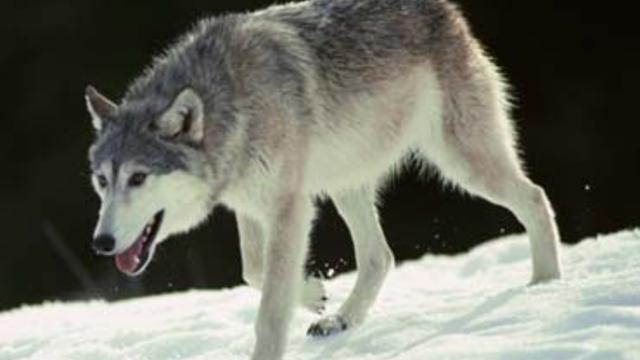
Michigan is joining the federal government in appealing a decision that restores legal protections for gray wolves in the western Great Lakes region.
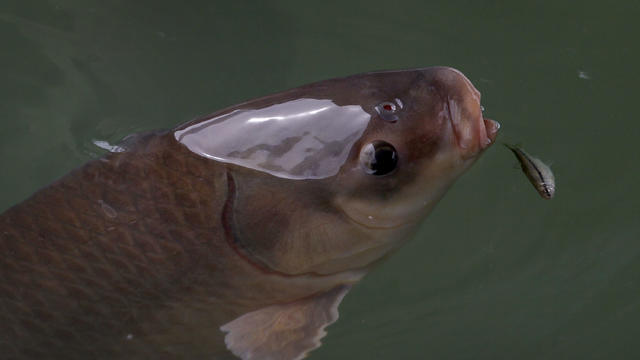
Members of Congress are calling for quick action at a crucial spot in the Chicago area to block Asian carp from reaching the Great Lakes.

The Great Lakes Areas of Concern is receiving $7.9 million from the National Oceanic and Atmospheric Administration to fund habitat restoration projects. U.S. Sens. Gary Peters and Debbie Stabenow announced the grant Wednesday. Both Michigan lawmakers are members of the Great Lakes Task Force.

For the second consecutive winter, bitter weather threatens to turn the surface of the Great Lakes into a vast, frozen plain. Nearly 81 percent of the lakes' surface area was covered with ice, the NOAA Great Lakes Environmental Research Laboratory reported Friday.

President Barack Obama's proposed budget for 2016 seeks a $50 million cut in a multi-year program to clean up the Great Lakes. The president's spending plan released Monday requests $250 million for the Great Lakes Restoration Initiative, down from $300 million appropriated for this year.
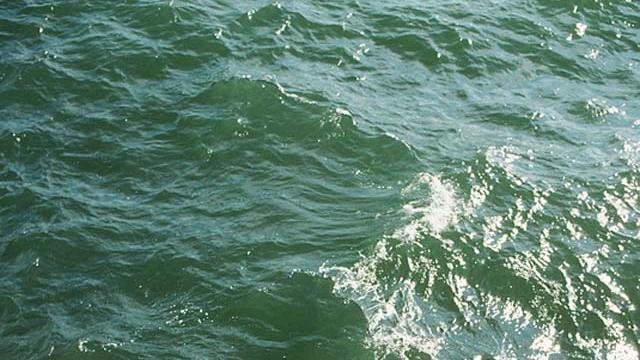
First it was tiny plastic beads, but now scientist are rising concerns about fibers from clothing polluting the Great Lakes. A recent study found polyester fleece sheds thousands of fibers when it's washed.
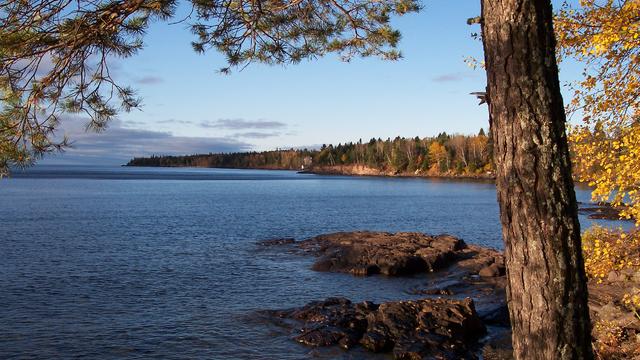
Scientists who have reported that the Great Lakes are awash in tiny bits of plastic are raising new alarms about a little-noticed form of the debris turning up in sampling nets: synthetic fibers from garments, cleaning cloths and other consumer products.
An organization representing U.S. cargo shippers on the Great Lakes says last year's deep freeze cost the economy an estimated $705 million and shows the need for another heavy icebreaking vessel. The Lake Carriers' Association said Tuesday the volume of freight that U.S.-flagged ships hauled on the lakes between Dec. 1, 2013, and May 30, 2014, was about 7 million tons lower than the same period a year earlier.
With Great Lakes levels finally back to normal after a 15-year downturn, the University of Michigan plans research to help people in the region prepare for future ups and downs. The university's Graham Sustainability Institute announced the program this week, as federal scientists reported that Lakes Superior, Huron, Michigan and Erie are well above their long-term average levels. Lake Ontario is slightly below.
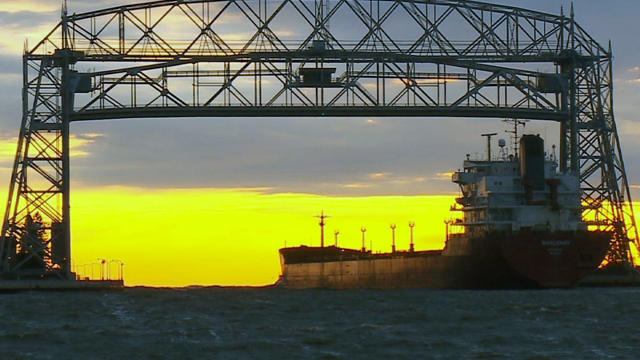
Two unusually wet years have finally ended the lengthiest period on record of low Great Lakes water levels — a blessing for long-suffering cargo shippers and recreational boaters — although scientists said Tuesday it's uncertain whether the recovery is temporary or heralds a trend.

Dave and Amy Freeman are making their way to Washington, D.C. -- in a canoe. The couple is paddling 2,000 miles from Ely to the nation's capitol. They're on a mission to draw attention to the Boundary Waters Canoe Area.