University of Minnesota researchers celebrate World Bee Day
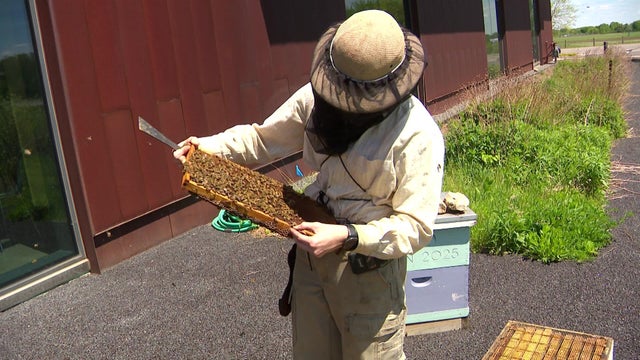
Outside the Bell Museum on the University of Minnesota's St. Paul campus, honey bee researcher Isabell Dyrbye-Wright kept busy on World Bee Day.
Watch CBS News
Outside the Bell Museum on the University of Minnesota's St. Paul campus, honey bee researcher Isabell Dyrbye-Wright kept busy on World Bee Day.
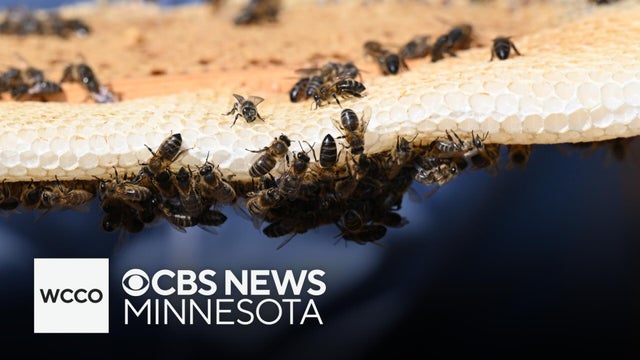
Minnesota is fifth in the nation for producing honey, with more than 100,000 bee colonies in the state. A new effort in Congress would compensate beekeepers for unfair trade practices. WCCO photojournalist Tony Peterson spoke with a beekeeper who is hoping for some sweet support.
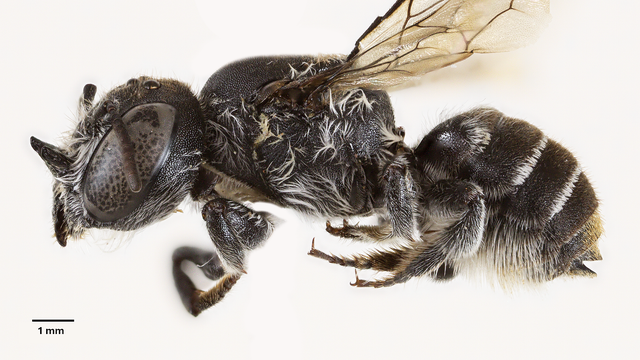
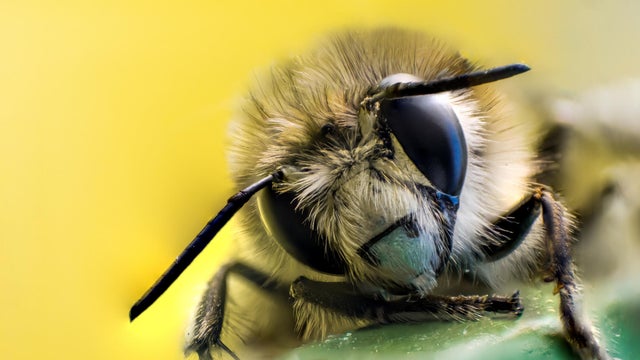
Kit Prendergast discovered the bee while surveying a critically endangered wildflower and was drawn to the insect's unique appearance.
Minnesota is home to thousands of pollinators, but they face challenges like habitat loss, pesticides and climate change. Now, a new first-of-its-kind pollinator garden aims to help pollinators thrive.

You may have heard of "No Mow May," but now there are questions about how effective the movement really is.
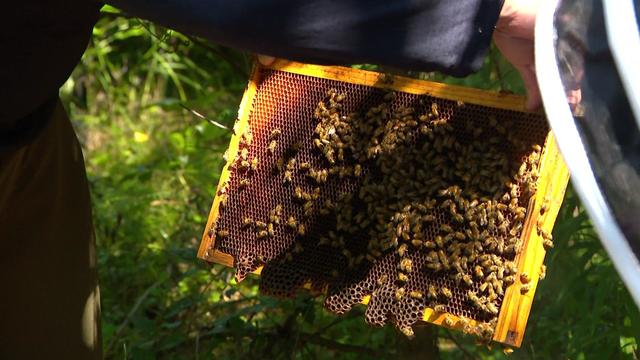
You've probably heard about beekeeping programs, but one in Shoreview is historic.
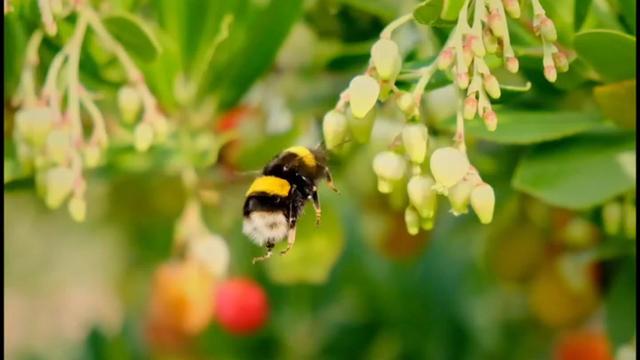
The rusty patched bumble bee became endangered in 2017. And now, there's evidence the population is barely hanging on — a concern because they're a critical pollinator.

"If allowed to establish in the US, this invasive species could threaten honey production and Georgia's native pollinators," the release said.
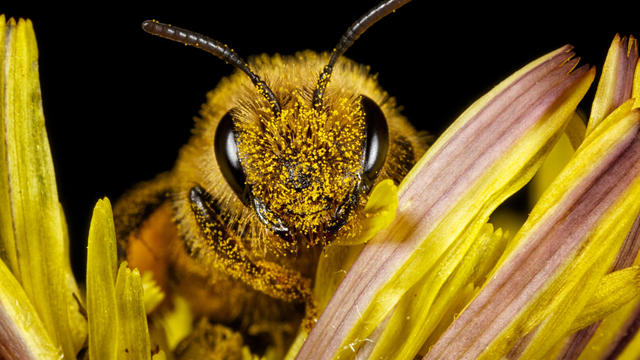
Behind Great River Energy's headquarters, you'll find ducks and canoers in Arbor Lake as a bird soars above. In the vegetation surrounding the lake are butterflies, bees, birds, and bats, all contributing to a pollinator habitat in desperate need of restoration.

The Pollinator Friendly Alliance is doing work across Washington County parks to make sure our bees, butterflies and beetles have space to do their thing.

Although it's not as bad as it was a year ago, for the year we are about 3 inches below average for precipitation, which will affect a number of native bee species.

Minnesota pollinators have it tough right now. The Department of Natural Resources says habitat loss, pesticides and climate change, have contributed to the drastic decline in population.

The Lawns to Legumes program offers up to $300 to cover the cost of planting a pollinator habitat in your yard.

Minnesota and Wisconsin are some of the leading honey producing states in the nation -- but the extreme drought is putting honey production at risk.

In this week's Finding Minnesota, John Lauritsen shows us why a certain bee colony is on the National Register of Historic Places.
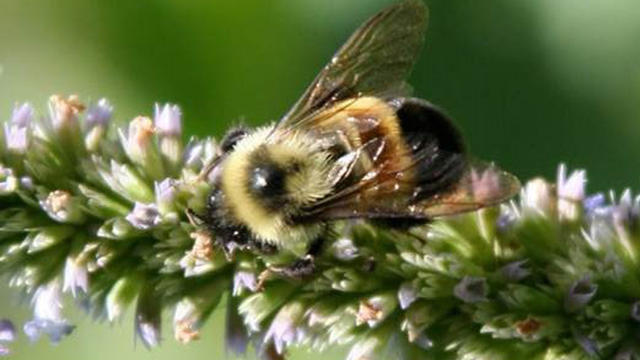
A state program in Minnesota aims to help homeowners make their lawns into bee-friendly habitats as part of an effort to support pollinators threatened by the loss of prairie land.

A new study says Minnesota is among the top states in the country working to protect declining bee and butterfly populations.

Bees are having a much harder time finding food in the region known as America's last honeybee refuge, a new federal study found.
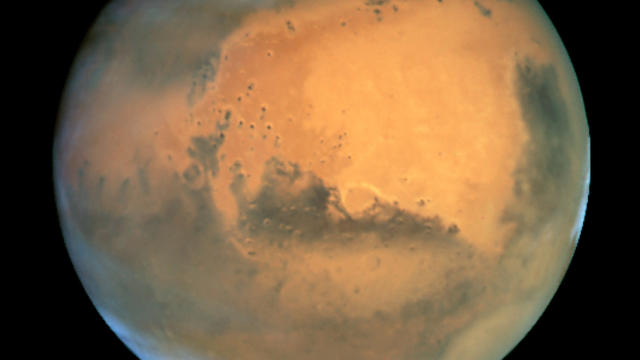
The space agency says it is working on creating a swarm of robot bees that will fly around the surface of Mars.

Some students in Minneapolis are getting an up close lesson all about bees.
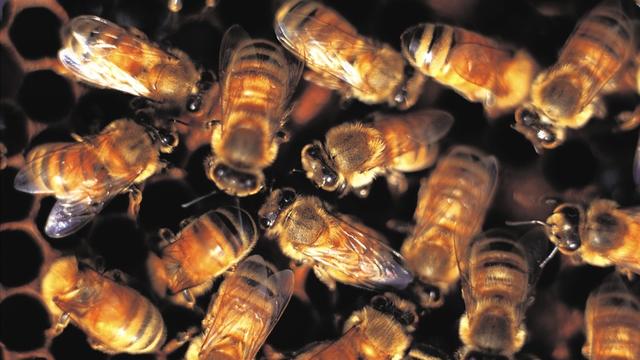
Have you been wondering why Buzz, the iconic Cheerios bee, has been missing from the box of your favorite cereal?

The rusty patched bumblebee has become the first bee species in the continental U.S. to be declared endangered after suffering a dramatic population decline over the past 20 years, federal officials said Tuesday.
Gov. Mark Dayton has issued an executive order restricting uses of neonicotinoid pesticides to reverse the decline of bee and other pollinator populations.

A Minneapolis-based company is giving some bugs a much-needed boost. Xcel Energy is dedicating seven acres of land to monarch butterflies, honey bees and other pollinators.
A truck hauling more than 2.5 million dead bees began a cross-country tour with a stop in South Dakota Monday in an effort to raise awareness on the collapse of bee colonies and other pollinators in the U.S. and the role that chemicals such as pesticides have played in the decline.