University of Minnesota researchers celebrate World Bee Day

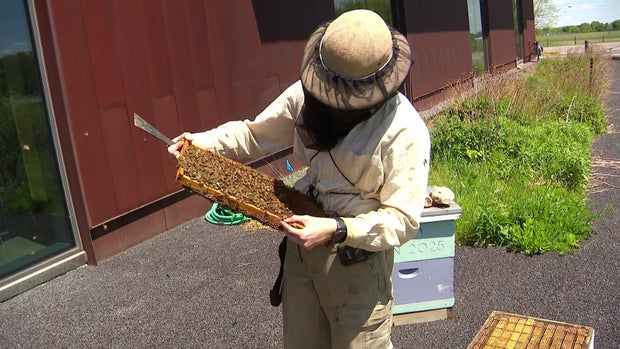
Outside the Bell Museum on the University of Minnesota's St. Paul campus, honey bee researcher Isabell Dyrbye-Wright kept busy on World Bee Day.
WCCO followed around the "Bee Squad" member Wednesday as she inspected colonies, making sure the queen bees they specially placed are still there.
"Queens that are raised from colonies that have mite resistance, good honey production, gentleness," Dyrbye-Wright said.
Across the street at the Bee Lab, the work continues.
"We're trying to implement better genetics within our network in the Twin Cities to have healthier bees," Dyrbye-Wright said.
Because a healthier bee population goes a long way.
"Bees are so essential to the ecosystem, right? I mean, we rely on their ecosystem services, their pollination is critical, not only to our food supply but to all of the flowers and trees, right? To everything. It's so interconnected," Dyrbye-Wright said.
But of course, it's not just honey bees. Minnesota has over 450 species of native bees that play a critical role as well.
"A world without bees would be really horrible and would probably fall apart," Dyrbye-Wright said. "So World Bee Day is awesome because native bees and honey bees are awesome."
If you want to help the bees, there are some simple things you can do, like take part in "No Mow May." The Bee Squad says they love a wild yard.
Buying honey from a local beekeeper is also a good way to support their work and you know what you're getting. Planting flowers is also a big help.


