Chicago, Illinois sue Department of Homeland Security, Trump administration for dangerous tactics, unlawful use of force by ICE and Border Patrol agents

The state of Illinois has filed a lawsuit against the Trump administration and U.S. Department of Homeland Security, accusing them of using dangerous enforcement tactics and unlawful use of force by federal immigration agents conducting sweeping immigration raids and arrests.
The lawsuit, which is more than 100 pages long, accuses the administration of unleashing "an organized bombardment" on Illinois and the City of Chicago, "causing turmoil and imposing a climate of fear."
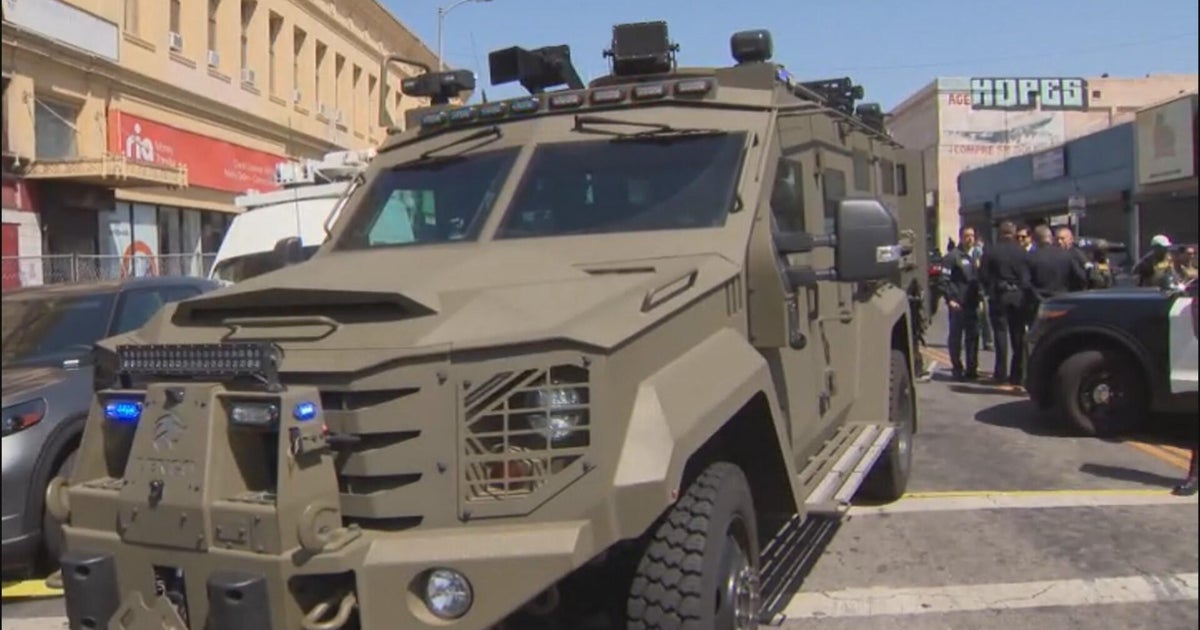
"Uniformed, military-trained personnel, carrying semi-automatic firearms and military-grade weaponry, have rampaged for months through Chicago and the surrounding areas, lawlessly stopping, interrogating and arresting residents, and attacking them with chemical weapons," the lawsuit states.
The state argues the "occupation" of Illinois and Chicago by U.S. Immigration and Customs Enforcement and especially U.S. Customs and Border Protection agents "is intended to coerce Plaintiffs to abandon their policies, which value and respect the State's immigrants, and devote their resources to further the immigration policies of the current administration. Illinois and Chicago have refused to do so."
The lawsuit is brought by Illinois Attorney General Kwame Raoul and supported by Illinois Gov. JB Pritzker.
Since the start of Operation Midway Blitz in the fall of 2025, ICE and CBP agents have wreaked havoc and violence upon the citizens of the state and Chicago "because of their lack of training and supervision, and continuous failure to de-escalate in an environment stoked solely by DHS Secretary Kristi Noem and CBP leader Gregory Bovino," Prtizker wrote in a statement announcing the lawsuit.
Raoul argues that President Trump was angered because he had not been able to force Illinois and Chicago to adopt his federal immigration policies, and thus "unleash[ed] a military assault upon them."
Raoul cited posts made by Mr. Trump on his Truth Social account he argued made false claims about "sanctuary cities," and an executive order he signed in April, followed by a letter from U.S. Attorney General Pam Bondi, demanding Illinois and Chicago "adopt the Trump administration's preferred immigration policies" and threatening to cut federal funding if the state did not comply.
The Trump administration sued Illinois over sanctuary laws, but a judge dismissed that lawsuit in July.
First, Mr. Trump announced he was federalizing the Illinois National Guard and deploying members of the Texas and California National Guards to Illinois. While members arrived in the state, they were never deployed as a court granted an injunction to stop the deployment on the grounds the order was likely unlawful. That case went all the way up to the U.S. Supreme Court, who denied the Trump administration's application for an emergency stay, writing, "the Government has failed to identify a source of authority that would allow the military to execute the laws in Illinois."
Shortly after, the administration launched Operation Midway Blitz, deploying hundreds of ICE and CBP agents to Chicago to conduct sweeping immigration raids and enforcement actions.
The lawsuit argues the deployment of CBP is not properly trained to for immigration enforcement in the interior of the country, and regularly uses tactics that are not appropriate for the interior at large and urban environments in particular.
The state notes that ICE already has an operational arm, Enforcement and Removal Operations (ERO), that is trained to and regularly operates in the interior of the country, with strict requirements for warrants and probable cause in warrantless arrests.
The lawsuit also argues the Border Patrol Tactical Unit, or BORTAC, is a "SWAT team trained to operate as a quasi-military arm of federal law enforcement…trained to respond to civil unrest and terrorist threats." CBP agents, including BORTAC agents, are "not trained to conduct removal operations in urban environments…such as Chicago," the lawsuit argues, and do not have the experience to carry out the immigration removal operations away from the country's borders.
Raoul and the state cite a pattern of "unauthorized, unprecedented and ineffective" tactics used by Border Patrol, including having masked and armed agents patrol the Chicago River while questioning any person they encountered about their immigration status; congregating in crowded parts of downtown Chicago in full military tactical gear and armed, as well; conducting a military-style raid on a South Shore apartment building in the middle of the night; taking biometric information from residents of Chicago and Illinois without consent and keeping it in government databases; arresting and detaining hundreds of people without a warrant or probably cause "seemingly based solely on race or ethnicity"; and indiscriminately using tear gas in Chicago neighborhoods around civilians, including children and the elderly.
The suit spends dozens of pages documenting specific claims against CBP agents and violations by DHS, including their roving patrol policy, biometric scanning policy, warrantless arrests, deployment of riot control weapons, arbitrary enforcement policy, concealment of license plates and trespassing on private property.
The lawsuit also cites two shootings by Border Patrol officers; the first in Franklin Park, which killed 38-year-old undocumented father of two Silverio Villegas-Gonzalez after he dropped his son off at daycare, and the Brighton Park shooting of Chicagoan Marimar Martinez. Martinez was shot five times and indicted by a federal grand jury before the charges were dropped. The lawsuit says, "body-worn camera footage captured another CBP agent with his hands on his assault rifle, saying, 'Do something, b****," just before [the agent] fired five shots into Ms. Martinez."
"Border Patrol's incursion into Illinois and its unlawful, unauthorized, violent, and arbitrary conduct is intended to intimidate and frighten Plaintiffs' residents by disregarding their privacy, ignoring the security of their homes and property, and threatening their freedom and physical well-being," the lawsuit argues.
Raoul also says Operation Midway Blitz has "caused widespread trauma to Chicagoans and other Illinoisans and has profoundly disrupted" the state's ability to enforce their laws and policies.
The lawsuit claims the Trump administration is violating the Tenth Amendment, as a lawsuit filed by Minnesota Attorney General Keith Ellison on Monday also argues, and the state of Illinois' sovereignty through exceptional federal overreach. It also claims Operation Midway Blitz and the tactics used within have not been authorized by Congress and are in violation of a number of federal laws.
The lawsuit asks the court to enjoin CBP from conducting civil immigration enforcement in Illinois, declare the Trump administration and DHS in violation of the Tenth Amendment, and enjoin all defendants from using the tactics and methods the state claims are illegal. It also asks the court to award reasonable fees, costs and expenses, including attorney's fees.
There is already a preliminary injunction against DHS and CBP from a federal judge based on a lawsuit filed by independent media organizations, journalists, protesters and clergy for violating their First Amendment rights, which significantly restricts immigration agents' use of force during Operation Midway Blitz. Judge Sara Ellis last week declined to dismiss that lawsuit, saying she has concerns about the implications of doing so, especially after a woman was shot and killed by an ICE agent in Minneapolis, because restrictions she put in place on agents' use of force in the Chicago area would be tossed out if the lawsuit is dropped.
The state of Illinois prohibits local and state law enforcement agencies from enforcing federal civil immigration laws through the TRUST Act, which was passed in 2017 and signed into law by then-Governor Bruce Rauner, a Republican. Those limits were then expanded in 2021 in the Way Forward Act. Additionally, Chicago operates under a Welcoming City Ordinance, barring Chicago police from cooperating with federal authorities in any immigration enforcement activities.
CBS News Chicago has reached out to the Department of Homeland Security for their comment on the lawsuit and are waiting to hear back. DHS did mention Chicago and Illinois in responding to the lawsuit filed in Minnesota, writing in part, "This is a baseless lawsuit, and we look forward to proving that in court."