
What happens if two wage garnishments are put on your paycheck?
Just one garnishment has a major impact on your finances, and adding a second could lead to even bigger trouble.
Watch CBS News
Just one garnishment has a major impact on your finances, and adding a second could lead to even bigger trouble.
Social Security benefits are legally protected from creditors, but only certain ones. Here's what's off-limits.

Self-employed workers aren't immune to collection efforts, but garnishment works much differently in these cases.

The timing of your settlement offer could have a big impact on how much you ultimately pay to get rid of your debt.

If you've saved $1 million for retirement, the IRS dictates how much you withdraw, whether you're ready or not.

A debt collector may be able to freeze your bank account, but if it's a joint account, the rules get complicated.

The math on credit card debt is brutal right now, but the fix you choose could cost you more than the debt itself.

If you've saved $250,000 for retirement, the IRS gets a say in how much you withdraw — whether you're ready or not.

If you've saved $500,000 for retirement, the IRS has a say in how much you withdraw, whether you want to or not.
Debt relief could make it easier to pay off your balances, but any overlooked costs could cancel out the savings.

Debt consolidation sounds like a quick fix, but in this economy, it could cost you more than you bargained for.
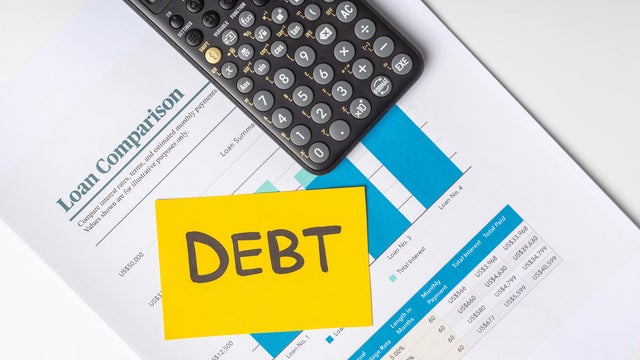
Before you consolidate any amount of debt, it's important to do the math and determine how much your costs will be.

Mortgage rates can move, even without a Fed meeting on the calendar. Here's what could push them lower this May.
Personal loan costs may be lower than credit cards right now, but that's not the only factor you should weigh.

Debt forgiveness can be a smart strategy to use, but for some borrowers, it creates more problems than it solves.