Stocks fall as report reveals pullback in consumer spending
Investors are uneasy as signs point to possible recession caused by Fed interest rates hikes.
Watch CBS News
Investors are uneasy as signs point to possible recession caused by Fed interest rates hikes.

Despite added jobs and higher wages "Americans are running faster just to stay even," said one economist.

Most Texans are having to drive less and cut back on spending.

Yahoo Finance anchor and reporter Akiko Fujita spoke with CBS News' Elaine Quijano and Tanya Rivero about the impacts of inflation on consumer confidence and spending. Fujita also discussed a new ban on Russian imports and how sanctions could affect the U.S. economy.

"Confidence is going to continue to shrink as long as inflation remains high," said one analyst.

Seniors are on track for the biggest cost-of-living adjustment in four decades, according to a new analysis.

Supreme Court abortion ruling sparks nationwide protests; Amid inflation concerns, many are stockpiling U.S. currency

President Biden is in Germany for the annual G-7 summit, where world leaders are set to discuss pressing global issues such as the war in Ukraine and worldwide inflation. Ed O'Keefe has the details.

Food prices are up 10%, new vehicles 12.5% and gasoline almost 50% compared to last year, according to U.S. Bureau of Labor Statistics.

Federal Reserve looking to slow spending amid record inflation; U.S. veterans who fought for Ukraine may have been captured

House Jan 6. committee holding second hearing; New Jersey gas tops $5 for first time
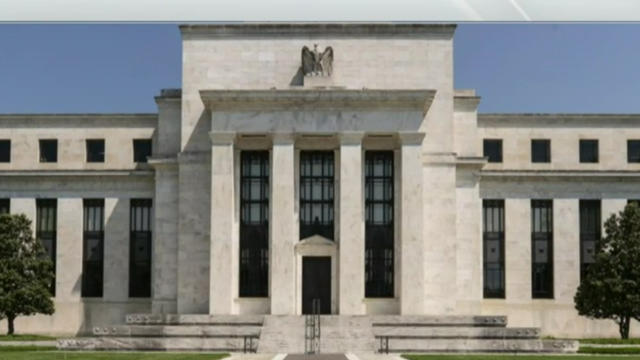
Fed likely to announce interest rate hike; Texas lawmaker demands answers on police response.

Aaron Weinman, finance correspondent for Business Insider, joined CBS News' Michelle Miller and Tanya Rivero to discuss Friday's stock market rally.

Financial markets are rising, with some analysts predicting an economic slowdown rather than a recession.

According to the U.S. Department of Labor, initial jobless claims fell to 229,000 for the week ending June 18th. That's 2,000 fewer than the previous week. CBS News reporter Sarah Ewall-Wice joined Errol Barnett and Anne-Marie Green to discuss what these numbers mean for the U.S. economy and yesterday's congressional testimony on inflation from Federal Reserve Chair Jerome Powell.

Dan Geltrude, founder of accounting and financial consulting firm Geltrude and Company, offers advice for navigating retirement spending as inflation soars and the stock market sinks.

President Biden is calling on Congress to suspend the federal 18-cent federal gas tax and 24-cent federal diesel tax. CBS News chief White House correspondent Nancy Cordes reports.

CBS News' Tanya Rivero and Elaine Quijano sit down with Aaron Weinman, a finance correspondent for Insider, to discuss what is driving the financial markets, the probability of a recession, and President Biden's proposed gas tax holiday.

President Biden called on Congress to halt the federal gas tax for three months as gas prices soar. But there's debate about whether it will actually help consumers. Nancy Cordes has the details.

Stocks have slumped in recent weeks amid investor fears that sharply higher interest rates could trigger a recession.

Several major investment banks are predicting that the U.S. will enter a recession sometime this year. This month the Federal Reserve announced its highest interest rate hike in decades in an effort to control inflation. Yahoo Finance Senior Reporter Emily McCormick joins “CBS News Mornings” to discuss the latest on the economy.

President Joe Biden is urging congress to pass a three-month federal gas tax holiday. However, some Democrats -- including former President Barack Obama -- have long criticized the idea. CBS News Senior White House and Political Correspondent Ed O'Keefe has more on why Biden is moving forward with this proposal.

Fed Chairman Jerome Powell acknowledged recession is possible but later said its likelihood is not "particularly elevated right now."

Financial markets rebounded Tuesday, but some analysts think U.S. stocks have yet to touch bottom.

The term describes when the economy suffers from high unemployment and inflation with low growth. Lana Zak explains why economists are worried it could happen again.