Sunday 9AM ET on CBS
11AM ET on the CBS News app
Sunday 9AM ET on CBS
11AM ET on the CBS News app
Watch CBS News
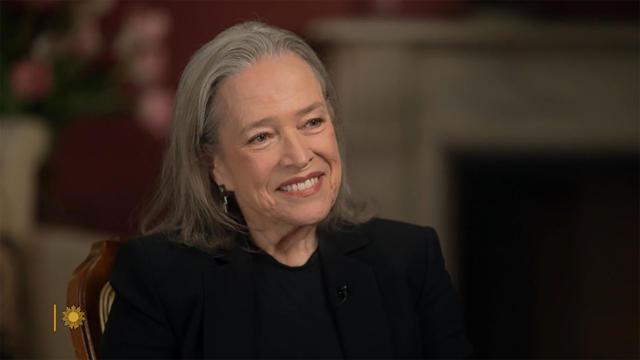
Academy Award-winning actress Kathy Bates sits down with Turner Classic Movies host Ben Mankiewicz to talk about her new TV show "Matlock," which explores the "invisibility" of women of a certain age. She also discusses some of her most memorable stage and screen roles, including her performance as a violent psychopath in the Stephen King thriller "Misery," and the message she shared with her late mother the night she won the Oscar.

Pharrell Williams, a self-described misfit who grew up in Virginia Beach, Va., saw and heard the world differently than most people. He has built a fascinating career as a musician, performer, and now creative director for Louis Vuitton Men. He talked with "Sunday Morning" contributor Kelefa Sanneh about the joy he finds in creativity, and about his new movie, "Piece by Piece," an animated film that depicts Williams and all other characters as Lego pieces.

On October 7, 2023, hundreds of Israelis were killed or taken hostage by Hamas terrorists in the deadliest attack on Jewish people since the Holocaust. Israel retaliated by launching strikes on the Gaza Strip, killing more than 40,000 Palestinians, according to the Hamas-run health authority. Correspondent Elizabeth Palmer reports on how, twelve months later, a cease-fire, or a pathway to peace, looks vanishingly remote. Editor's Note: This story has been updated to correct the number of Israeli hostages released in November, 2023.

Writer Delia Ephron, famous for dreaming up fairy-tale rom-coms like "You've Got Mail," is making her Broadway debut this month with "Left on Tenth," a play adapted from her bestselling memoir about a widow pursuing another chance at love, just when she is diagnosed with leukemia. CBS News chief medical correspondent Dr. Jon LaPook talks with Ephron, director Susan Stroman, and stars Julianna Margulies and Peter Gallagher about the play's life lessons.
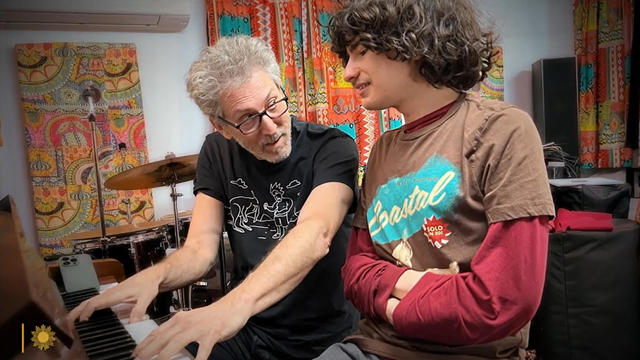
Twenty-year-old Jacob Rock is a non-verbal young man with autism who quietly composed an entire six-movement symphony in his head. After struggling to communicate for much of his life, he learned how to share his ideas via an iPad app with musician Rob Laufer. The two created the symphony "Unforgettable Sunrise," which was premiered last year by a 55-piece orchestra from the University of Southern California's Thornton School of Music. Correspondent Lee Cowan talked with Rock and Laufer, and with Jacob's father, Paul, about a remarkable musical odyssey.

"Sunday Morning" looks back at historical events on this date.

Just weeks before the presidential election, new rules are going into effect that can jeopardize people's right to vote, from challenges to voter registrations, to limits on when and how ballots may be cast. CBS News chief election & campaign correspondent Robert Costa talks with officials in Georgia, including Secretary of State Brad Raffensperger, about conducting a free and fair election under duress while combating false accusations of election fraud.

We leave you this Sunday morning among sunflowers in Highmore, South Dakota. Videographer: Kevin Kjergaard.

On Tuesday, the Democratic and Republican nominees for vice president will face each other in their first and only debate. Historian Kate Andersen Brower says that, even though Minnesota Governor Tim Walz and Ohio Senator JD Vance both hail from the heartland, viewers should not expect "Midwestern Nice" to play out between the two. CBS News chief election & campaign correspondent Robert Costa looks at the history of VP debates. [CBS News will host the only planned vice presidential debate between Governor Tim Walz and Senator JD Vance on Tuesday, Oct. 1, at 9 p.m. ET on CBS and CBS News 24/7. Download the free CBS News app for live coverage, post-debate analysis, comprehensive fact checks and more.]
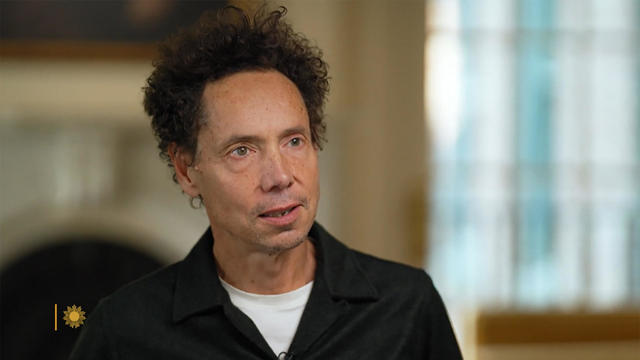
Bestselling author Malcolm Gladwell's latest, "Revenge of the Tipping Point," builds on a familiar idea from his books: You may think you know how the world works, but you're wrong! The provocative Gladwell talks with correspondent David Pogue about why he's refused to change his approach, his work ethic, or his contrarianism.