In Michigan, consumer sentiment is pessimistic before midterms

In most of the country, autumn is campaign season. But in Michigan it is also cider season. The Franklin Cider Mill is an institution in suburban Detroit that churns out hot donuts and ice-cold cider slushies. Between bites, we asked visitors to assess the state of their wallets three weeks before Election Day.
"I would say most are struggling, if I'm being honest," one woman said. Another man offered, "I don't feel great about the economy right now."
Jeffrey Robinson, a high school principal, put it succinctly: "It sucks," he said. "We have parents that carpool that are finding it hard to keep gas in the car."
If it seems like people are feeling especially gloomy about the economy, Joanne Hsu has the proof. She runs the nation's longest-running consumer sentiment survey at the University of Michigan. It dates back to 1946. She says that, since the start of the Iran conflict, "We've been seeing quite a bit of decline in consumer sentiment across the board, across all walks of life."
In fact, Hsu says, consumer sentiment is lower than almost any other time in modern history – including the stagflation era in the mid-1970s; the financial crisis in 2008; and the post-COVID price spikes under the Biden administration.
"Democrats, Independents and Republicans, all three groups, feel worse about the economy in this administration than they did in the first Trump administration," said Hsu.
And, she said, people are feeling bad about the economy despite the stock market doing well and rising wages. "The wages not keeping up with inflation is the key point there," Hsu said. "So, people don't feel like they're able to get ahead. The share of consumers who are expecting their wages to grow faster than inflation fell from 18% just a year-and-a-half ago, to only 11% in September. That's a huge drop."
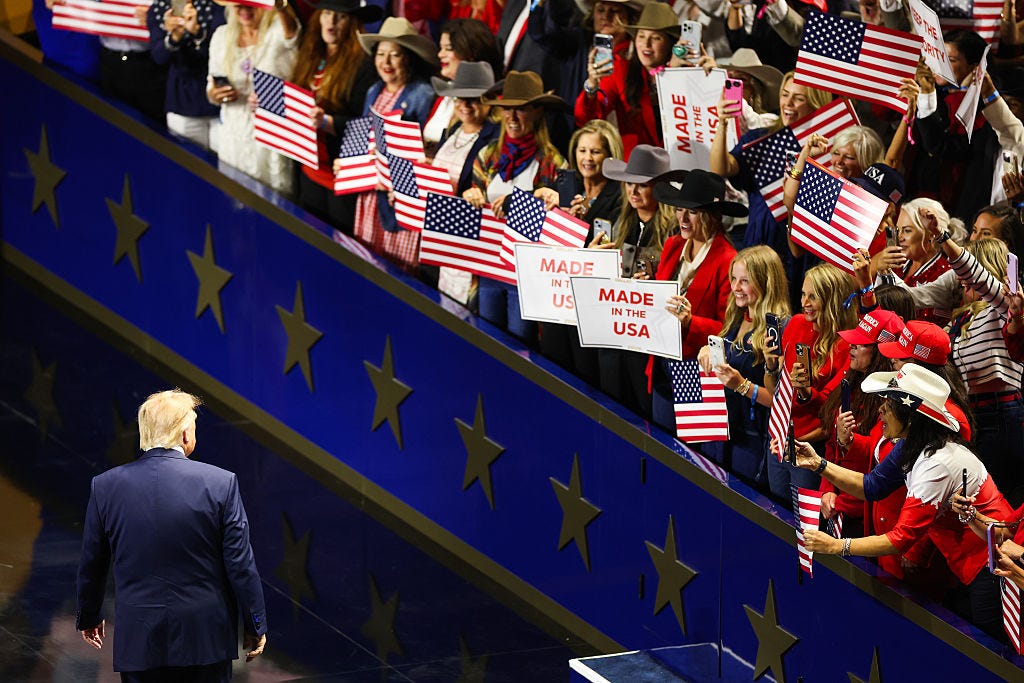
Hsu says consumer sentiment initially went up when Mr. Trump was reelected two years ago. But the president has failed to deliver on one of his key campaign promises, one he made right here in Michigan just a few weeks before Election Day. "One of my top priorities will be to quickly defeat inflation and make America affordable again," Mr. Trump said in 2024. "It'll all happen very quickly. This will rapidly drive prices down, lower interest rates, and put more money into the pockets of American consumers. It'll also bring your grocery bill way down."
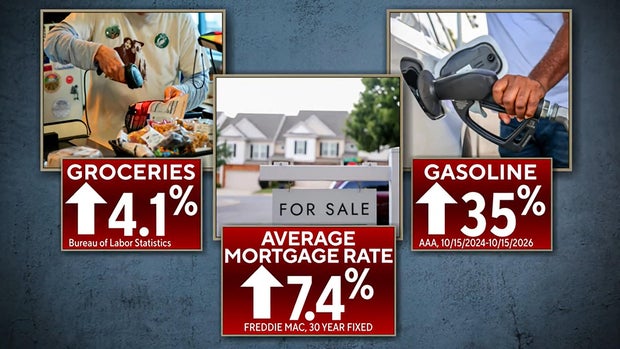
Instead, grocery prices rose by more than four percent in the past two years, according to the Bureau of Labor Statistics; gas prices are up 35 percent, according to AAA; and 30-year fixed mortgage rates are projected to stay above seven percent through next year, according to Freddie Mac.
"The average public is paying a price"
Real estate agent Michael Perna told us, "It would not surprise me if we saw a rate that starts with an 8 before we see a rate that starts with a 6."
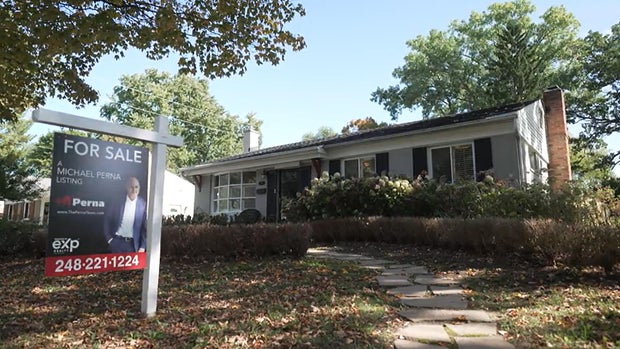
In Northville, Mich., a house that normally would have been on the market for just a week has been for sale for more than a month. Perna says the house is priced a little over what buyers can afford right now: "Originally the mortgage rates were about 6.5 percent, and now they're at 7.5 percent, and buyers can afford $50,000 less, [so] we're a little over."
He says, even for homebuyers with a stable income, every rate hike means they have to settle for less – which makes for a pretty bad attitude about this economy. "Absolutely, a lot of people, myself included, have a bad attitude about this economy!" Perna said.
So, will sour consumers make for angry voters? Back at the Franklin Cider Mill, some are optimistic, but not all. One woman criticized President Trump's tariffs ("It raises all of our prices, so it's hard"), but thinks in the long term they are needed to bring more manufacturing jobs to the U.S.
One man said this economy is not what he expected under Mr. Trump in his second term: "He promised us, and I don't think he kept his promise."
High school principal Jeffrey Robinson said, "The average public is paying a price. I'm not looking for my $5,000 check, because I know that's not coming. But I don't know how long the economy and the average person is going to be able to sustain what we're going through right now."
Story produced by Mark Hudspeth. Editor: Jason Schmidt.
See also:
- Small business owners scramble from Trump's tariffs whiplash ("Sunday Morning")