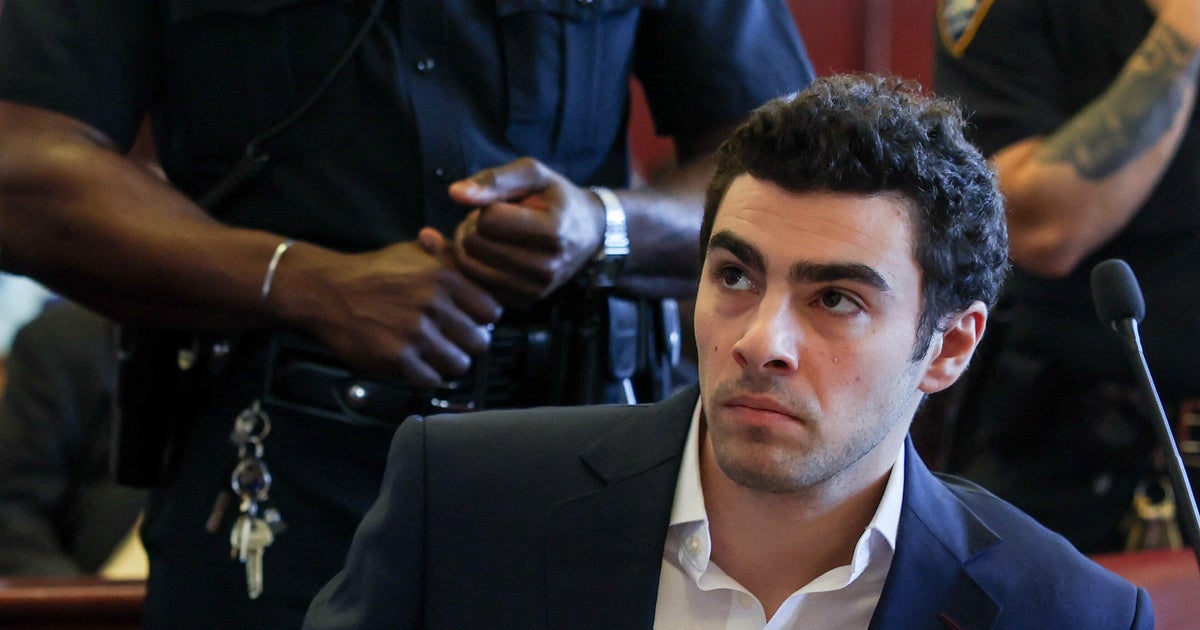
Luigi Mangione's terrorism charges are dismissed. Here's a closer look at what the New York law says.
A New York judge dismissed the state terrorism charges against suspected United Healthcare CEO shooter Luigi Mangione on Tuesday, ruling they were "legally insufficient."
It calls into question what exactly is, and isn't, applicable under the state's terrorism statute.
New York's terrorism statute came in response to 9/11
Judge Gregory Carro wrote in Tuesday's ruling that New York's state terrorism statute, article 490 of the Penal Law, was created six days after the September 11, 2001 terror attacks.
Lawmakers cited the "devastating consequences" and the "compelling need" a statute "designed to combat the evils of terrorism."
The bill referenced the 9/11 attacks as an example, along with the bombings of American embassies in Kenya and Tanzania in 1998, a shooting from atop the Empire State Building in 1997, the Oklahoma City bombing in 1995, the murder of Ari Halberstam on the Brooklyn Bridge in 1994, the bombing of the World Trade Center in 1993 and the mid-air bombing of Pan Am Flight 103 in 1988.
What falls under New York's terrorism statute?
In order to be convicted of murder in furtherance of an act of terrorism, a defendant must "intimidate or coerce a civilian population, influence the policy of a unit of government by intimidation or coercion, or affect the conduct of a unit of government by murder, assassination or kidnapping."
Prosecutors had argued Mangione intended to "violently broadcast a social and political message to the public at large."
"There was no evidence presented of a desire to terrorize the public, inspire widespread fear, engage in a broader campaign of violence, or to conspire with organized terrorist groups," Carro wrote in his ruling. "Here, the crime - the heinous, but targeted and discrete killing of one person -- is very different from the examples of terrorism set forth in the statute."
"Famously difficult to define"
The judge also noted terrorism "has been famously difficult to define," adding the New York Court of Appeals has warned against expanding the definition.
"The concept of terrorism has a 'unique meaning,' and its implications 'risk being trivialized if the terminology is applied loosely in situations that do not match our collective understanding of what constitutes a terrorist act,'" he wrote.
Mangione still faces second-degree murder charges and eight weapons counts in the state case, as well as federal charges that carry the possibility of the death penalty. The 27-year-old has pleaded not guilty.