Injury Breakdown: Blazers "Kneed" a Healthy Roy
by Abby Sims
The Portland Trail Blazers persevered through a myriad of significant injuries, major illnesses and even some image-tarnishing scandals this season and have somehow fought their way into the playoffs. Now, seeded sixth, Portland will really have to rally to get past the third-seeded Suns in the first round, for they are without their leading scorer, Brandon Roy. Roy, a three-time All Star shooting guard who averaged 21.5 ppg during the regular season, tore a meniscus in his right knee early in the victory over the Lakers on the 11th of April and on the 15th he had surgery to repair the damage.
Though first quoted as having said he hoped to play through the injury, Roy subsequently decided on the surgery saying, "…If I'm going to be out there, I want to be contributing. If we're fortunate enough to advance in the playoffs, having the surgery now gives me the best opportunity to help our team." Don't count on it sports fans. There are more than the two obvious "ifs" in that statement and the one between the lines speaks to the improbability that Roy, or anyone for that matter, could recover sufficiently in such a short time so as to play NBA caliber ball, especially without risking the health of his knee over the long haul. NBA.com later quoted a more realistic Kevin Pritchard, GM of the Trail Blazers, as saying "We are looking forward to Brandon making a full recovery and expect him to be ready for the start of the regular season."
So, what is a meniscus anyway?
A meniscus is a cartilagenous structure that appears in a few joints of the body, most notably at the knee. There is an inner, or medial meniscus and an outer, or lateral meniscus. Both lie between the tibia (the large bone of the lower leg), and the femur (thigh bone).
The medial meniscus is 'C' shaped and the lateral meniscus has more of an 'O' shape, and they span the knee joint from front to back. The menisci serve several important purposes—A primary role is to enable the surfaces of the bones that form the knee joint (the femur and tibia) to fit together better (particularly as the knee is bent). This prevents excess movement between the bones thus assisting in stabilizing the knee. This increased stability diminishes wear and tear of the joint surfaces, minimizing arthritic changes. Menisci also distribute the forces at the joint and bear a good deal of the load that is transmitted during movement and with the compressive forces of activity. They are like the bumper cushions and shock absorbers of the knee.
Why is the medial (inner) meniscus hurt more often than the lateral one?
A compressive force coupled with rotation at the knee as it moves from a bent to a straight position is thought to be the most likely cause of meniscal tears. However, some tears may be considered degenerative in that there is no known trauma. The latter type are generally diagnosed in an over 40 population.
The medial and lateral meniscus are anchored (via ligaments) to the femur and tibia. Other ligaments also connect the two menisci to each other. However, there is a degree of mobility of the menisci, which enhances their function and helps to prevent injury. Some studies have demonstrated that the rear portion (called the posterior horn) of the medial meniscus has the least amount of mobility, and this may contribute to the frequency with which it is injured.
Another reason the medial meniscus is frequently injured is that it is attached to the medial collateral ligament (MCL), which stabilizes the inner compartment of the knee joint (take a look at a recent entry on Da'Sean Butler for more on the MCL). As a result, injuries to the MCL also frequently cause a tear of the medial meniscus.
What is the difference between a meniscal repair and a meniscectomy?
A meniscectomy is the removal of the entire meniscus. This procedure is rarely performed these days because we have a better understanding of the important role that the menisci play in protecting the knee. However, many people undergo a partial meniscectomy (using an arthroscope), in which a portion of the meniscus is shaved off, to eliminate the torn section. The choice to preserve the meniscus is made whenever possible and the determining factor is the type of tear as well as its size and location. Some stable small tears may not require surgery at all.
To oversimplify, the outer section of each meniscus has a better blood supply than the more interior region. Tears in this outer, or vascularized portion are those that respond to repair. Where the blood supply is limited, sufficient healing will not take place so rather than repair it, a portion of the meniscus is removed. Another factor that is important in determining whether a meniscus is repaired or partially removed is the stability of the joint. If a knee is unstable, a meniscal repair is likely to fail. If an athlete has an ACL (anterior cruciate ligament) tear along with a meniscal tear, the ACL must be reconstructed at the same time the meniscal surgery is performed to ensure its success.
Is there a difference in the way the two surgeries are rehabilitated?
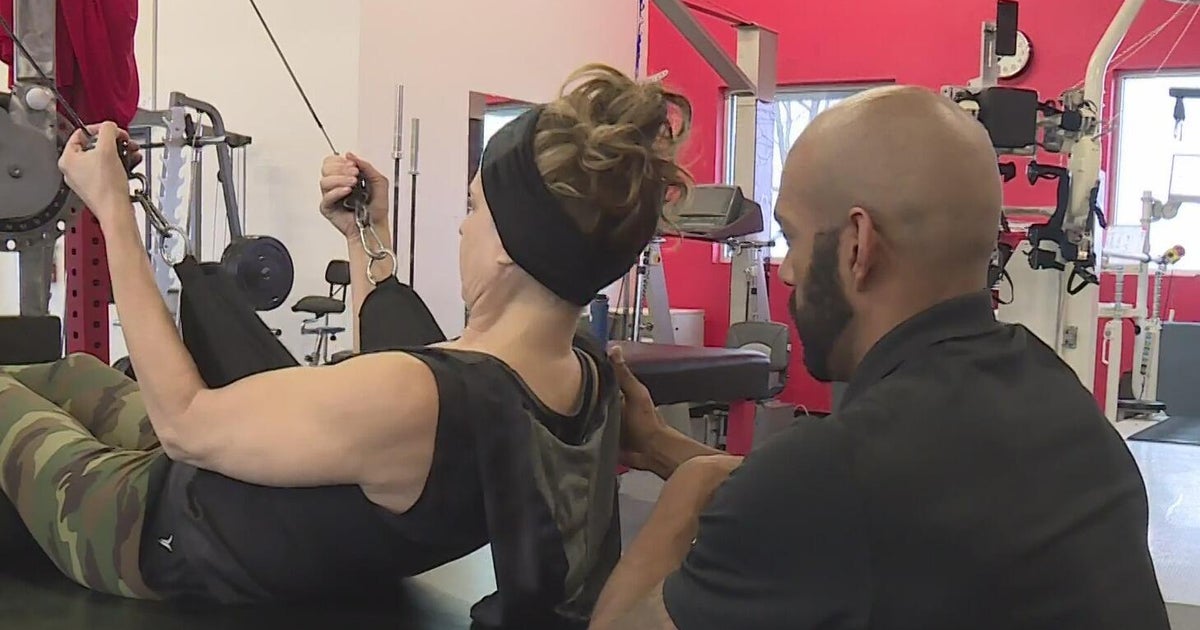
In the old days (I've been around awhile!) meniscal repairs were rehabilitated in a slower more guarded fashion than partial meniscectomies, limiting a patient's weight-bearing and initially bracing the knee in an extended position. This resulted in more muscle atrophy from disuse, increased difficulty restoring full mobility and delayed progress to full function. The current school of thought is to accelerate the rehab process, much like that for the partial meniscectomy. However, this still takes at least 6-8 weeks, and for most weekend-warriors and major league spectators, longer. So, back to Brandon Roy… There is no point in pushing his limit. Rehab, even for high-level athletes should not be rushed, and when players return to competition too soon they often sacrifice long-term health for short-term rewards. The Trail Blazers are smart in playing it safe and putting a priority on having a healthy Brandon Roy around for future seasons.
Abby Sims is an orthopedic and sports physical therapist who has been in private practice in NYC for the past 30 years (you may be familiar with her husband, sportscaster & WFAN alum Dave Sims). Abby has a Masters of Science in Physical Therapy from Duke University and has extensive experience working with professional, collegiate and recreational athletes with musculoskeletal injuries – both non-operative and operative. She has also enjoyed lecturing at many medical conferences. Abby looks forward to responding to your questions or writing about topics that you suggest. For more information about Abby, or her practice, please check out www.RecoveryPT.com as well as www.AthletiSense.com.