Artemis II splashdown live updates as NASA mission returns to Earth
What to know about Artemis II's splashdown return:
- NASA's Artemis II astronauts are set to return to Earth from their moon mission on Friday with a splashdown landing in the Pacific Ocean after making a high-speed reentry through the atmosphere.
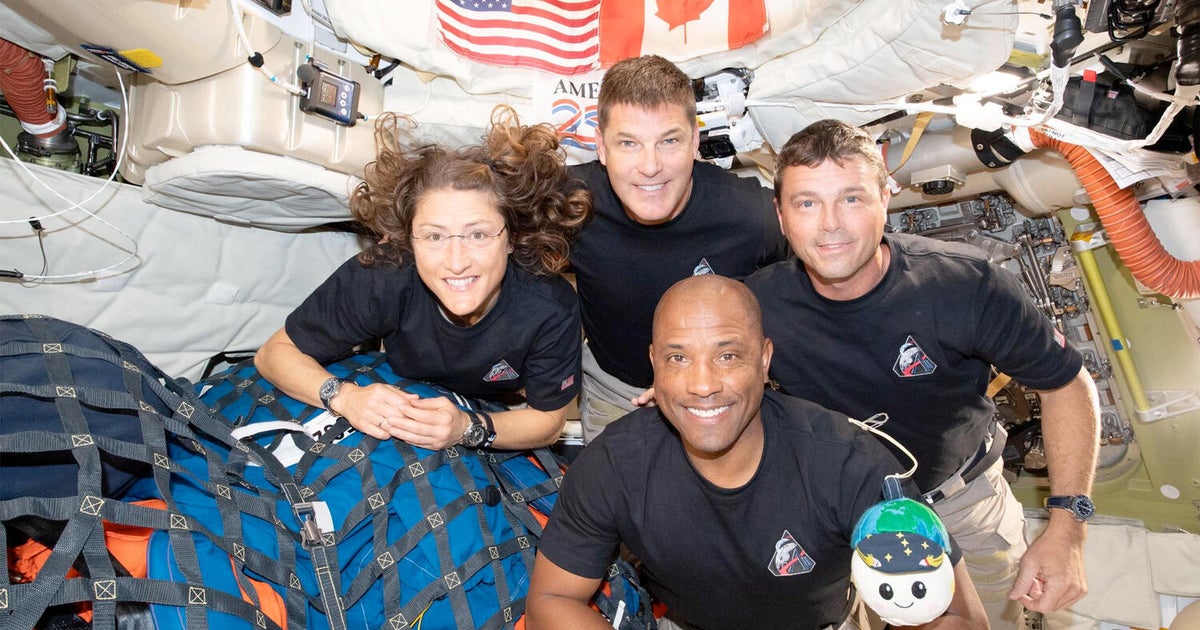
- The Orion capsule is carrying the crew — commander Reid Wiseman, pilot Victor Glover, mission specialist Christina Koch and Canadian astronaut Jeremy Hansen — back to Earth after a nine-day mission that set a record for the farthest distance humans have ever traveled from our planet.
- The Orion is expected to splash down in the Pacific near San Diego at around 8:07 p.m. ET, and CBS News will have live coverage. Navy recovery crews will bring the astronauts to the USS John P. Murtha for medical checks before they helicopter back to land.
What happens as astronauts reenter Earth's atmosphere
Reentry into Earth's atmosphere should begin at 7:53 p.m. ET, according to NASA's timeline for landing day.Twenty-four seconds after reentry begins, and some 1,950 miles from splashdown, heating across the Orion capsule's 16.5-foot heat shield will build to the point that electrically charged plasma will engulf the spacecraft, preventing normal communications.
One minute and 22 seconds into the descent, temperatures across the heat shield will reach a peak of some 5,000 degrees Fahrenheit — half as hot as the visible surface of the sun.
The communications blackout is expected to end after about six minutes.
At that point, the spacecraft will be descending at about 9,000 mph, less than 200 miles from the targeted splashdown point. Eight minutes after entry, the Orion will pass through an altitude of about 100,000 feet. One minute later, the spacecraft will drop below the speed of sound.
At an altitude of about 50,000 feet, at a velocity of some 300 mph, 11 parachutes will begin deploying in sequential fashion to further slow and stabilize the spacecraft. Finally, three pilot chutes will pull out Orion's three 116-foot-wide main chutes, which will begin inflating at an altitude of about 6,000 feet.
That will slow the craft to a relatively gentle 17 mph splashdown in the Pacific Ocean.
Astronauts take some final photos of Earth from space
A video camera mounted inside Orion's cabin captured commander Reid Wiseman and pilot Victor Glover using their iPhones to snap final photos of Earth from about 40,000 miles away.
The astronauts held the phones up to the video camera to show the pictures to Mission Control.
"We're going to need a copy of that photo when you guys get back," the capsule communicator can be heard saying.
NASA says Orion is "in great shape" and "weather is go for splashdown"
Mission Control in Houston provided a positive update on conditions with less than 5 hours to go until splashdown.
"Everything on board Integrity is in great shape," a NASA commentator said, referring to the name of the Orion spacecraft. "All the systems are functioning perfectly."
The crew is taking some time to stow items they no longer need in preparation for reentry.
"All is well aboard Integrity and the weather is go for splashdown," NASA said.
Orion performs final major maneuver
The Orion spacecraft has performed its last major maneuver of the mission, according to a status update from NASA.
The spacecraft fired its thrusters to fine-tune its entry path to the splashdown location. The burn lasted eight seconds.
NASA communicators told the crew that it appeared to be a good burn. The crew will continue to prepare for reentry.
Crew is staking their lives on the heat shield, and NASA has "high confidence"
When the Artemis II Orion crew capsule returns to Earth on Friday, it will hit the discernible atmosphere some 75 miles above the Pacific Ocean at a blistering speed of around 24,000 mph, and within seconds, temperatures across its 16.5-foot-wide heat shield will climb to some 5,000 degrees — half as hot as the visible surface of the sun.
The four astronauts on board are counting on the heat shield to keep them safe all the way through the peak heating zone to a parachute-assisted splashdown off the coast of San Diego.
"We have high confidence in the system, in the heat shield and the parachutes and the recovery systems we put together," Amit Kshatriya, NASA's associate administrator, said Thursday.
NASA made some modifications to plans for the reentry trajectory after the uncrewed Artemis I test flight in 2022 sustained damage to its heat shield.
NASA monitoring weather conditions for splashdown
NASA commentator Rob Navias says forecasters are predicting the densest portion of cloud cover in the region will remain closer to the California coast. Out at the splashdown location, roughly 40-50 miles southwest of San Diego, they are predicting broken, scattered clouds, winds of 10 knots and seas of 4 feet.
NASA Administrator Jared Isaacman will be on recovery ship for crew's return
NASA Administrator Jared Isaacman will be aboard the USS John P. Murtha for splashdown. The ship is tasked with safely recovering the four astronauts and their billion-dollar spacecraft.
Four helicopters and six small boats will take part in the crew and capsule recovery after splashdown in the waters of the Pacific.
Orion capsule will be traveling up to 24,000 mph during reentry
The Orion capsule carrying the astronauts will be traveling at about 24,000 mph when it hits the top of the atmosphere during reentry. That's fast enough to fly from New York to London in less than nine minutes.
Artemis II crew wakes up for final day of the mission — 61,326 miles from Earth
For the final day of their mission, the Artemis II astronauts woke up at 11:35 a.m. ET to the tunes of "Run to the Water" by Live, selected by the crew, and "Free" by Zac Brown Band.
"What a great way to start the day, Houston. Courage and grit. That'll stick with me and it should stick with all of you all day long," commander Reid Wiseman said.
At wake-up time, they were 61,326 miles from Earth.
A day earlier, NASA shared the crew's morning playlist on Spotify. "Each track was selected by the Moon crew, continuing a tradition that started more than 50 years ago," NASA wrote on social media.
California 8-year-old designed Artemis II's zero-gravity indicator
"Rise," the plush mission mascot aboard Artemis II, has served an important role as the crew's zero-gravity indicator during the trip around the moon.
Rise also became a viral sensation, floating through videos and photos from the Artemis II crew, and carried the names submitted to NASA's "Send Your Name with Artemis" campaign.
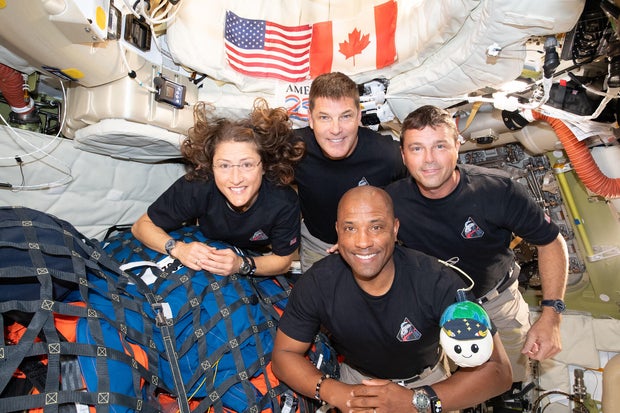
The adorable plush is the brainchild of 8-year-old Lucas Ye. The California second-grader made sure to include historical references in every part of the plush's design and ensured it would meet NASA's strict standards.
Someday, he says, he hopes to become an astronaut himself.
How to watch Artemis II's return to Earth and splashdown
CBS News will have live coverage as the Artemis II mission comes to an end after nine days in space.
- What: Artemis II crew returns to Earth.
- Date: Friday, April 10, 2026.
- Time: Live coverage on CBS News 24/7 begins at 7:30 p.m. ET. Splashdown is scheduled for 8:07 p.m. ET.
- Location: Splashdown off the coast of San Diego, California.
- Online stream: Live on CBS News in the video player above and on your mobile or streaming device.
Watching solar eclipse "just blew us all away," astronaut says
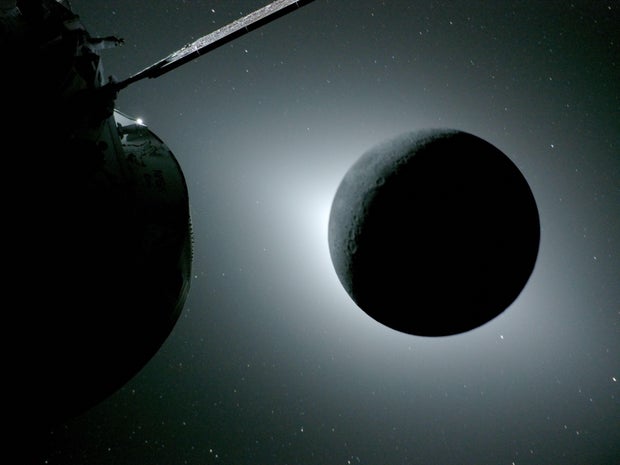
Astronaut Victor Glover told reporters that watching the sun disappear behind the moon in a solar eclipse was the highlight of the mission for him.
"We saw great simulations made by our lunar science team, but when that actually happened, it just blew us all away," he said during a news conference Wednesday. "Launching on April 1 meant the far side (of the moon) wasn't as illuminated as we were hoping. And so (the eclipse) seemed to be a consolation, and it was one of the greatest gifts of that part of the mission."
Asked about the splashdown, Glover said he's been thinking of that moment ever since he was assigned to the crew. He also said there will be much more to share once they're back on Earth.
"All the good stuff is coming back with us. There (are) so many more pictures, so many more stories. And gosh, I haven't even begun to process what we've been through," he said. "Riding a fireball through the atmosphere is profound as well. I'm going to be thinking about and talking about all of these things for the rest of my life, for sure."
Trump praised Artemis II astronauts as "modern-day pioneers"
President Trump told the crew of NASA's Artemis II mission they had "inspired the entire world" in a 12-minute chat late Monday, after they looped around the moon on their record-breaking voyage.
"Today, you've made history and made all America really proud," he said. "Humans have never really seen anything quite like what you're doing in a manned spacecraft. It's really special."
Mr. Trump praised the astronauts for their "courage" and "genius" — and noted that their trip is a precursor to NASA's bid to return humans to the surface of the moon for the first time in over half a century.
"America is a frontier nation, and the four brave astronauts of Artemis II … really are modern-day pioneers," the president said, adding that the U.S. plans to "push on to Mars" next.
Astronauts captured stunning photos during mission
The crew captured stunning photos during the mission, with spectacular views from the far side of the moon and an eclipse in space.
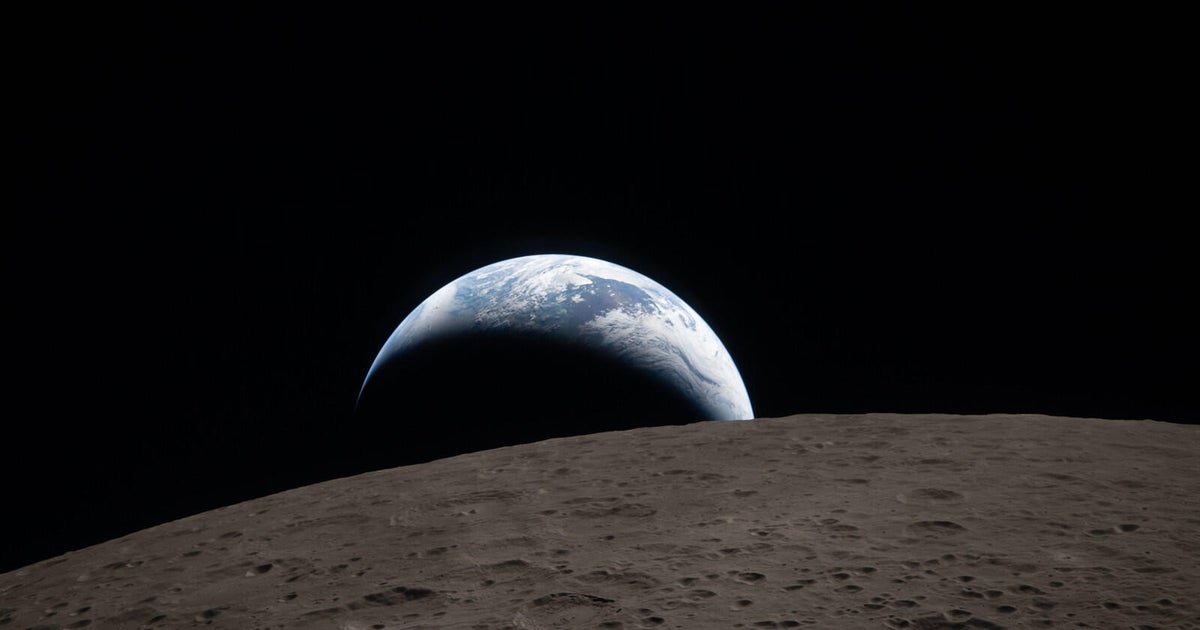
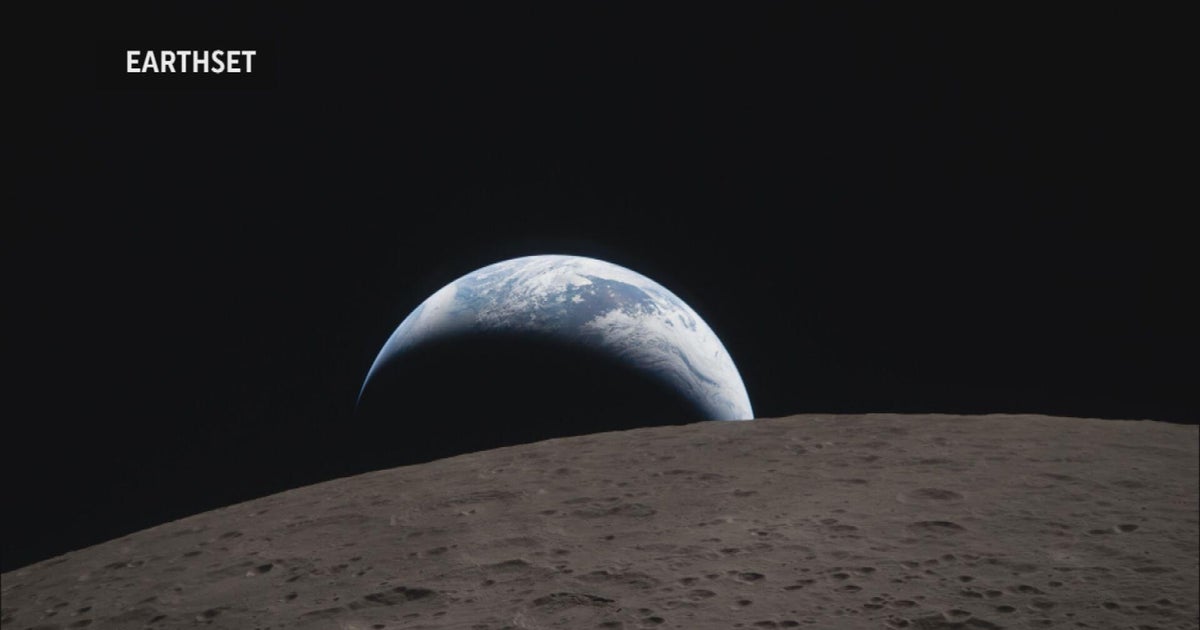
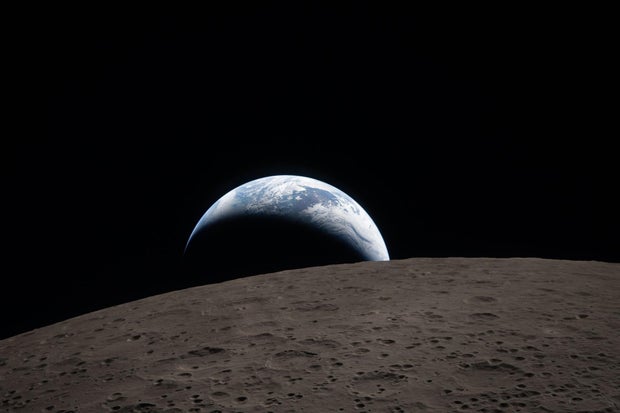
One image from NASA showed "Earthset" — the Earth dipping behind the moon. Part of the Earth is seen in darkness, while Australia and Oceania are visible on the planet's surface. Details of the moon appear in the photo's foreground.
"Humanity, from the other side," the White House said about the image.
Another stunning photo showed the moon eclipsing the sun. The eclipse was not visible from Earth, only to the crew aboard the spacecraft, and the astronauts needed to wear eclipse glasses to protect their eyes until the moon completely covered the sun.

Crew named crater on the moon after commander's late wife
In an emotional tribute, astronaut Jeremy Hansen said he and fellow crew members Christina Koch and Victor Glover chose to name a moon crater "Carroll" after commander Reid Wiseman's wife, who died of cancer in 2020. Hansen's crewmates could be seen wiping away tears as he shared the dedication.
"Some times of the moon's transit around Earth we will be able to see this," he said of the crater. "... And it's a bright spot on the moon. And we would like to call it Carroll."
Wiseman later said it was the most deeply profound moment of the mission.
"That was an emotional moment for me, and I just thought that was just a total treasure," Wiseman said during a space-to-ground news conference Wednesday.
He said his crewmates proposed the memorial when they were all in medical quarantine a few days before launch.
Before launch, the science team had helped identify a few relatively fresh craters on the moon that had not been previously named. The crew proposed naming another of the craters "Integrity" after the name of their Orion spacecraft.
Crew set record for farthest distance from Earth
The crew of Artemis II set the record for the farthest distance any human has traveled from Earth just after 7 p.m. ET on Monday as their Orion spacecraft looped around the far side of the moon.
The new record — 252,756 miles from Earth — surpassed Apollo 13's record from 1970 by more than 4,000 miles, according to NASA. The crew had exceeded Apollo 13's record earlier in the day.
The distance record was one of two big moments for the crew on Monday night. The Orion capsule also made its closest approach to the moon when it flew 4,067 miles above the surface.
Both milestones came without radio contact to NASA back on Earth. Since the moon blocked Orion, and its signal, from Earth, the crew entered a planned 40-minute loss of communication until it came out on the other side.