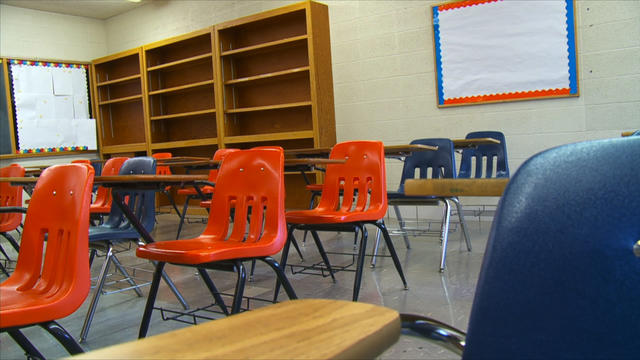
Teachers Conflicted About Returning To In-Person Classes This Fall
Gov. Tim Walz has said there are three scenarios being considered here in Minnesota: students returning to in person learning, distance-only learning, or a hybrid model.
Watch CBS News
Gov. Tim Walz has said there are three scenarios being considered here in Minnesota: students returning to in person learning, distance-only learning, or a hybrid model.

The Minnesota House of Representatives once again rejected a measure that would have limited Gov. Tim Walz's ability to extend the peacetime state of emergency.

The legislature failed to pass any of the major bills during the last special session. That included bills on police reform, a $1.35 billion infrastructure, jobs and bonding bill, a tax bill, and relief for riot-torn Minneapolis and St. Paul.

Gov. Tim Walz announced Friday that he will convene a special legislative session starting on July 13.

As COVID-19 test processing capacity in Minnesota has reached the 20,000 a day benchmark, daily deaths and hospitalizations continue to trend downward.

One month ago Thursday, Floyd died in Minneapolis after a police officer knelt on his neck for nearly eight minutes. A lot has happened since Floyd's death, both here in the Twin Cities and across the country.

President Donald Trump claims he sent National Guard troops to Minneapolis to restore order after the death of George Floyd. That never happened.

While the debate around a police reform proposal received a lot of attention, the legislature's failure to agree on other issues is having an impact on the bottom line of communities statewide.

What appeared to be a possible compromise on police accountability and COVID-19 funds fell apart in early hours of Saturday morning as the Minnesota legislature voted to adjourn the special session.
Heading into the session, Minnesota Gov. Tim Walz hoped lawmakers would address COVID-19 relief, a bonding bill, a tax bill, and police reforms. So far, none of those issues are settled.

This push comes Friday, after the governor issued a proclamation officially recognizing the day as Juneteeth Freedom Day in Minnesota.

The lights are on late Thursday night at the Minnesota State Capitol in St. Paul, as lawmakers try to reach a compromise in the special session.

The Minnesota Senate's GOP majority passed a limited set of measures Wednesday that the Democratic governor dismissed as "weak sauce."

During the special session Tuesday, Gov. Tim Walz signed a bill that will provide $62.5 million in grants to small businesses impacted by the COVID-19 pandemic.

Gov. Walz urged the legislature to pass the $2.2 billion bill, which would be invested in infrastructure and bring back lost jobs.

The organizers behind the petition accused Walz of malfeasance following his stay-at-home and other emergency orders locking the state down amid the coronavirus.

On Friday, Minnesota lawmakers will start debating big changes that could change police departments statewide.

This coming Monday will mark 100 years since the Duluth lynchings, a dark stain on Minnesota's past. And on Friday morning, the Minnesota Board of Pardons made history: It granted the state's first posthumous pardon to Max Mason.

The changes being called for involve changes in specific Minnesota laws that would fundamentally change when police officers can use force and how they can lose their jobs.

The Minnesota Historical Society says that they have no knowledge of the whereabouts of the statue after it was removed.
As far as the details go, the governor said he's prepared to put every solution on the table and debate them that way, knowing the Legislature will talk around police departments and unions.
A group of protesters pulled down a statue of Christopher Columbus Wednesday outside the Minnesota State Capitol.

Gov. Tim Walz says the state is ready to make another turn of the proverbial dial toward normal social restrictions.

Gov. Tim Walz is sending Minnesota National Guard troops to state's western border because of what he says are credible threats of violence during demonstrations planned in neighboring North Dakota.

Overnight mandatory curfews have been in effect for the last five nights now, and they're not ending just yet.