Minneapolis air quality was world's worst Thursday, but much improved Friday

The air quality in Minneapolis was ranked the worst among major cities globally Thursday afternoon as smoke from northern wildfires cloaked the region. As of Friday morning, the air quality in the metro has improved greatly.
After being in the top spot for hours on Thursday, Minneapolis was ranked 84th as of 11:30 a.m. Friday, according to IQAir.
The metro is no longer under an air quality alert, though northern Minnesota is. In the Arrowhead, where air quality is at a hazardous level, an alert remains in place through 11 a.m. Monday. The rest of the region, where the air ranges from unhealthy to very unhealthy, is set to see its alert expire at 6 p.m. Friday.
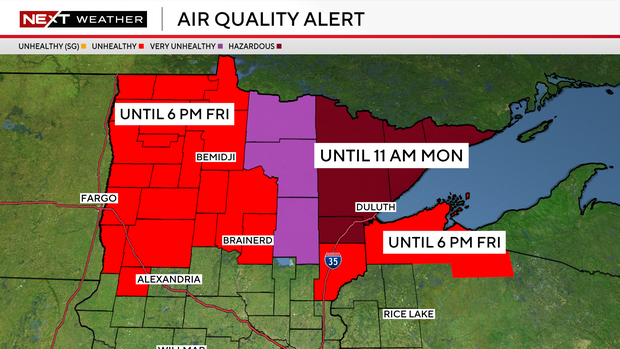
Heavy smoke from wildfires in northern Minnesota and Canada will remain across northeastern Minnesota, while the smoke should push out of western and central Minnesota by around midday, the agency said. Air quality in the Twin Cities is expected to reach the yellow, or moderate, category. Parts of western and central Minnesota will be two steps worse, with the air unhealthy for all. In northeastern Minnesota, the air will be hazardous.
Smoke first arrived in the metro and southeastern Minnesota late Wednesday evening. The MPCA said Wednesday night that hourly observations for the Twin Cities surpassed previous records.
The health dangers
It's an unfortunate, rare situation having this smoke in conjunction with this heat, says Ryan Lueck with the Minnesota Pollution Control Agency.
"What's unique about it is that the health impacts can be different, it can be worse," Lueck said. "So the body has a harder time dealing with both of those stressors at the same time, as opposed to if it was just one at a time. And so that's one of the main concerns that we have with this event. It's hot out there, it's gonna stay hot and now we're adding in wildfire smoke into the mix, which is not good."
People at greatest risk are those who already have heart and lung problems, pregnant people, along with children and older adults. Members of these groups will want to minimize time outdoors during the alert, Lueck says, and everyone should take caution when it comes to exercising outside or doing hard manual labor outside in these conditions.
Even the short-term combination of extreme heat and smoke could aggravate lung disease, asthma and acute bronchitis, the agency says, and it can increase the risk of respiratory infections.
Dr. Beth Stegora with Hennepin Healthcare says the combination of excessive heat and poor air quality is a major concern.
"The emergency room visits are going up significantly right now between all the hospital systems for heat-related illnesses, including things like vomiting or people passing out or having altered mental status," Stegora said.
Stegora is also the subject matter expert for heat and health for Hennepin County. She said the excessive heat forces the heart to work harder and poor air quality can impact your lungs creating more stress on the body.
Stegora said heat-related illness is preventable if you watch out for symptoms while also making sure to stay hydrated. Symptoms include dizziness, feeling faint, vomiting or passing out.
Those at higher risk include children, older adults, people with underlying health conditions and pregnant women.
Health experts recommend drinking water often, limiting time outside, taking breaks in the shade and making sure to recover at night before the next day.
"We're planning on meeting each day to connect about what the stats are within the county and where we need to put our resources," Stegora said. "So, I think we could anticipate an increase in our emergency room visits.


