Twin Cities law enforcement leaders call for unified gang task force amid spate of gun crimes

Several law enforcement leaders in the Twin Cities are pushing for new policy to address what they describe as a spate of gun violence from gangs tied to "East African and Somali" communities.
Bloomington Police Chief Booker Hodges held a joint news conference Tuesday afternoon to discuss gang violence with Hennepin County Sheriff Dawanna Witt and the police chiefs of neighboring Eden Prairie and Edina, Matt Sackett and Todd Milburn.
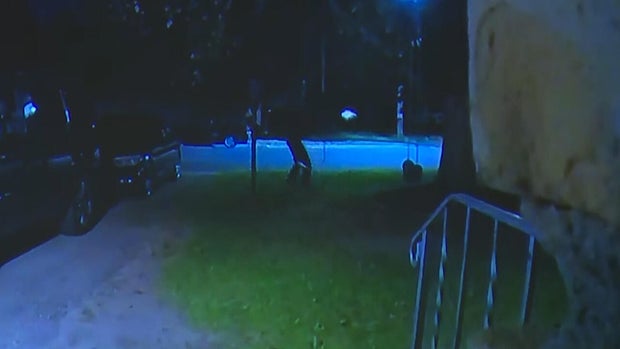
Hodges said around 12:47 a.m. Tuesday, multiple armed people fired around 100 total rounds in the area of Harriet Avenue South between West 99th and 102nd streets, just east of Lyndale Avenue South and Interstate 35W. One person suffered minor injuries in the shooting.
Hodges played security camera footage of the shooting in which the suspects appear to be using auto sears, an illegal modification device that turns a semi-automatic handgun into a fully-automatic machine gun.
Eden Prairie and Edina have also been reeling from gun violence, including Friday night's double shooting outside Eden Prairie High School's homecoming game, and a shooting outside a gas station in the city Monday night.
Also overnight Tuesday, a man showed up to Edina's M Health Fairview Southdale Hospital with a non-life threatening gunshot wound, which police believe is tied to a Minneapolis shooting.
Last month in the city, a group of teenagers was shot at while playing basketball near Our Lady of Grace Church. Milburn said his investigators recovered 55 spent bullet casings at the scene.
"It's all about social media beef"
Hodges, Witt, Sackett and Milburn were united in placing blame for the recent uptick in gang violence on "the Somali American community," with Hodges explaining how the gangs are not necessarily preoccupied with the traditional trappings of drugs and money.
"They're coming from two-parent homes, living in apartment buildings with $3,500 a month rent, driving [BMWs] and Mercedes, and all these luxury cars," Hodges said. "These kids have come from good homes and they have money. They're living in houses that cost more than my mortgage. So they're out here simply shooting each other based on social media beef, period."
Hodges also singled out Hennepin County Attorney Mary Moriarty and decried her policy of declining to charge people who were initially pulled over in petty misdemeanor traffic stops.
"The Somali American gangs are not dealing in drugs, so there is no drug nexus here to, that allows us, our law enforcement to stop someone from exercising their constitutional right until after they've committed a felony like shooting at people in the street or if they get caught with one of these switches," Hodges said. "I wish it was more complex, but like I said, there's no drugs. We're not finding drugs, we're not finding big, big stashes of cash. You're not finding any of that."
"We took our foot off the gas"
Witt said her office is repurposing two task forces "to primarily start focusing on gangs," and is calling for more cooperation between law enforcement.
"There's not one single agency that could tackle this problem that we're seeing today," Witt said. "We used to have a gang strike force here in Minnesota. That has pretty much disseminated, right? It's time to bring it back under better leadership."
Witt noted that one of her predecessors, former sheriff Rich Stanek, testified before Congress in 2014 about the growth in Somali gangs. But Witt said in the years since, "we took our foot off the gas."
"It's like right now, while we're focused on Somali American gangs, as soon as we're looking over here, something else pops up," Witt said. "We can identify people by their groups as typically how gangs are formed, whether it's race, culture, where they live. But you know what? You got to call gang problems what they are, yes, but you also got to be able to continue to focus on the things that aren't happening because that's what happened."
Besides the current lack of a strong task force, Hodges and Milburn also say an overall "lack of cooperation" from witnesses and victims is stunting progress.
"It's very clear to us in our Edina cases that we have witnesses, we have victims who know exactly what happened, are not being forthcoming with what they know, and that's hampering our investigations," Milburn said.
Still, Edina residents want to see arrests.
"As senior citizens we are nervous about being out at night in our community," said Jan Nelson.
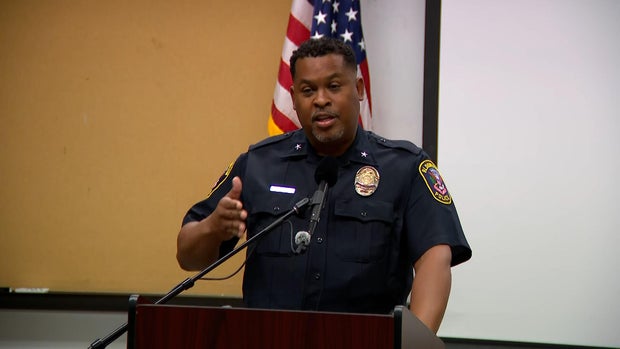
"We only have success, great success if we have cooperation from the community and people that know what's going on," Hodges said. "They can come forward and give us information that they're aware of."
Also on Tuesday, Ramsey County Sheriff Bob Fletcher held a news conference where he too singled out the Somali community.
"Number one, we need Somali parents to monitor their children like everybody does," Fletcher said. "Number two, there's been a lot of discussion about programs for youth. You know, I have a long history of doing youth programs, I'm a big advocate of it. Elected officials will have to decide do we want to put money into some youth programs that help these young men succeed rather than have them fail."
Fletcher also said he plans to meet later this week with Minnesota Bureau of Criminal Apprehension Superintendent Drew Evans and 40 other law enforcement agencies to determine a plan for a regional task force.
Eden Prairie Mayor Ron Case is looking to start an East African gang task force. Case is hoping to include new law enforcement tactics across the metro, and bringing everyone, including the Somali community, together to talk.
"We need the help of everybody, the Somali community, all of our law enforcement agencies, the state, the county," said Case. "I believe we can really tackle this."
During a community meeting on gang violence Monday night in Edina, metro resident Farhina Budul urged leaders to avoid casting a shadow of contempt and suspicion across the state's 100,000-plus-strong Somali community.
"When violence happens, we absolutely have to address it," Budul said. "But we also have to be careful that our response does not stigmatize an entire community." violence.
"As senior citizens we are nervous about being out at night in our community," said Jan Nelson.


