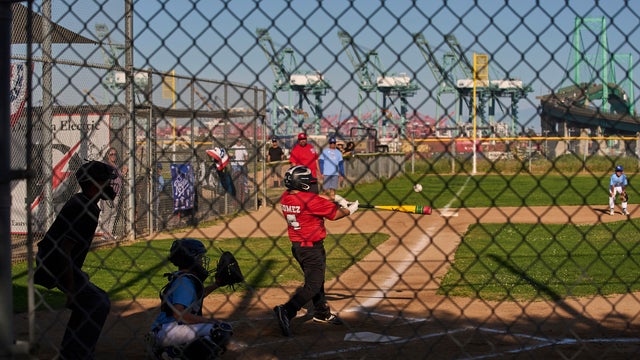
Latin American champion, Venezuelan little league team denied U.S. visas
The Cacique Mara team, from Maracaibo, Venezuela, was scheduled to participate in the tournament after winning the Latin American championship in Mexico.
Watch CBS News
The Cacique Mara team, from Maracaibo, Venezuela, was scheduled to participate in the tournament after winning the Latin American championship in Mexico.

The U.S. Treasury sanctioned six leaders and affiliates of the Venezuelan gang Tren de Aragua, including the head of the group, known by the alias "Niño Guerrero."
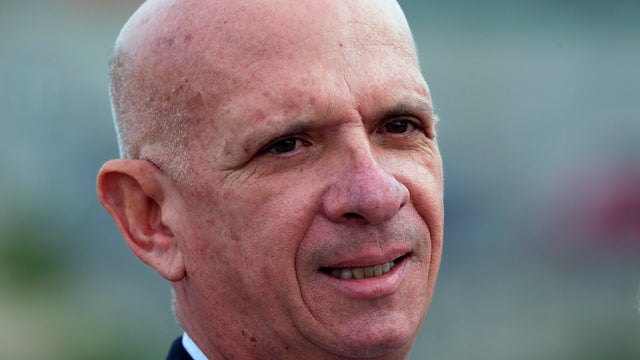
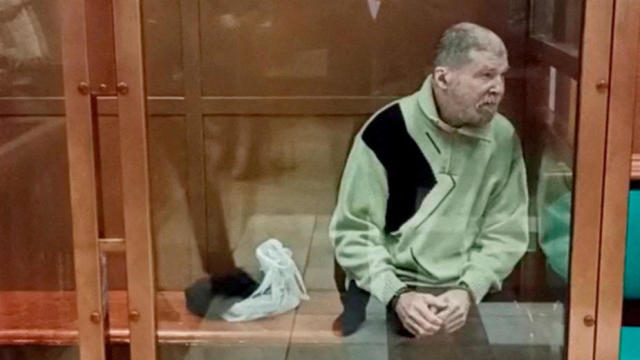
A former Venezuelan spymaster pleaded guilty to drug trafficking charges — including narco-terrorism -- a week before his trial was set to begin in a Manhattan federal court.
Jesus Sarmiento, who had nearly 80,000 followers on TikTok, was murdered by armed men who broke into the residence where he was staying.

The notices, delivered via email, inform recipients that their temporary permission to remain in the U.S. under the CHNV parole program has been rescinded.
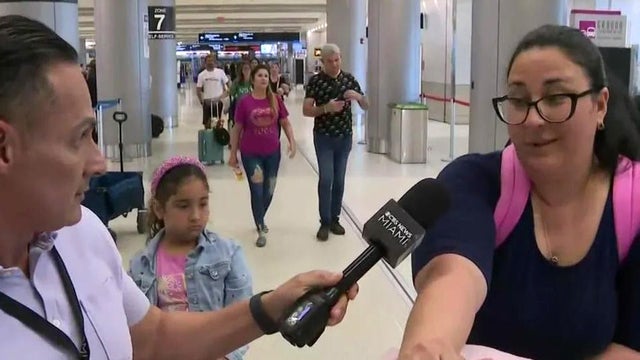
President Trump's new travel ban is causing concern among South Florida families as many fear they'll no longer be able to reunite with loved ones.
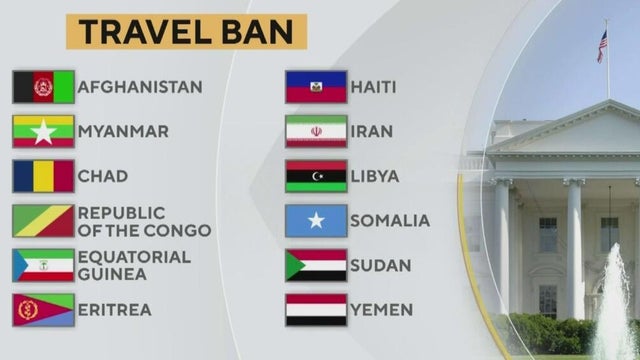
President Trump’s newly reinstated travel ban bars most visa applications several countries — including Cuba, Haiti, and Venezuela — prompting mixed reactions at Miami International Airport. CBS News Miami's Chelsea Jones has the story.
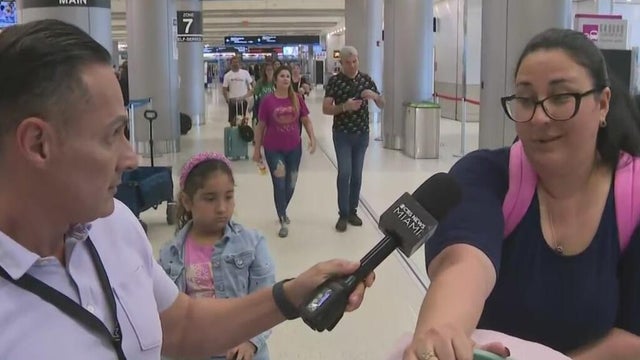
A new Trump administration travel ban impacting citizens from 12 countries — including Cuba, Haiti and Venezuela — is sparking confusion and heartbreak for South Florida families trying to reunite with loved ones. CBS News Miami's Ivan Taylor has the story.
The travel restrictions have triggered fear, frustration and calls for action among the affected communities.
CBS News Miami's Larry Seward reports on South Floridians speaking out about the upcoming travel ban.
The Trump administration is considering a regulation that would prevent most asylum-seekers from getting work permits
South Florida reaction continues to pour in after the Supreme Court allowed the Trump administration to revoke humanitarian parole protections for nearly half a million people.

The parole program, known as CHNV, temporarily protected roughly 532,000 people from Cuba, Haiti, Nicaragua and Venezuela from the risk of deportation.
The U.S. State Department is warning citizens not to travel to Venezuela, warning of "severe risks" including wrongful detention, kidnapping and torture.
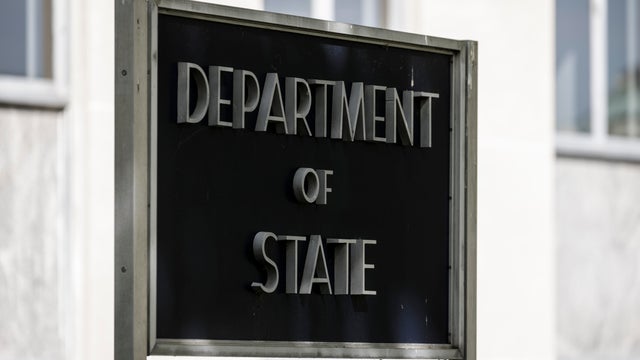
The State Department said that it does not have an operating embassy or consulate in Venezuela and warned of "severe risks" there.
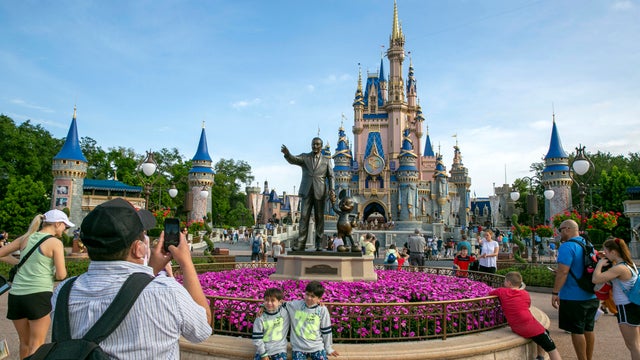
Almost four dozen Venezuelan workers who had temporary protected status taken away have been put on leave by Disney after the U.S. Supreme Court allowed the Trump administration to strip them of legal protections.
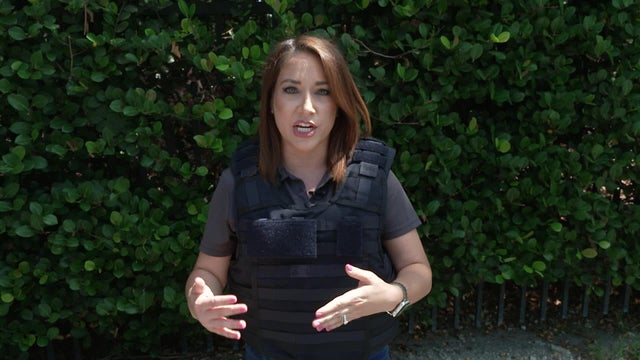
CBS News Miami's Lauren Pastrana rides along as ICE agents capture Venezuelan double murder suspect.
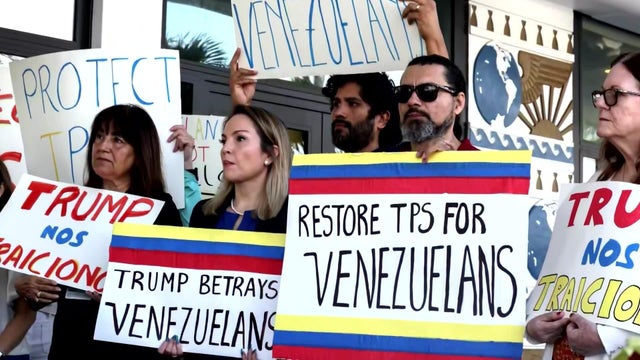
"The fight is far from over, but this is a very big setback," said Adelys Ferro, executive director of the Venezuelan American Caucus.
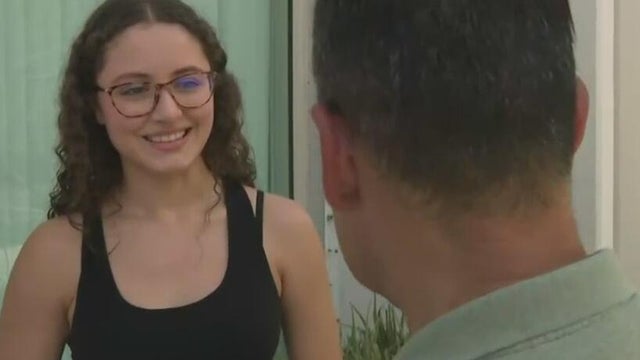
CBS News Miami's Ivan Taylor reports on how some Venezuelans living in South Florida are reacting to the recent TPS decision.
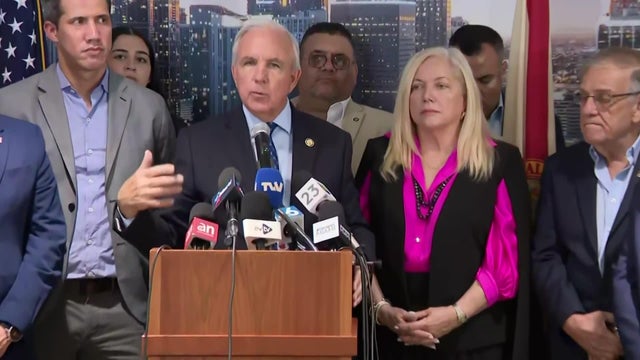
U.S. Rep. Carlos Gimenez (R-FL) emphasized the positive contributions of Venezuelan immigrants and urged people not to generalize based on isolated criminal activity.
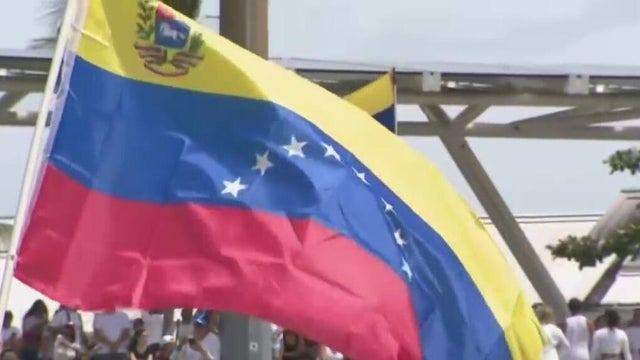
South Florida leaders on both sides of the political aisle are voicing concern after the U.S. Supreme Court allowed the federal government to revoke Temporary Protected Status (TPS) for Venezuelan nationals, potentially putting hundreds of South Florida residents at risk of deportation.
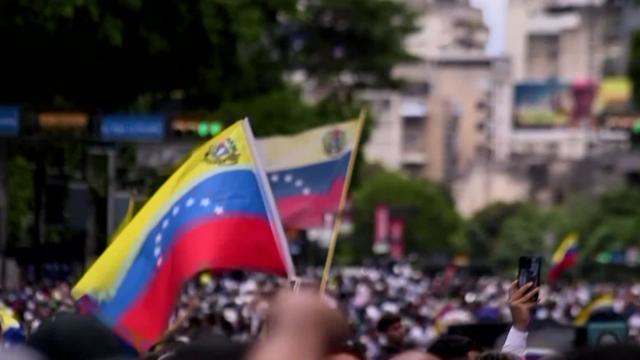
The Supreme Court ruling is alarming migrants, but a South Florida legal expert offers reassurance.
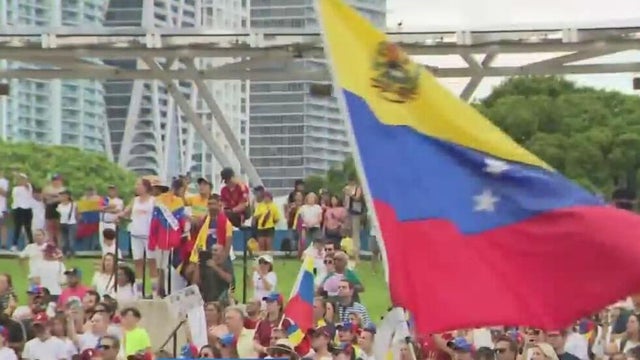
The U.S. Supreme Court on Monday said it will let the Trump administration end the Temporary Protected Status program protecting roughly 350,000 Venezuelan migrants.
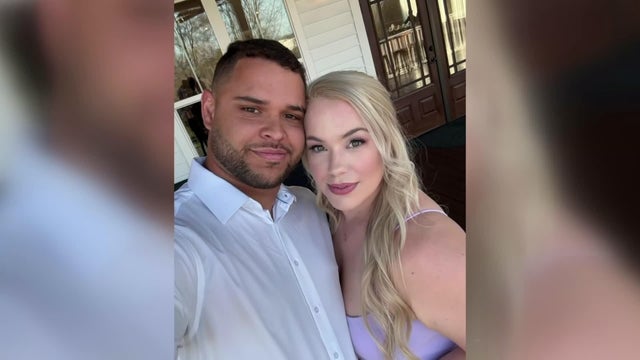
According to Madison Pestana, her husband, Juan Pestana, was detained in the parking lot of their building as he was getting into his truck to go to work.
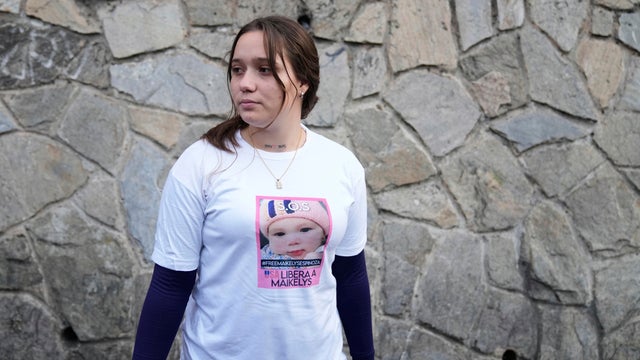
The 2-year-old girl, Maikelys Espinoza, was separated from her parents by deportation — a move that Venezuela repeatedly denounced as a kidnapping.