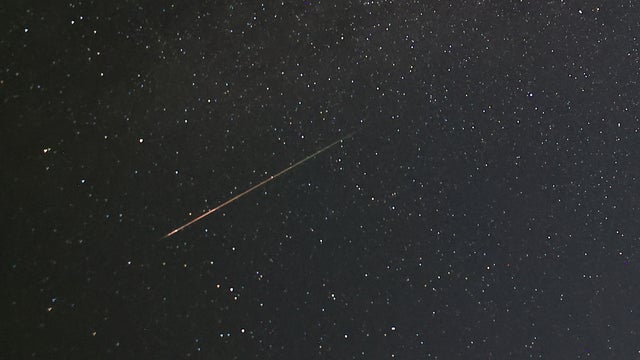
Perseid meteor shower reaches peak viewing on Wednesday night
The Perseid meteor shower is the best viewing all year, according to NASA.
Watch CBS News
The Perseid meteor shower is the best viewing all year, according to NASA.
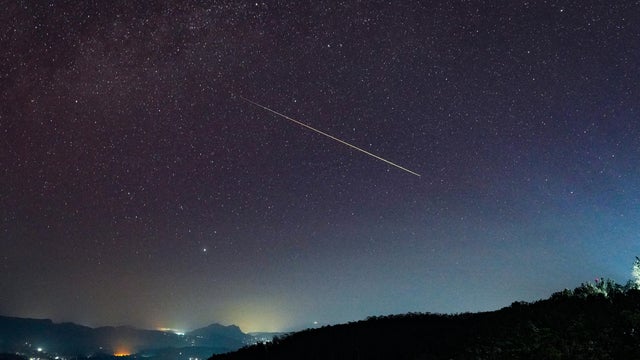
The Perseids meteor shower begins this week and is expected to offer one of the best astronomy shows of 2025.

This is the first time the sound and image of a meteor falling has been documented on video, a University of Alberta scientist found.

One of the best meteor showers of the year is about to peak. Here's how to watch and where you can catch the Geminids.
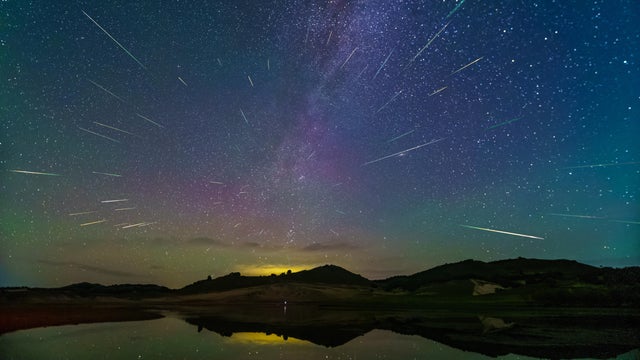
The Perseid meteor shower peaked in the night skies of Sunday into Monday, giving astronomy fans one of the best shows of 2024 as they looked to the skies.
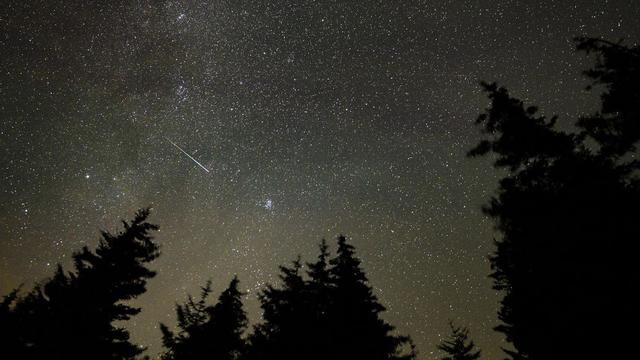
Two meteor showers are expected to flash across night skies around the same time this week.
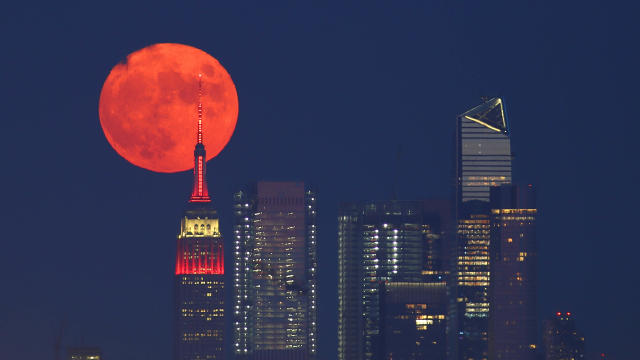
The full moon, also known as the Thunder Moon, will last three days, peaking on Sunday morning.
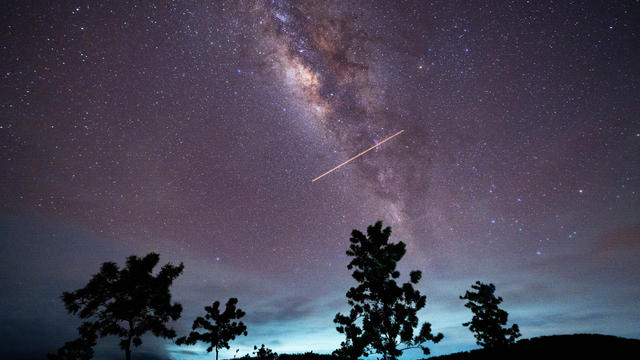
The Eta Aquariids meteor shower will peak overnight on Sunday into Monday, according to NASA.
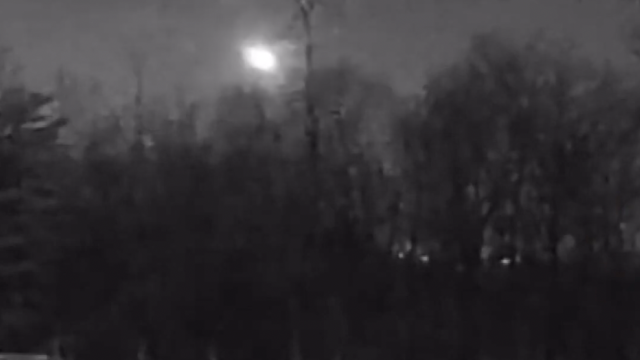
People across the eastern U.S. and in parts of Canada saw a dazzling light show on Wednesday night, as a fireball entered the atmosphere and burned up.
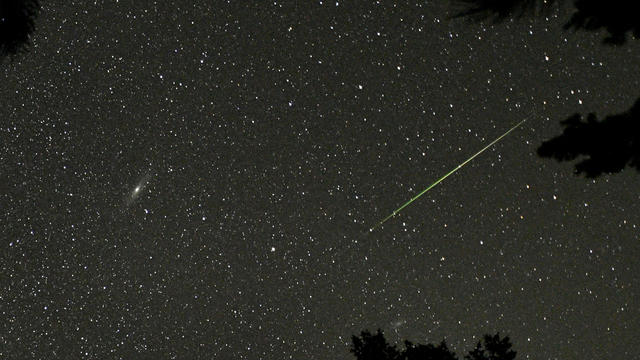
The American Meteor Society recommends keeping an eye out for meteors from 1 a.m. to 5 a.m.
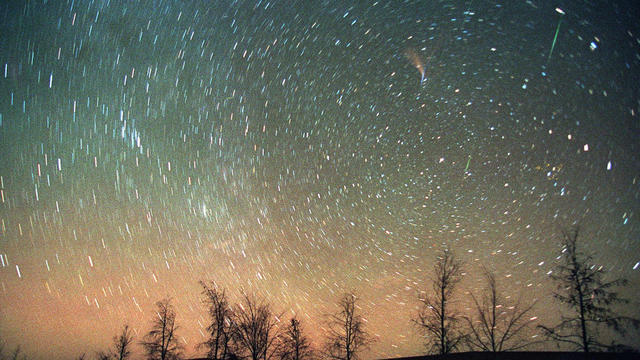
The Leonid meteor showers are fast – streaking by at 44 miles per second, according to NASA. Still, some stargazers can see them at their peak this week.
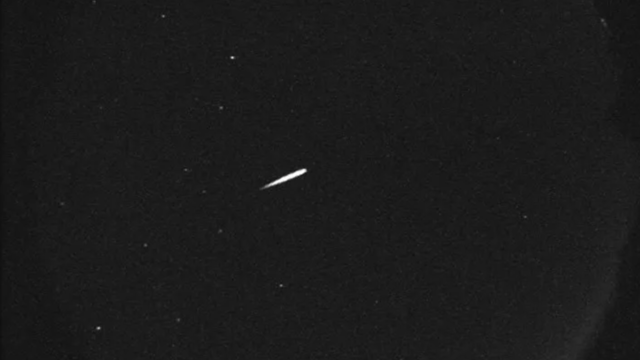
The Orionids are known for their brightness and speed, traveling at about 41 miles per second.
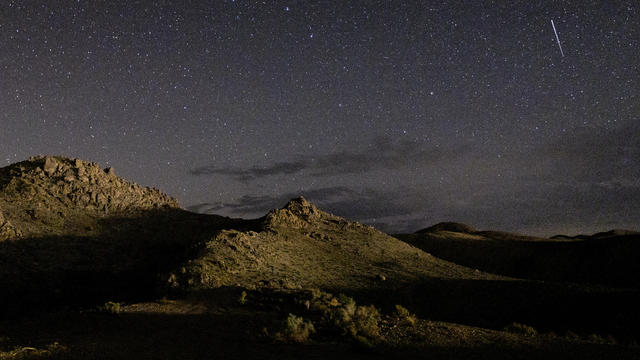
About 50 to 100 meteors from the Perseids can be seen per hour under ideal conditions, according to NASA.
Every year around this time we pass through the orbit path of Comet Swift-Tuttle
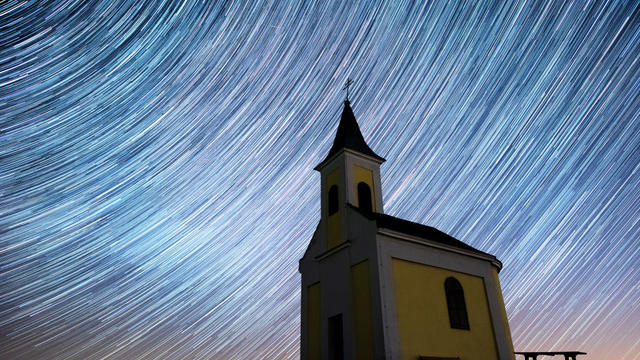
The Lyrids have lit up the sky for the past 2,700 years and potentially dozens of meteors could be seen per hour.
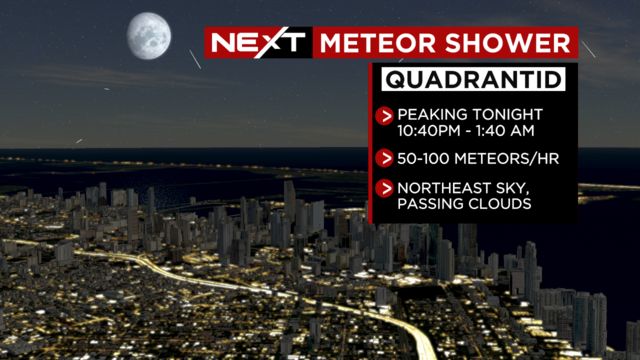
The new year kicks off with the Quadrantids, one of 12 annual meteor showers
The Ursids shower, which began on December 13, will peak on Wednesday night
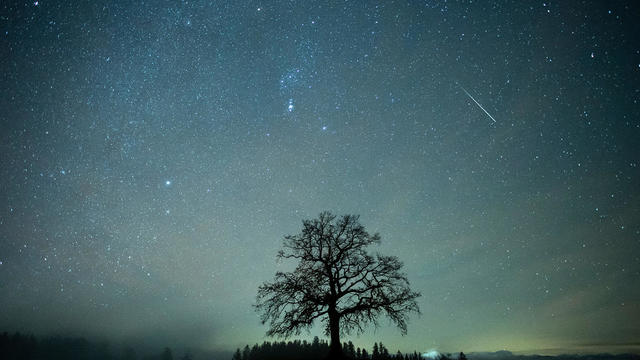
The meteors appear to radiate from the constellation Gemini, which will rise in the sky at around 10 p.m.
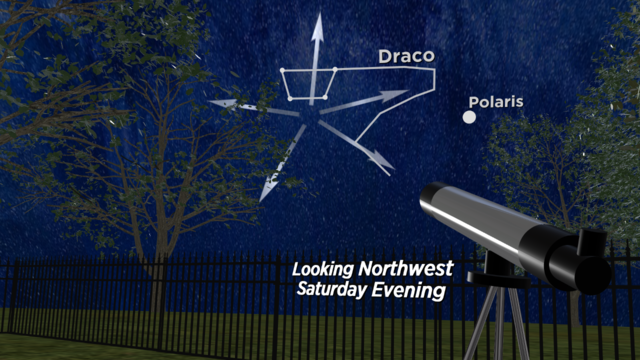
If you were planning to enjoy a vibrant meteor shower this weekend, mother nature may have different plans for you.
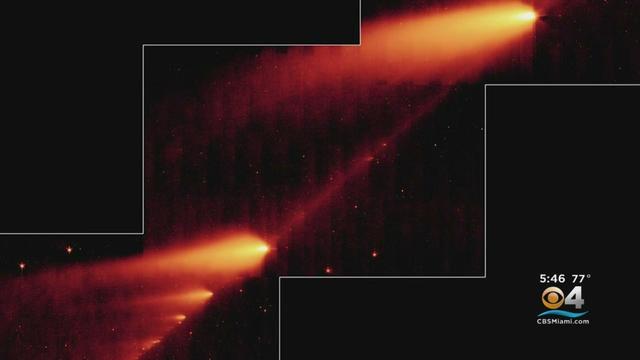
The stunning sight may be visible as earth passes through the remains of a comet that split apart nearly 30 years ago.