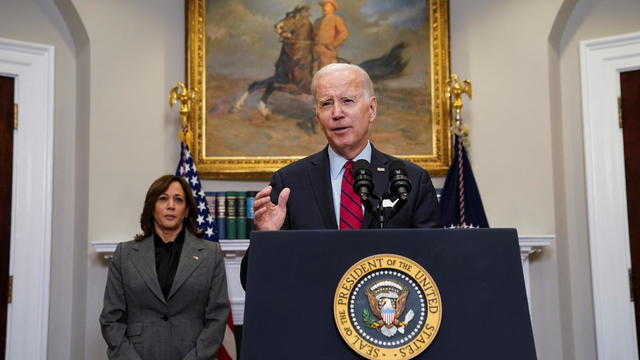
Biden expands Title 42 expulsions while opening legal path for some migrants
Under the plan, some migrants from Cuba, Nicaragua and Haiti would be allowed to enter the U.S. legally if they have financial sponsors.
Watch CBS News
Under the plan, some migrants from Cuba, Nicaragua and Haiti would be allowed to enter the U.S. legally if they have financial sponsors.
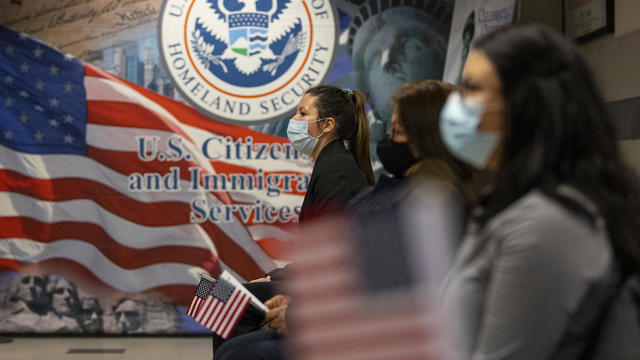
Unlike a Trump administration plan, the proposed rule would not dramatically increase application fees for immigrants seeking to become U.S. citizens.

The dispute over ending the public health law, which gives border authorities the power to swiftly expel some migrants, has gone all the way to the U.S. Supreme Court.

Title 42 allows U.S. border officials to quickly expel migrants and asylum-seekers on public health grounds.
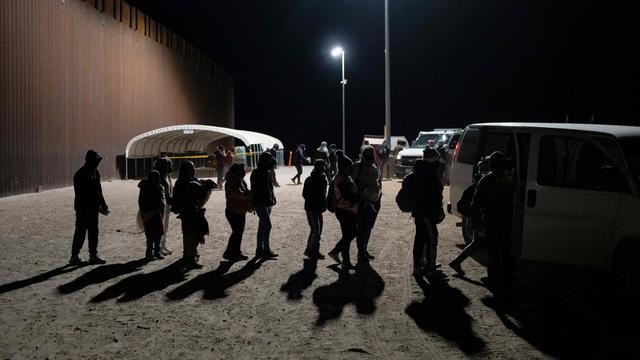
ICE deportations in fiscal year 2022 were the second-lowest tally recorded, but represented a notable increase from 2021.

The following is a transcript of an interview with Bank of America chief economist Michael Gapen that aired on Sunday, Jan. 1, 2023, on "Face the Nation."

The following is a transcript of an interview with Kristalina Georgieva, managing director of the International Monetary Fund, that aired on Sunday, Jan. 1, 2023, on "Face the Nation."

The following is a transcript of an interview with economist John Sullivan, Michael Morell, Michele Flournoy and H.R. McMaster that aired on Sunday, Jan. 1, 2023, on "Face the Nation."

The following is a transcript of an interview with Ben Tracy and Kevin Book that aired on Sunday, Jan. 1, 2023, on "Face the Nation."
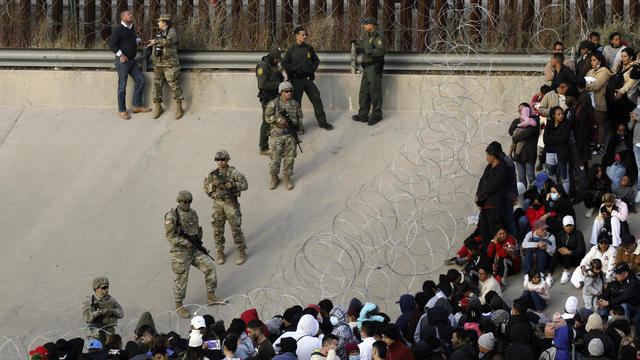
The Department of Homeland Security issued a bulletin on potential extremist-fueled violence connected to the expected end of Title 42 before the Supreme Court intervened on the policy.
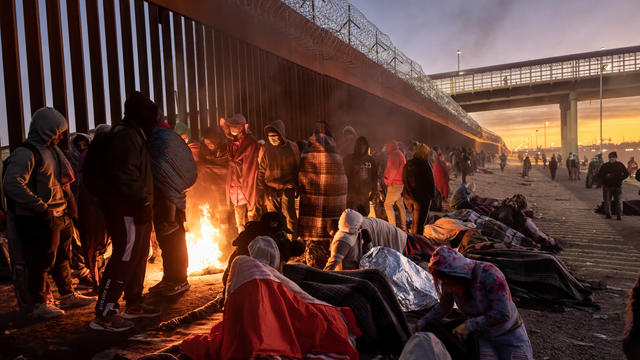
For nearly three years, the Title 42 public health law has allowed the U.S. to quickly expel hundreds of thousands of migrants to Mexico.

For the past two weeks, hundreds of migrants have been forced to sleep on the streets of El Paso because space in the city's shelters and churches has been depleted by a sharp increase in migrant arrivals.
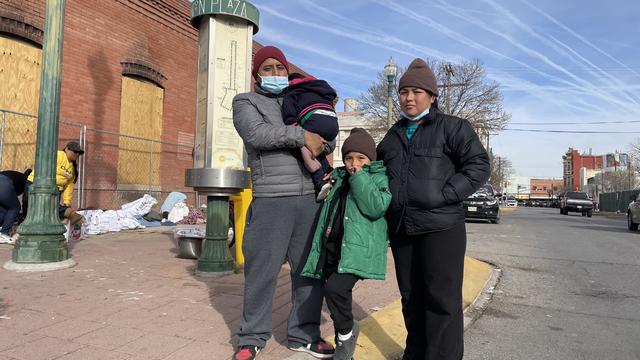
A sharp increase in arrivals of migrants fleeing economic and political instability in Latin America has overwhelmed El Paso's shelter capacity, stranding some migrants on the street.

Title 42, a pandemic-era public health order first invoked by the Trump administration, has allowed U.S. border officials to quickly expel migrants without asylum screenings.
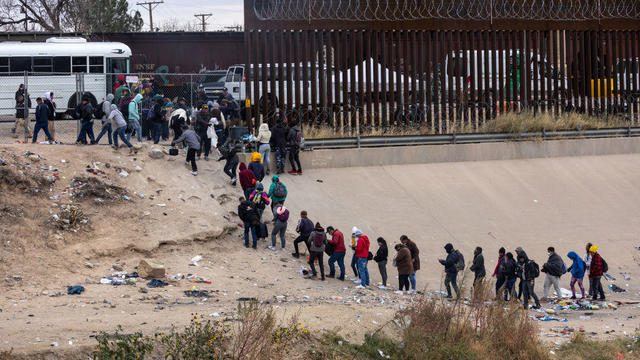
In a one-page order on Monday, Roberts agreed to place on hold a lower court ruling that declared Title 42 illegal, pending further action from the full court.

The Biden administration has asked Congress for an additional $3.4 billion to respond to the end of Title 42.

The following is a transcript of an interview with Dr. Scott Gottlieb that aired on Sunday, Dec. 18. 2022, on "Face the Nation."

The following is a transcript of an interview with White House adviser Keisha Lance Bottoms that aired on Sunday, Dec. 18. 2022, on "Face the Nation."

The following is a transcript of an interview with Rep. Henry Cuellar that aired on Sunday, Dec. 18. 2022, on "Face the Nation."

The following is a transcript of an interview with Rep. Tony Gonzales that aired on Sunday, Dec. 18. 2022, on "Face the Nation."

Title 42, a public health law first invoked by the Trump administration, allows U.S. border officials to expel migrants without allowing them to request asylum.
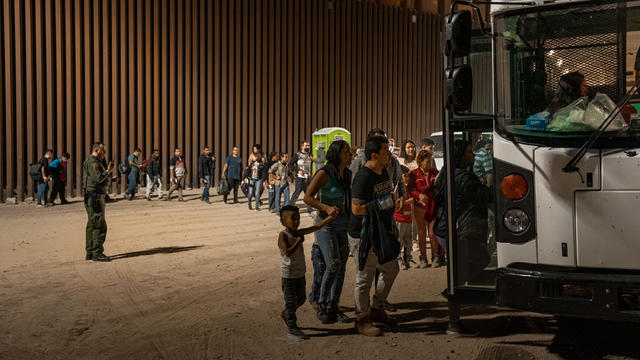
The immediate implications of the order were not clear, as any U.S. effort to return migrants to Mexico under a formal policy has to be greenlit by the Mexican government.

Arizona Gov. Doug Ducey issued an executive order in August directing the state to fill gaps in the border wall.
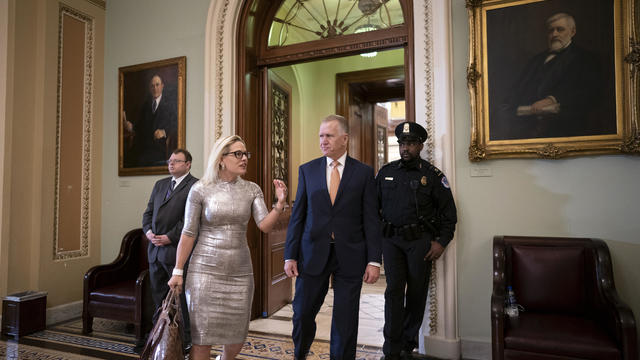
Negotiations in the Senate failed to gain enough traction to pass before the end of this session of Congress.
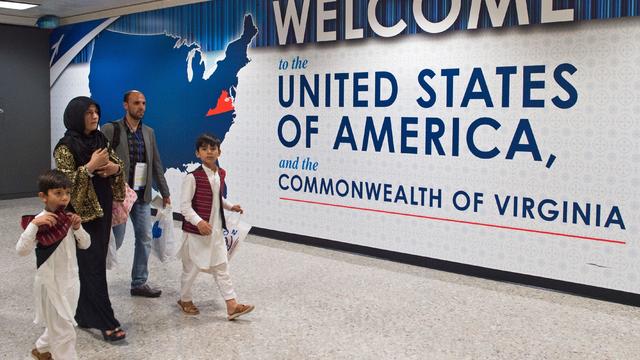
The State Department issued 493,000 visas to immigrants overseas who had applied to move to the U.S. permanently, a 73% jump from fiscal year 2021.