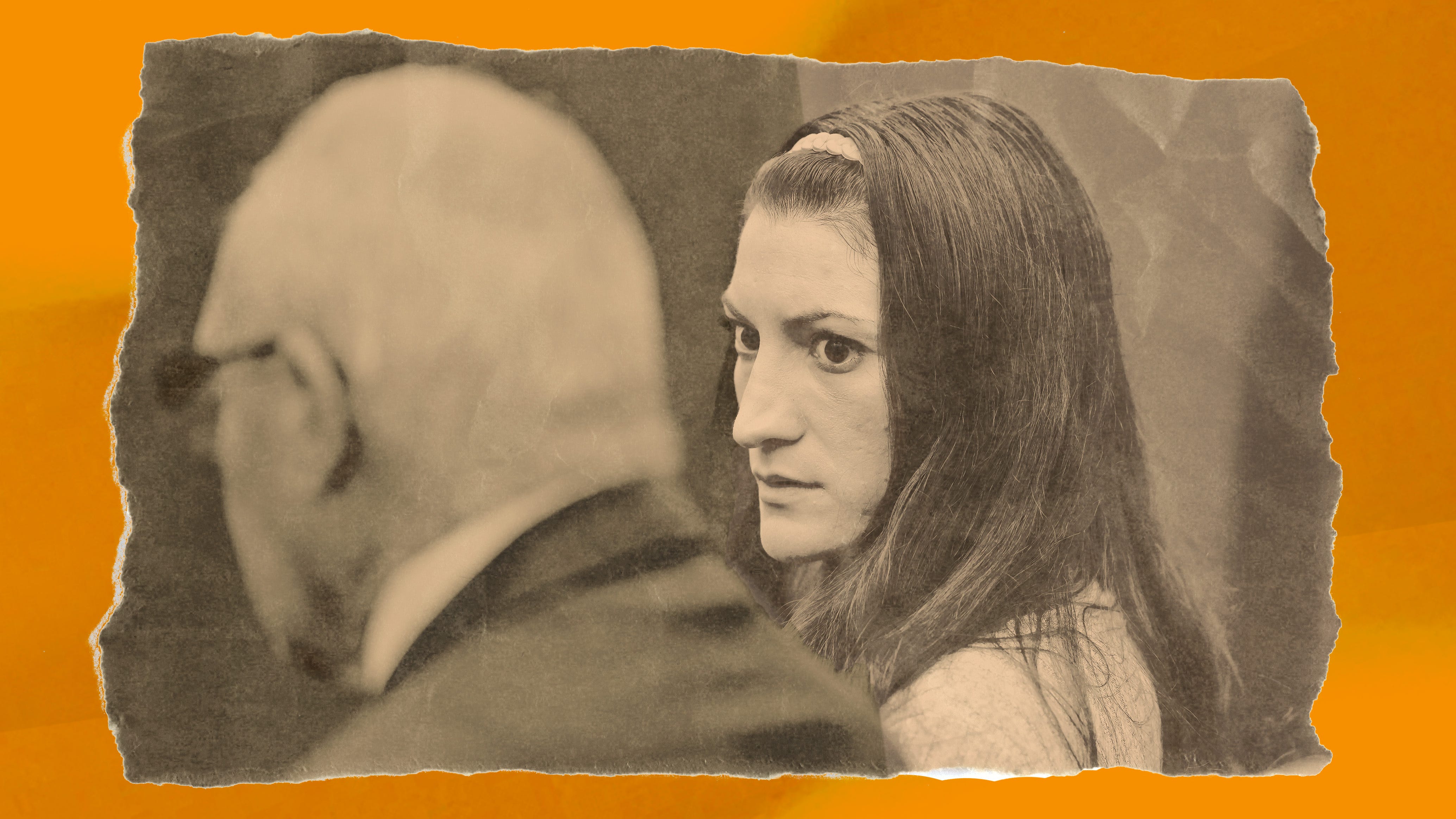
Lindsay Clancy trial ends in mistrial with no verdict. What happens next?
The murder trial of Lindsay Clancy ended in a mistrial on Friday, Sept. 4, the seventh day of deliberations, after the 12-person jury said it could not come to a unanimous decision about whether Clancy was criminally responsible for killing her three young children at her Massachusetts home in January 2023.
The outcome came after weeks of emotional testimony and days of anxious waiting as the jury argued behind closed doors and repeatedly reported being deadlocked. A note from the foreperson indicated there was a single holdout. Judge William Sullivan sent them back multiple times to keep trying to reach a verdict.
Finally on Friday, when the jury said it was still deadlocked, Sullivan declared a mistrial.
Here's what could be next.
Lindsay Clancy will remain in custody
With a mistrial, the conditions for the defendant go back to what they were pretrial, CBS News Boston reported. That means Clancy will remain in custody and under psychiatric care at Tewksbury State Hospital, where she has been held since 2023.
If Clancy had been found not guilty by reason of insanity, she would have remained at a mental health facility indefinitely. If she had been found criminally responsible for the murders, she would have gone to prison.
DA will decide about new trial
Plymouth County District Attorney Timothy Cruz will decide if Clancy will be retried for first-degree murder or a lesser charge with a new jury, or possibly consider a plea deal. Cruz could also decide not to retry the case.
In a news conference outside court following the mistrial, Cruz said he would not be announcing those plans immediately. "I'm going to be meeting with our team, and we will address this case further at the appropriate time in the context of an official court proceeding," he said.
Clancy's defense attorney, Kevin Reddington, said earlier in the week that he'd be ready to retry the case if needed but believes she is not emotionally prepared to undergo a second trial.
Asked about that comment at a news conference after the mistrial, Reddington said that if a retrial goes forward this fall, "She'll be ready."
Reddington has previously criticized Cruz for charging Clancy with first-degree murder, which mandates a jury trial. A lesser charge would have made a bench trial before a judge, or a potential plea deal, possible.
A mistrial is "a gut-wrenching outcome," said CBS News legal analyst Caroline Polisi. But she believes the prosecution will consider a retrial.
Polisi noted that after Karen Read's first trial ended in a hung jury in 2024, prosecutors "came right back" and tried it again; Read was acquitted in the retrial.
"I think they'll likely come back a second time," Polisi said.
Jessica Levinson, a professor at Loyola Law School and CBS News legal contributor, agreed.
"I think it's entirely possible that they would move forward with a retrial for a couple of reasons," Levinson said. "One, sometimes you see a really big swing in juries from one trial to another. Two, you could charge this in a very different way."
Instead of asking the jury to decide between first-degree murder, second-degree murder, manslaughter, or not guilty by reason of mental disease or defect, she said, "You could see the prosecution bring a much more slimmed-down case. In addition, you could potentially see a plea bargain."
Prosecution can refine its argument in second trial, legal experts say
Polisi said prosecutors would have the opportunity to rework or refine their strategy if a second trial is held. For example, she suggested, the prosecution might want to rethink its argument that Clancy faked her suicide attempt.
"I would think they would really hone down their case to present it not as, you know, diminishing her mental health state, but acknowledging that she was severely depressed," Polisi said in an earlier interview. She said the prosecution could refocus on "whether or not she knew the difference between right and wrong, not trying to say it was a fake suicide attempt."
Both the prosecution and defense will want to poll the jurors who deadlocked, she said, "because that will shape" future decisions and arguments.
"We might see a completely different theory of this case if it gets tried a second time," Polisi said.
Jennifer Roman, a legal analyst for CBS Boston station WBZ-TV, said both sides in the case will likely be thinking about what they would do differently.
"It's hard not to look back at a trial and, even on the day of, think, 'That cross-examination went well' or 'I wish I had done that a little bit differently today.' It's human nature," Roman said. "Certainly, both sides have learned from this trial and will do things a little bit differently if there is in fact a second trial."
Polisi said there are a number of ways in which a second trial could favor the prosecution.
"They get to streamline it — they get to see what they did right and incorrectly in the first trial and sort of refine it. There's no surprises from the defense," she said.
"I think that really would be the case here, because the prosecution made some pretty big missteps, I'd say, in this trial. They would have a second chance to sort of alleviate some of those missteps. And I think it would be a much stronger case on a retrial."
What made jury deliberations so difficult?
It's not clear what specifically caused the jurors to deadlock because deliberations are secret. Jurors had five options to choose from — not guilty by reason of insanity, not guilty, first-degree murder, second-degree murder or manslaughter — and any verdict would have had to be unanimous.
A key issue in the case was whether Clancy was criminally responsible for the murders of her children or if she was too mentally ill to understand her actions.
Both the prosecution and Reddington agreed that Clancy was mentally ill, but they disagreed about how culpable she was for her actions. The prosecution said Clancy planned the killings and was able to distinguish right from wrong, while the defense argued that she was overmedicated and suffering from postpartum psychosis.
Jurors heard testimony from 85 witnesses during the trial and considered more than 200 pieces of evidence.
The case has drawn widespread attention, with supporters, protesters and counterprotesters showing up at the courthouse, and public debate about the case raging online. Polisi said it's not surprising to see the jury struggle to come to a decision.
"It's a microcosm, right? It's not shocking that we're at a complete deadlock, because look at everybody else out here," Polisi said. "Nobody can agree out here, so why would the jury agree?"
Laura Niemi, a psychologist and jury consultant, told CBS News Boston on Monday that the jurors had "a really difficult task."
"It's more than understanding like the medical evidence. It's more than kind of making sense of the conflicting diagnoses. Jurors have to make a coherent story out of all of this," Niemi said.