Maryland Gov. Moore's State of the State addresses redistricting, affordability
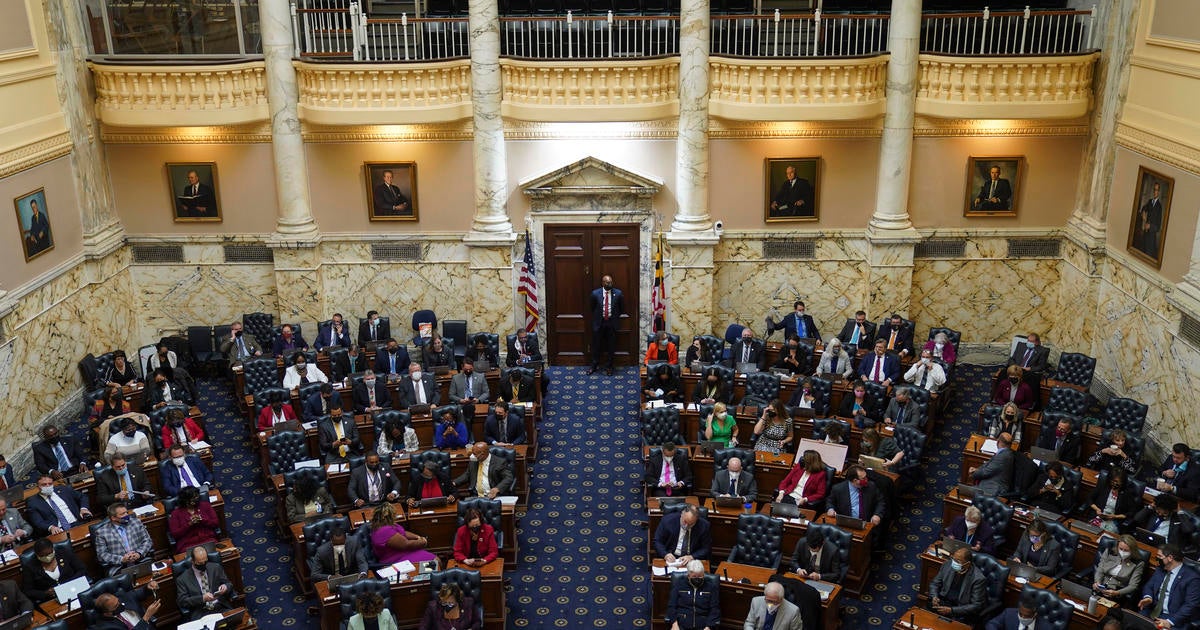
Maryland Gov. Wes Moore delivered his fourth State of the State address on Wednesday in Annapolis.
He discussed his priorities for the state, efforts to protect residents from "attacks from Washington, D.C.," his 2027 budget proposal and other issues he is working on.
The governor also talked about mid-cycle redistricting, investing in artificial intellegence and strengthening protections for immigrants amid a crackdown from federal enforcement officials.
2027 budget proposal
Gov. Moore unveiled a nearly $70.8 billion budget proposal in January, shortly after the legislative session got underway.
The budget does not raise taxes or fees, according to the governor. It addresses the state's $1.5 billion deficit with nearly $900 million in cuts and cost-saving measures.
The proposed spending plan focuses on funding education, reducing energy costs and investing in law enforcement. The plan also aims to bolster Maryland's revenue by attracting new industries.
"For the fourth year in a row, we are going to prove that we can do more with less," the governor said during his address."So once again, I've introduced a balanced budget with a General Fund that is smaller than the previous year. And in a moment when prices are up on everything, our proposed budget does not raise taxes or fees on the people of this state."
In announcing his budget plan, the governor blamed the Trump administration for the budget shortfall after federal workforce cuts impacted nearly 25,000 Maryland residents. According to Moore, federal budget cuts also impacted the state's bottom line.
"What I can control is making sure that we can be smart and disciplined in our state, that in our state, we are going to say we have to spend wisely and demand more from every single dollar that we're going to that we're going to invest," Moore said.
The proposed budget maintains 8% in Maryland's Rainy Day Fund and cuts government spending by $154 million in two years.
Immigration in Maryland
Another hot topic issue addressed by Gov. Moore was over immigration and ICE enforcement.
"When we think about when Maryland needs to lead in this moment, we need to think about how we are standing with our immigrant communities as well," Moore said.
Recently, Maryland lawmakers advanced bills that would ban 287(g) agreements. Those agreements allow local law enforcement to work with federal immigration agents.
Many local jurisdictions like Baltimore City, Baltimore County, Howard County, and others, have pushed for bills to prohibit the partnerships between government and ICE.
However, Harford County is among eight counties in Maryland to have signed onto this 287(g) partnership. The other counties include Allegany, Carroll, Cecil, Frederick, Garrett, Washington and St. Mary's counties.
"Our extraordinary men and women in Maryland law enforcement will continue to work with federal officials when it comes to getting violent criminals off of our streets, but they will always follow the constitution," Moore said.
On Tuesday, residents in Washington County, in Maryland, protested after the county commissioners announced their full support for immigration enforcement, as a new ICE detention center is planned near Hagerstown.
House Minority Leader Jason Buckel said there needs to be more conversations about how to identify dangerous individuals that should be deported.
"Let's work together to identify those, then maybe we don't have to focus as much on others," Buckel said. "Maybe we don't get collateral arrests. Maybe we don't get people with guns outside of schools and shopping centers. We're not having those conversations. We are just playing politics on those issues."
Moore announced the launch of "Citizenship Maryland," a program aimed at making sure those in Maryland who are eligible for citizenship have the support and resources needed.
Maryland crime
Moore touted the decline in violent crime across Maryland, and in particularly Baltimore City, where homicides were at a historic low in 2025.
According to Baltimore leaders, police investigated 133 homicides last year, its lowest in nearly 50 years.
Police said crime in Baltimore was down 31%.
"The last time the homicide rate was this low in Baltimore, I was not born yet," Moore said.
Moore said that since he was elected, his administration has been going into communities and giving funding to neighborhoods most effected by intergenerational poverty.
"You cannot address violent crime if you aren't addressing the failed conditions in the communities where the violence is living at," Moore said.
But, House Minority Whip Jesse Pippy said juvenile crime is still a huge problem, referencing this week's shooting at Thomas S. Wootton High School in Montgomery County.
"So here's a real life scenario, you have someone who is on an ankle monitoring system, allegedly, for other crimes, is now pointing guns at students in class and then shoots one, so this is what we're talking about," Pippy said. "The majority party seems to be hell bent on putting politics above safety."
Investing in AI training
During his address, Gov. Moore announced that the state will be investigating $4 million to train workers on how to succeed in the artificial intelligence economy.
"A few years ago, AI could barely put together a coherent sentence," the governor said.
"It can feel scary, and that's why we need a broad-based strategy-not just for government, but for all of society...We need to make sure our workers are not being left behind by AI," he added.
The governor said AI tools will eventually be used to help Marylanders navigate Supplemental Nutrition Assistance Program (SNAP) benefits, Medicaid, unemployment, insurance, child care credits and other state resources.
The governor also said AI tools will be used to drive economic growth in Maryland.
"AI companies want to move to Maryland because we have some of the best universities and research institutions in the world. And since we have the assets, they'll bring the jobs," Moore said. "This technology can also help us lift the dreams of the small business owner. And it must."
Pushing for mid-cycle redistricting
In recent months, Gov. Moore has been pushing for Maryland to adopt a new Congressional map, an effort that is now facing a vote in the state Senate.
"At a time when other states were having a discussion about mid-decade redistricting, I said Maryland needs to be part of that conversation," Moore said during his address.
In early February, the State House approved a map that was recommended by the Redistricting Advisory Commission.
The recommended map redraws Maryland's 1st Congressional district and expands it from the Eastern Shore into parts of Anne Arundel and Howard counties. Other districts would shift and would favor Democrats.
During a hearing in the state House, Moore testified that Maryland needed to act to oppose "political redlining" by President Trump in other states.
Moore's push for mid-cycle redistricting has run into opposition from State Senate President Bill Ferguson, who argues that the effort could backfire, costing Democrats a seat.
"Now I know there's been some discussion about the principled disagreement I have with the Senate President on redistricting," Moore said. "We diverge on this particular issue. But we both care about the future of our state. We both care about the future of our people. And we are going to continue to work together on the issues we care about most."
Previous State of State address
The governor's 2025 State of the State address focused on uniting Maryland lawmakers amid a $3 billion budget deficit and uncertainty at the time about the new administration in Washington.
Moore broke down his 2026 budget proposal last year and laid out his legislative priorities, including generating new businesses and streams of income for the state.