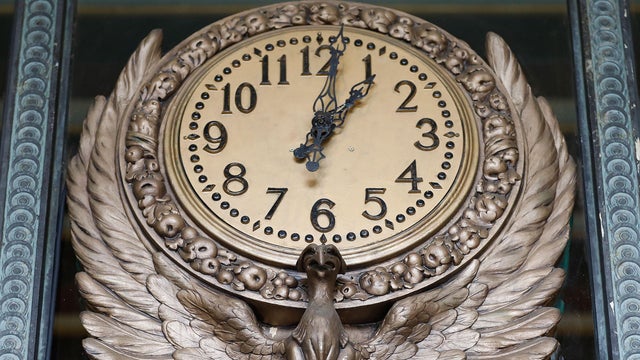
Daylight saving time arrives for 2026. Here's what to know.
The time change known as daylight savings starts Sunday, March 8, 2026. Most Americans lose an hour of sleep when clocks "spring forward."
Watch CBS News
The time change known as daylight savings starts Sunday, March 8, 2026. Most Americans lose an hour of sleep when clocks "spring forward."
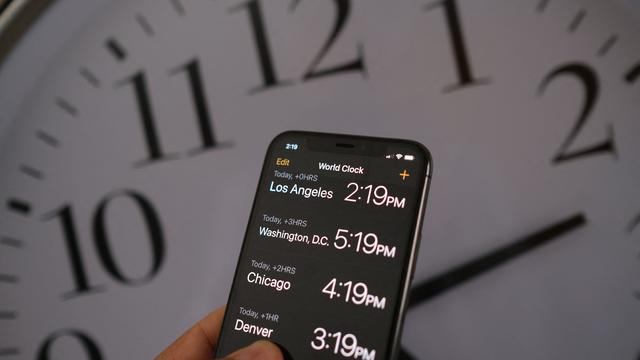
Two states don't do daylight saving time and won't "spring forward" as the clocks change for 2026.
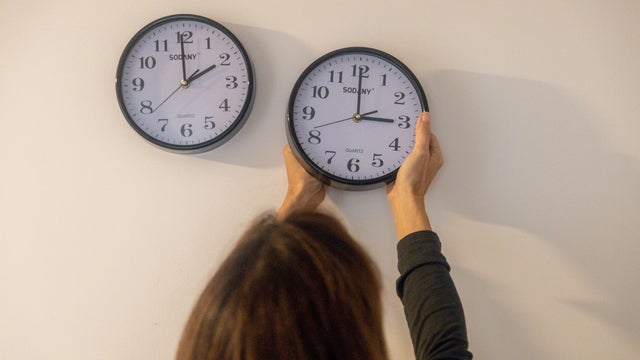
Daylight saving time ended on Sunday, Nov. 2, 2025, when the clocks fell back and we gained an hour.
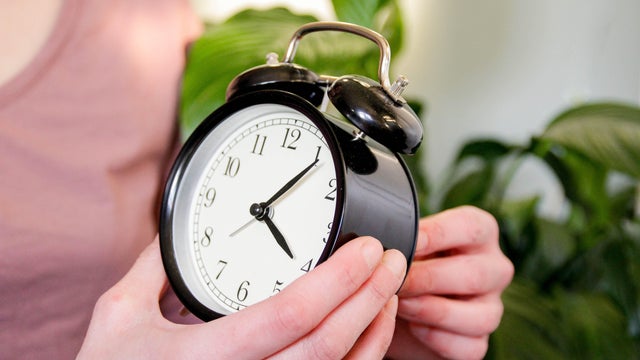
Children's Health specialists recommend adjusting bedtime routines and limiting electronics to ease the transition.
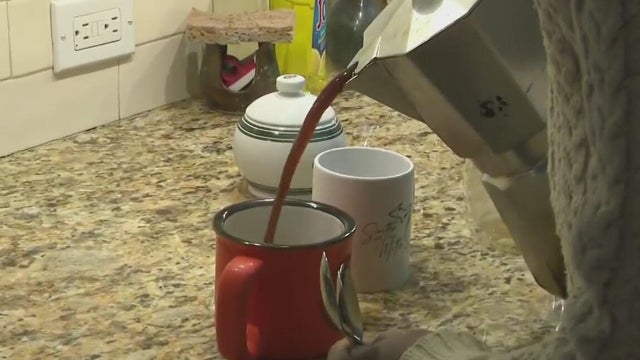
Clocks fall back this weekend and Texans will gain an hour of sleep. Here's how to adjust to the time change.
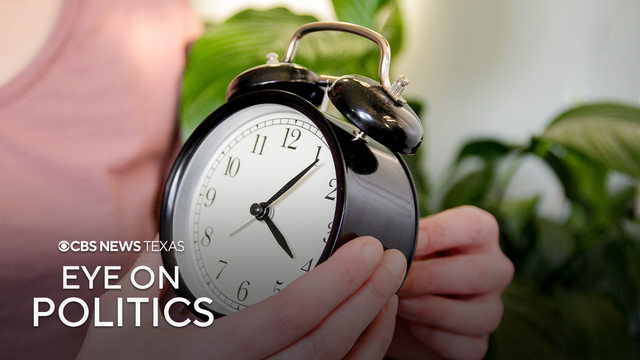
Time For A Change? New bills filed at the Texas Legislature would end the practice of changing your clocks.

Daylight saving time in 2025, when clocks change by an hour, has started. Here's a look at when exactly we "spring forward."

On Sunday, March 9, clocks will spring forward one hour. Here's how to adjust to the time change.

President-elect Donald Trump said Republicans will try to end the decades-long ritual of changing the clocks twice a year.
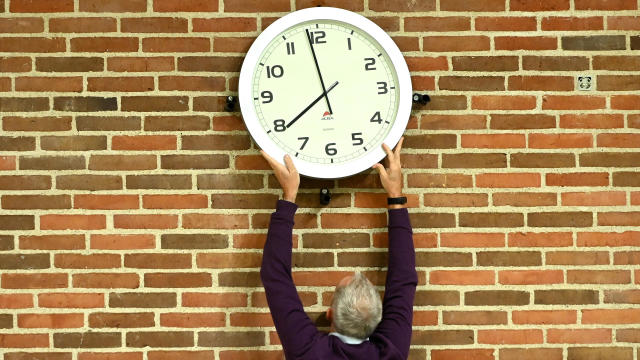
The end to daylight saving time means our clocks "fall back" early Sunday, Nov. 3, 2024. But why do we have to adjust the time twice a year?
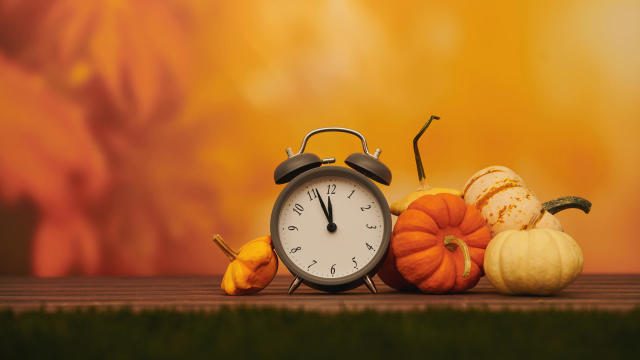
Gaining an extra hour of sleep as daylight saving time ends might sound like a win, but experts say "falling back" can have some health consequences. Here's some advice to help you cope.

Daylight saving time for 2024 is here, which means we lost an hour of sleep as we "spring forward." Here's how to deal with the time change, according to experts.
Clocks "spring forward" when daylight saving time begins on Sunday, March 10, 2024.
Daylight saving time begins this year in the early hours of Sunday, March 10, giving us longer, sunnier evenings until Nov. 3, 2024. Here's what to know about how the time change works.
Daylight saving time is returning in March 2024 the same way the twice-a-year time change has resumed for the last 17 years, only to end as usual in November 2024.
Daylight saving time ends this weekend and clocks will be going back one hour. In each of the time zones where daylight saving is observed, the time changes at 2 a.m. local time on Nov. 5.

Daylight saving time ends this weekend and clocks will be going back one hour. In each of the time zones where daylight saving is observed, the time changes at 2 a.m. local time on Nov. 5.
Don't forget to change those clocks! We fall back an hour this weekend.
The Texas House yesterday voted 138 to 5 to adopt Daylight Saving Time (DST) year round – a measure the governor tweeted he "strongly supports."
The American Academy of Sleep Medicine has been pushing for the elimination of daylight saving time. Dr. Mayakrishnan says she's on board with that.

For most people in the United States, it's time to "spring forward" into Daylight Saving Time on Sunday, March 12, at 2 a.m.
Six in 10 Americans said they preferred making daylight saving time permanent, according to a poll.

There's little support for switching clocks back and forth.