Final key witnesses testify in Prairieland ICE facility shooting in federal trial

The tenth day of the federal trial for the alleged attack on the Prairieland detention center in Alvarado last July began with the very last cooperating witness, Nathan Baumann, explaining his role in the protest the night of July 4th.
Nine men and women are on trial, facing a variety of federal charges, accused of being part of a "North Texas antifa cell."
According to court documents, the group attacked the ICE facility, setting off fireworks, vandalizing property, and shooting at police officers who responded. One officer was struck in the neck with a bullet and survived. Charges include attempted murder, aiding terrorists and weapons charges. Those supporting the defendants have called those charges outrageous, saying the defendants were there protesting ICE and that the government has gone overboard to send a message.
Witness details his involvement in spray-painting vehicles, damaging surveillance cameras
Nathan Baumann lived in College Station at the time and had never met any of the defendants in person before that night. Baumann said he was in town visiting his brother in Dallas when he learned of the protest and decided to join.
According to Baumann, he arrived alone and met up with several people dressed similarly to him, in all black with black masks. He accompanied them to the tree line directly to the west of the facility, where he helped set off fireworks for several minutes before heading to the front of the property.
Baumann admitted that he used spray paint from his backpack to vandalize several employee vehicles in the parking lot. According to Baumann, he then left the lot and returned with Zachary Evetts, who he says suggested vandalizing the surveillance cameras.
Prosecutors played a nine-second video showing a figure in black wearing a backpack with brown straps. The figure slowly walks backwards away from the camera before it goes dark. Baumann said it was him backing away as Evetts damaged the camera.
Baumann also testified to encounters he claimed to have had with Autumn Hill and Daniel Sanchez while the defendants were being held at FMC Fort Worth last fall. According to Baumann, Hill told him she was the leader of a "homosexual cult," and Sanchez admitted to moving documents to help his wife's criminal case.
Lawyers highlight changes in Baumann's statements and Signal messages
Defense attorneys pointed out several ways Baumann's stories have changed since July 2025. Body camera footage from that night showed Baumann originally claiming he had been the one to stumble upon another protester who was spray painting. In a police interview, Baumann then said Sikes was the spray painter before changing stories again to admit his part in the spray painting and point the finger at Evetts.
MarQuetta Clayton, Rueda's attorney, showed messages from Signal that Baumann admitted were lies, including one about his parents being at risk of deportation.
Cody Cofer, Autumn Hill's attorney, pointed out the evolution of Baumann's cooperation with the government. While he signed his plea agreement in the fall, it wasn't until early February — after Baumann learned that prosecutors were going to recommend the maximum sentence in his plea — that he asked to meet with investigators again and offered up the conversations at FMC.
"How many years of freedom will you earn for your performance here?" Cofer asked.
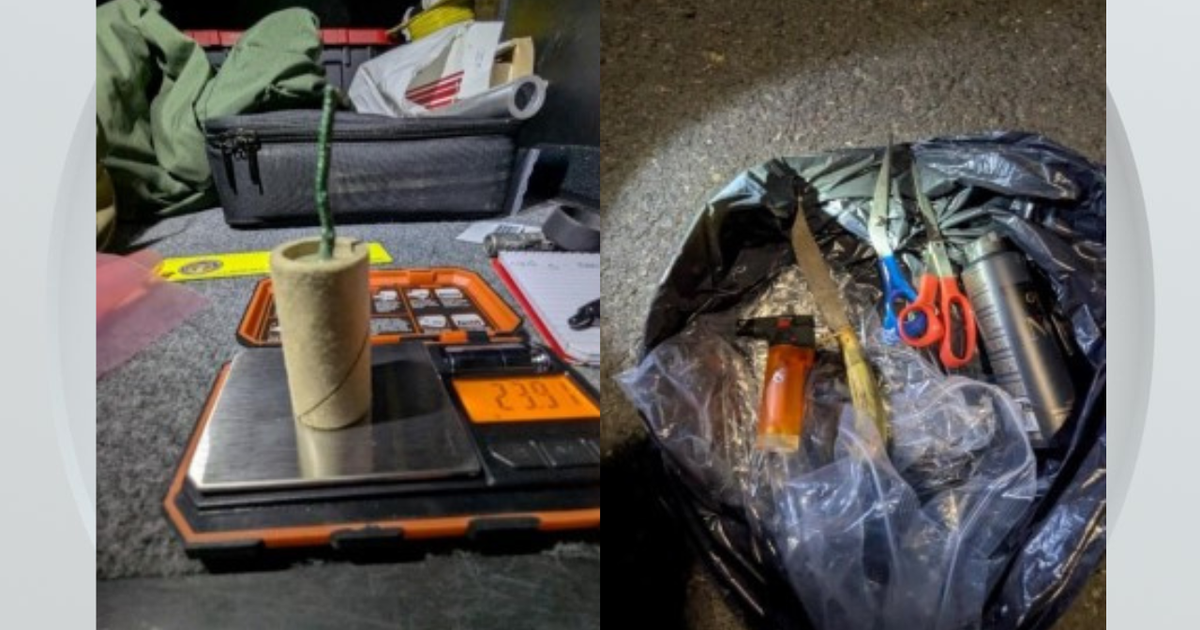
After two DPS forensic scientists testified about fingerprints and gun evidence, the government called an ATF agent to the stand to explain why the consumer-grade fireworks bought at any roadside stand in Texas can be considered explosives under federal law.
Conservative think tank employee testifies on antifa
After the mid-afternoon break, prosecutors called the man they deemed an antifa expert.
Kyle Shideler works for a conservative think tank called the Center for Security Policy, a nonprofit that focuses on national security, defense, and foreign policy issues in order to make recommendations to government agencies.
Shideler told jurors he began focusing on antifa in 2017 after hearing about speakers at college campuses being attacked by people dressed in black. He called antifa a "united front" of various leftist ideologies operating under one umbrella, and a "clandestine organization" with no national organization, membership rolls or recruiting practices.
Under cross-examination, Shideler said he conducts "open source research" that is not peer-reviewed or subject to typical data analysis practices.
While he made several comments about the defendants' Signal conversations having "hallmarks" of antifa, he also admitted that he had no other experience reading or studying any other "antifa chat groups."
When defense attorneys pointed out that none of the chats included talk of property damage or violence, Shideler said he wouldn't expect that kind of discussion in writing. But he called noise demonstrations "consistent with" actions taken by antifa groups.
Shideler often refused to simply answer "yes" or "no" questions from defense attorneys, opting instead to qualify his reply or add in extraneous information. At one point, Judge Mark Pittman chided him, saying, "You don't need to spar so much."
The government is expected to rest its case on Tuesday.
Trial day 9 – Witness testifies about "gear check"
The third cooperating witness took the stand on Friday. Susan Kent, 24, pleaded guilty to a count of providing material support for terrorism for helping Benjamin Song evade capture after the shooting of the Alvarado police officer.
Kent told jurors she met Song through Seth Sikes, who was her boyfriend at the time. She was the only person to testify about the "gear check" meeting that took place on the night of July 3.
Kent said she went because Sikes could not go, though at the time she said she did not realize the meeting was specific to the July 4 noise protest. According to Kent, Benjamin Song, Autumn Hill, Megan Morris, Joy Gibson, Rebecca Morgan and a few other people she did not recognize had gathered at a Dallas residence known as the "big gay house" where Hill and Morris lived with several other people.
Kent said the meeting focused on plans for the protest, with Song encouraging everyone to bring guns. She told jurors that Song originally suggested trying to break detainees out of the facility, an idea that everyone else dismissed immediately in favor of "non-violent" ways to show support for those inside. At the end of the night, Kent said many in the group stayed to watch a YouTube video about how to clear a building.
Kent testified that she went home that night to the apartment she shared with Sikes, but did not discuss the gear check with him. According to Kent, she wasn't sure he would even attend the protest until she received a text from him late on July 4, telling her he was "going dark."
She said she learned that something had gone wrong when she saw that Song had changed his name in the Signal chat from Champagne to Delete. Kent took that as a sign to remove the protest participants from the group chat.
On cross-examination, Kent paused before answering almost all of the questions. When asked if she was worried about violating the terms of her plea agreement, she replied, "I like to make sure I'm choosing my words carefully."
Kent became emotional at one point when she recalled being questioned by authorities. Defense attorney Phillip Hayes asked her if she felt like it was political persecution. Kent took several seconds to compose herself before saying that while she was not sure it was political, it did feel like persecution.
Witness testifies about helping Benjamin Song evade capture
Later, the fourth cooperating witness testified. John Thomas was not involved in any of the planning for the protest, nor did he attend, but he says he picked up Song the next day and helped him evade capture. Thomas, Song and Joy Gibson were roommates at the time. Thomas was also the secretary of the Socialist Rifle Association. Prosecutors showed jurors the membership list obtained through a subpoena, which detailed each person's personal information, political beliefs and more.
According to Thomas, Song told him that the night began with the group shooting fireworks into the air, then at the building, and into the fence. He also said that Song confessed to shooting in the direction of the Prairieland guards who had run toward the officer that night.
On cross-examination, Thomas admitted that he hoped his cooperation would lead to a shorter prison sentence and fewer state charges.
And while Thomas originally named several defendants as antifa members, he later told defense attorneys that the term antifa was just an ideology based on being opposed to facists, not an organized group.