Auto dealers face uncertainty as tariff hikes loom
On April 2, a 25% tariff on imported automobiles and parts is due to go into effect. Carter Evans reports that, for car shoppers, it could be a case of buy now or pay more later.
Watch CBS News
On April 2, a 25% tariff on imported automobiles and parts is due to go into effect. Carter Evans reports that, for car shoppers, it could be a case of buy now or pay more later.

The Federal Reserve's downbeat outlook on the U.S. economy is a wake-up call for investors.

Fed Chair Jerome Powell cites "high uncertainty" around the impact of Trump administration tariffs on key trading partners.

In response to the steel and aluminum tariffs, the European Union said last week that it would place levies on $28 billion worth of American goods, including beef, poultry, bourbon, jeans and peanut butter, starting April 1. President Trump said that if the EU enacts those tariffs, he will respond by imposing a 200% retaliatory tariff on all European wine and Champagne. Andrew Rockwell, production winemaker at Sparkling Pointe, joins "The Daily Report" to discuss.

President Trump says his Chinese counterpart will visit Washington, D.C., in the "not so distant future." Jennifer Welch, chief geoeconomics analyst at Bloomberg, and Ravi Agrawal, editor-in-chief of Foreign Policy magazine, join "America Decides" to discuss what that visit could mean amid brewing trade tensions.
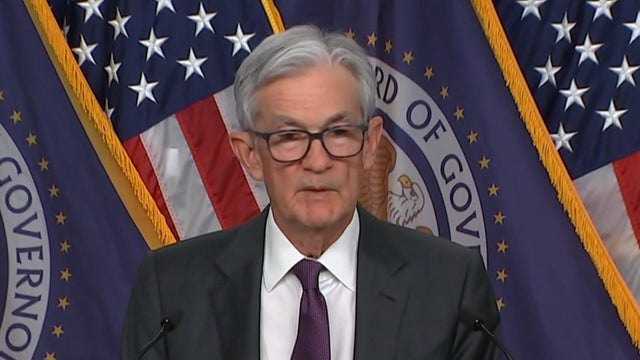
The Federal Reserve chose not to lower interest rates Wednesday, as Chair Jerome Powell admitted the economic outlook was uncertain. He indicated that even though inflation was expected to inch up in response to President Trump's tariffs, the Fed is still forecasting two rate cuts this year. Kelly O'Grady explains.
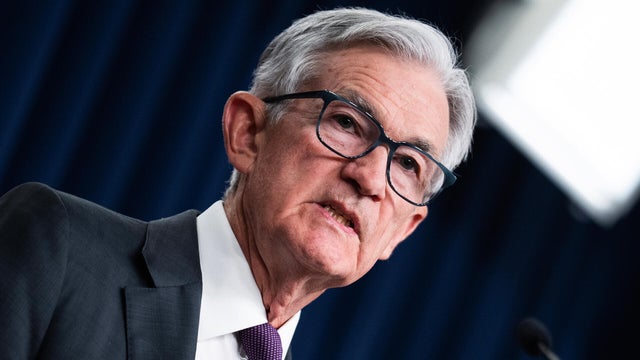
The Federal Reserve left interest rates unchanged Wednesday as uncertainty about the U.S. economy grows. CBS News MoneyWatch correspondent Kelly O'Grady unpacks Fed Chair Jerome Powell's comments on the decision. Then, Donna Ginther, distinguished professor of economics at the University of Kansas, joins with analysis.

In a focus group conducted by Axios in Michigan, some battleground state voters expressed second thoughts about supporting President Trump in the 2024 election. Political strategists Meghan Hays and Maura Gillespie join "America Decides" with analysis.

President Trump's aggressive trade policies and barbed rhetoric threatens to discourage foreign travelers from visiting the U.S., economists say.
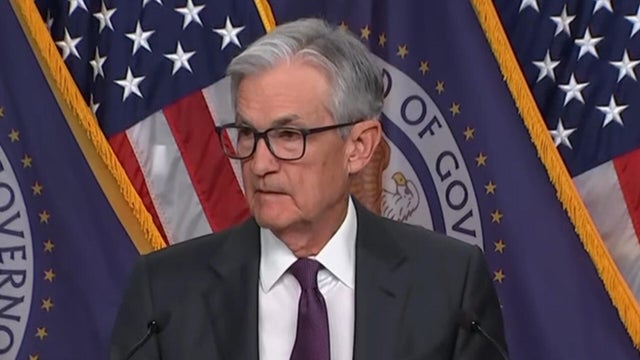
The Federal Reserve left its benchmark interest rate unchanged on Wednesday, with Chair Jerome Powell saying "further progress may be delayed" on bringing down inflation because of President Trump's tariffs. CBS News business analyst Jill Schlesinger has more.

Mounting concerns about the Trump administration's trade policies are driving institutional investors away from U.S. stocks.
Preliminary data from the University of Michigan shows that consumer sentiment, or how people feel about the economy, declined for a second straight month. It all comes as January saw a decline in spending which has some economists warning that the U.S. could face a possible recession. CBS News MoneyWatch correspondent Kelly O'Grady has more on recession risk signs.

President Trump has threatened tariffs as high as 200% on European wines, spirits and beer. Janet Shamlian visited a pub in Chicago, where owner Aine O'Brien is concerned about how they could affect business.

Despite the stock market's recent instability, President Trump is standing firm on his promise of implementing reciprocal tariffs in early April. Washington Post opinions columnist Heather Long joins "America Decides" to examine how the tariffs are creating anxiety about a recession.

Homebuilders say President Trump's tariff agenda is making construction and renovation projects more expensive.
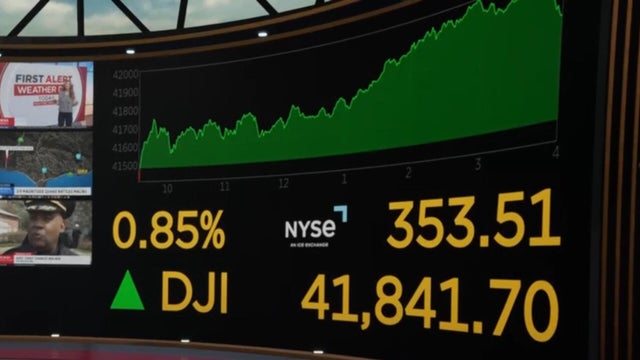
The Dow Jones regained some ground Monday after President Trump's tariffs put markets in a tailspin last week. CBS News MoneyWatch correspondent Kelly O'Grady breaks down what happened on Wall Street.

Tariff trouble around the world could hit your local bar. On Thursday, President Donald Trump threatened to place a 200% tariff on some alcoholic products from the European Union after they issued a 50% tariff on all American whiskey. THe U.S. has already issued 25% tariffs on Canada and Mexico. Now, the makers and buyers of some beloved drinks are now drowning in questions.
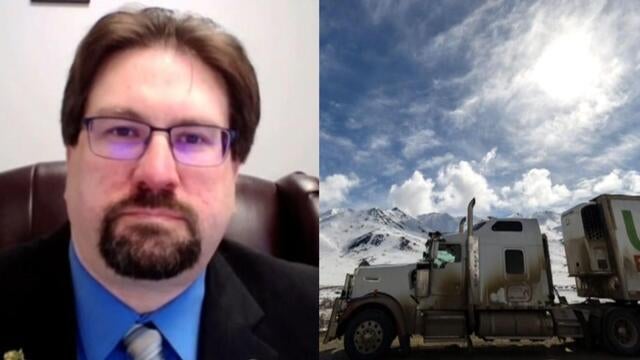
Canada's British Columbia is proposing a law that would allow the province to toll U.S. trucks using its roads to travel to Alaska. Alaska Republican State Sen. Robert Myers joins "The Daily Report" to discuss the impact.

In an unsigned letter, Tesla encourages trade representative to reconsider tariffs, saying they could hurt U.S.-based car manufacturers.

Stock markets reeled this week after news varied over President Trump's tariffs and investor fears. CBS MoneyWatch correspondent Kelly O'Grady reports.

The war in Ukraine was a major focus of President Trump's meeting with NATO Secretary General Mark Rutte at the White House on Thursday. CBS News congressional reporter Taurean Small has more.

Irish Taoiseach Micheál Martin described the U.S. and Ireland's economic relationship as a "two-way street."

The Dow lost more than 500 points Thursday and the Nasdaq dropped more than 300 as investors reacted to President Trump's threat to impose a 200% tariff on European Union exports of wine, champagne, and other alcoholic beverages. Suzanne Lynch, Global Playbook author and associate editor for Politico, joined CBS News to discuss Europe's reaction to the threat.

President Trump has imposed steep tariffs on Canadian goods, citing trade imbalances and drug trafficking. But many of his claims exaggerate or misrepresent the facts.

President Trump on Thursday threatened to put a 200% tariff on European alcohol if the European Union puts a 50% import tax on American whisky in retaliation for his tariffs on steel and aluminum. Kelly O'Grady examines the latest on the trade war.