Breaking down OPEC and its influence
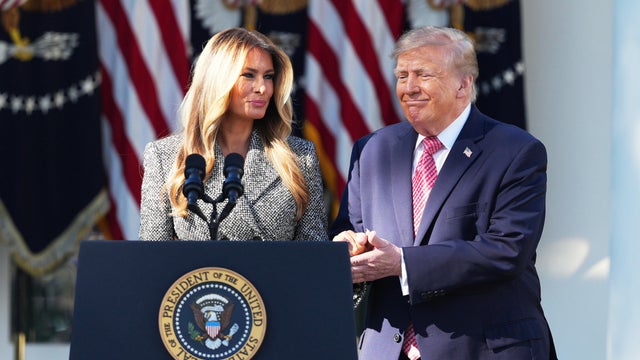
President Trump gave his endorsement to the United Arab Emirates' decision to leave the Organization of the Petroleum Exporting Countries, or OPEC, on Wednesday. "The Daily Report" breaks it down.
Watch CBS News
President Trump gave his endorsement to the United Arab Emirates' decision to leave the Organization of the Petroleum Exporting Countries, or OPEC, on Wednesday. "The Daily Report" breaks it down.

Gas prices have surged to their highest level since the start of the U.S.-Israeli war with Iran. CBS News MoneyWatch correspondent Kelly O'Grady has the details.

The Strait of Hormuz remains in limbo amid Iran's latest offer to reach a deal with the U.S. Meanwhile, the United Arab Emirates announced its exit from the Organization of the Petroleum Exporting Countries (OPEC), effective May 1. CBS News' Ramy Inocencio has more.

On Nov. 29, 1973, CBS News aired a special report titled "Making It Through This Winter," spotlighting the ways Americans were making do amid the oil crisis. Watch the program in full.
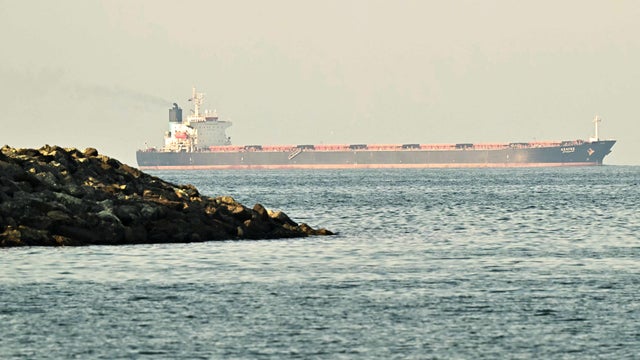
Oil prices rose sharply when market trading began late Sunday over concerns that the supply from Iran and elsewhere in the Middle East would slow or grind to a halt.
The average price across the U.S. now stands at $2.95 per gallon, down 8.5 cents from a week ago, according to GasBuddy.
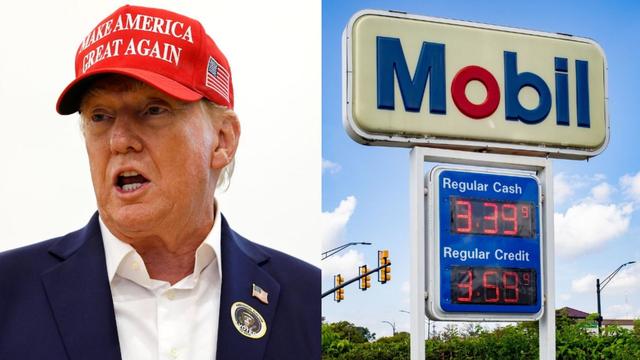
President-elect Donald Trump vowed to cut U.S. energy prices by 50% within one year of taking office. He is also expected to loosen regulations on oil and natural gas companies. Patrick De Haan, the head of petroleum analysis for GasBuddy.com, a website that tracks fuel prices, joins CBS News to discuss.

As the Middle East waits to see how Israel will respond to Tuesday's massive missile attack by Iran, oil prices have risen over the prospect of possible Israeli strikes on Iran's oil facilities. CBS News foreign correspondent Ramy Inocencio has more.

Several OPEC+ countries will reduce oil production by a combined 2.2 million barrels per day through June. Jeff Colgan, director of the Climate Solutions Lab at Brown University, joins CBS News to discuss how the decreased output could affect the U.S.

This year's robust stock market performance defied analysts' predictions as investors cheered prospects of lower interest rates and inflation.

Move by two OPEC+ members to continue scaling back crude production likely means higher prices at the pump for U.S. drivers.

The Saudi cut of 1 million barrels per day comes as the other OPEC+ producers agreed to extend earlier production cuts through next year.

OPEC unexpectedly announced cuts to oil production. The move will likely increase the price of gas.

Oil cartel's surprise plan to dial back production will likely push up fuel costs within the next two weeks, analysts say.

Saudi-led OPEC+ opted not to make any additional changes to oil production as Western sanctions on Russian oil are set to take effect. Evan Halper, a business reporter for the Washington Post, joins CBS News' Vladimir Duthiers and Lilia Luciano to discuss the impact.

The OPEC oil cartel and allied producers including Russia aren't changing their targets for shipping oil to the global economy.

OPEC estimates show that the world markets could demand more oil for the next decade, despite a push toward renewable energy and electric cars. Tom Kloza, global head of energy analysis at the Oil Price Information Service, joins CBS News to talk about what the projection means and how it could affect suppliers and consumers.

North Korean leader Kim Jong-un could soon test a tactical nuclear weapon, according to U.S. and South Korean officials. CBS News chief foreign affairs correspondent and "Face the Nation" moderator Margaret Brennan joins CBS News' John Dickerson to discuss.

President Biden said there will be "consequences" for Saudi Arabia after the country, as part of OPEC, sided with other oil producing countries to cut production. CBS News chief White House correspondent Nancy Cordes discussed what those consequences could be.

The White House said Tuesday that Biden has promised to provide Ukraine with more advanced air defense systems. This comes as Russia continues to bombard the country with missile attacks. Meanwhile, the White House also said Mr. Biden is reevaluating the U.S.-Saudi relationship after OPEC announced last week it would cut oil production. CBS News chief White House correspondent Nancy Cordes reports from Washington, D.C.

John Kirby, a retired admiral who now serves as National Security Council coordinator for strategic communications, joined CBS News to discuss the war in Ukraine, Russian President Vladimir Putin's nuclear threats, as well U.S.-Saudi relations and North Korea's recent missile tests.

President Biden is releasing 15 million barrels of oil from the nation's strategic reserve in an effort to curb rising prices after OPEC+ announcing it would cut oil production. CBS News senior White House and political correspondent Ed O'Keefe explains how the administration plans to account for the oil it's taking from the reserve and how the move could affect the midterm elections.

President Biden unveiled his three-step plan Wednesday to lower oil prices. Part of that plan is the release of 15 million barrels of oil from the U.S. strategic reserve. The announcement comes weeks after OPEC+ announced it was cutting oil production, a decision that drove gas prices up. CBS News senior White House and political correspondent Ed O'Keefe discussed the president's plan.

President Biden announced Wednesday that 15 million more barrels of oil would be released from the Strategic Petroleum Reserve as part of a plan to reduce gas prices. Reuters energy reporter Laura Sanicola discussed the reaction in the oil market.

President Biden announced the release of 15 million barrels of oil from the U.S. strategic reserve as part of a response to recent production cuts announced by OPEC+ nations.