Astronomers discover oldest, most distant supermassive black hole
The supermassive black hole at the center of one of the universe's brightest objects is 1.6 billion times more massive than the sun.
Watch CBS News
The supermassive black hole at the center of one of the universe's brightest objects is 1.6 billion times more massive than the sun.
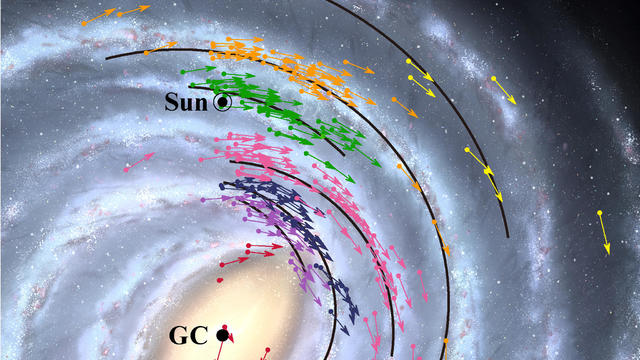
But scientists say not to worry.

The smallest rogue planet found to date, it wanders through the Milky Way with no parent star or gravitational siblings to keep it company.

NASA called the cluster a "pocketful of stars."

Microsoft is officially launching a cloud storage system called "OneDrive" worldwide. The service lets users store photos, videos and documents in one place, on multiple devices. To entice customers, Microsoft will give 100,000 customers an additional 100GB of storage for one year. Jill Wagner has the latest MoneyWatch Headlines.

The galaxy appears as a near-perfect ring of light — a so-called "Einstein Ring."

Scientists say there may be dozens of civilizations in our galaxy that are advanced enough to communicate with us.

The gargantuan system, which formed just 1.5 billion years after the Big Bang, challenges some of the accepted theories of how galaxies in the universe may have formed.
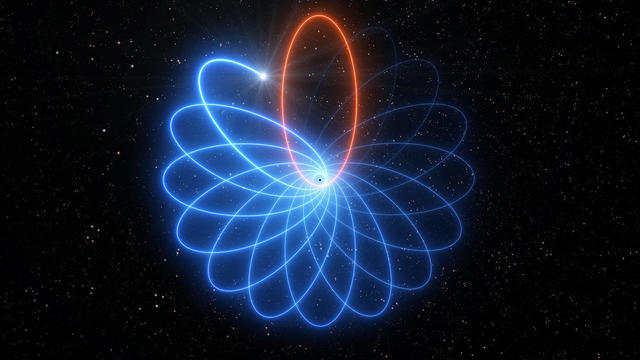
After studying the star for nearly 30 years, astronomers have once again proven Albert Einstein's theory of relativity.

"I've been looking for a star like this for nearly 40 years and now we have finally found one," one astronomer said.
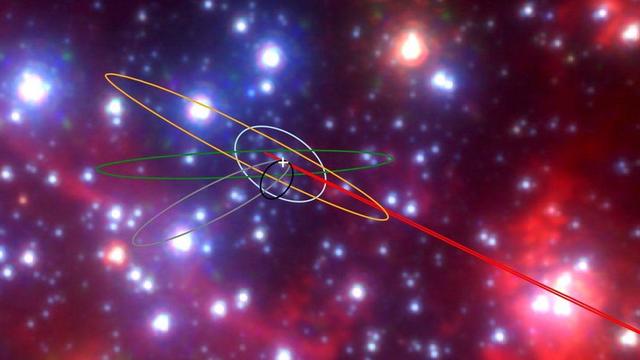
Are they just gas, or are they stars? Astronomers now believe the unusual objects may be a hybrid of both.
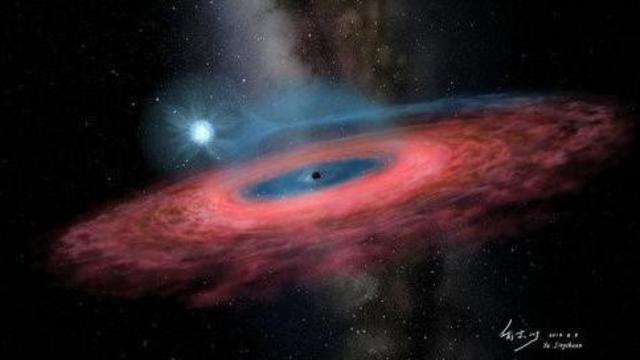
A black hole with a mass of about 70 times that of the sun is lurking across our galaxy.
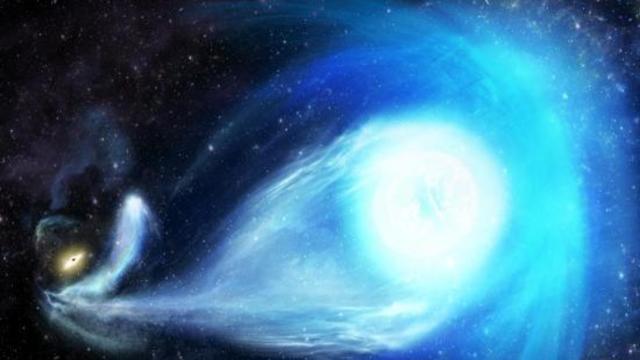
Astronomers spotted the star just 29,000 light-years away from Earth — "practically next door by astronomical standards"

For nearly a century the Mars Wrigley company has been making candy treats that have filled kids' Halloween stashes – and adults', too
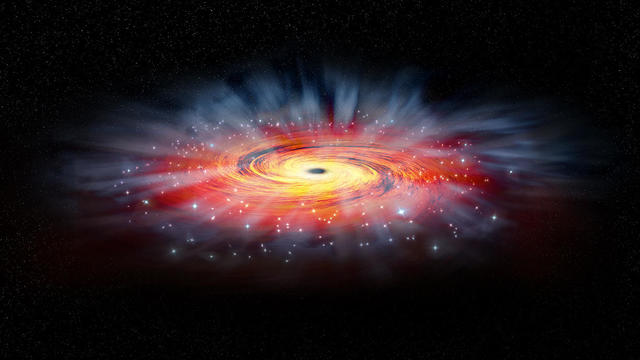
Scientists called the flashes "unprecedented"

200 scientists from 18 countries have revealed hundreds of thousands of previously undetected galaxies

Saturn's rings may have formed during the age of dinosaurs – but compared to the planet, that's not that old

Collection of radio telescopes measured a span of 66,000 light-years from Earth across the Milky Way's center to a star-forming area near the edge of the other side of the galaxy

About 10,000 stars zipping through the Milky Way may actually be runaways from a neighboring galaxy, researchers say

Amateur photographer Sam Wilson captured the Milky Way and Aurora Australis in this stunning time-lapse video

New research shows that when a black hole devours a star, it spews planet-size "spitballs" of regurgitated gas

Tracing the mysterious history of the galaxy we call home

Behold a rare sight: bright-blue wisps of glowing gas and sparkling young stars in one of the closest galaxies to Earth

Breathtaking images of the Milky Way, the Northern Lights and more

Scientists wonder whether a mysterious force far beyond our galaxy will ultimately destroy us