Sunday 9AM ET on CBS
11AM ET on the CBS News app
Sunday 9AM ET on CBS
11AM ET on the CBS News app
Watch CBS News

The artist – a member of the Tlingit tribe of Alaska and the Pacific Northwest – uses an untraditional medium for his traveling exhibition, "Raven and the Box of Daylight," which tells a Native American folktale entirely through glass.
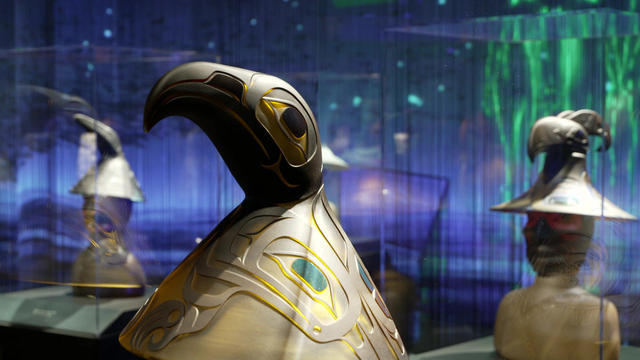
Preston Singletary, a member of the Tlingit tribe of Alaska and the Pacific Northwest, uses a very untraditional medium when fashioning indigenous art: glass. He talks with correspondent Lilia Luciano about his traveling exhibition, "Raven and the Box of Daylight" (now at the Museum of the American Indian in Washington, D.C.), which tells a Native American folktale about the origins of the world entirely through glass.

Thirteen-year-old Josiah Johnson, of Louisville, was born without legs, but he is not lacking in confidence. And when he tried out for the one sport where altitude is everything – the Moore Middle School basketball team – it turned out the long shot was pretty good at making long shots. Correspondent Steve Hartman reports.

The 80-year-old isn't slowing down; in fact, he's been busier than ever, with two TV series (including the "Yellowstone" prequel, "1923"), and a fifth Indiana Jones movie.
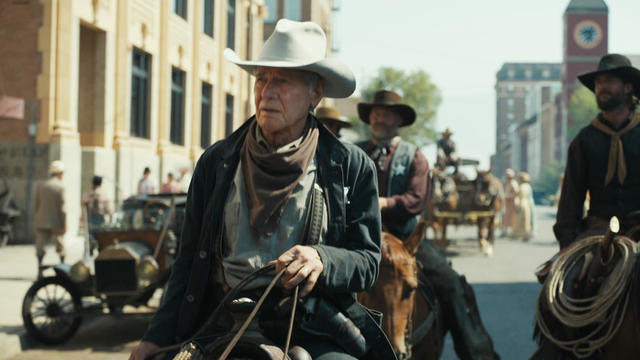
The 80-year-old isn't slowing down; in fact, he's been busier than ever, with two TV series (including the "Yellowstone" prequel "1923"), and a fifth Indiana Jones movie. Harrison Ford talks with Turner Classic Movies host Ben Mankiewicz about playing "ordinary" people; fame and the loss of anonymity; and the attraction of returning to his home in Wyoming.

The humorist has noticed some irritating habits in the way people address one another.
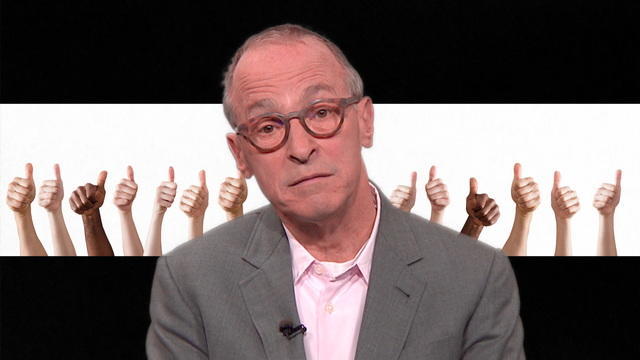
The humorist has noticed some annoying habits in the way people address one another.
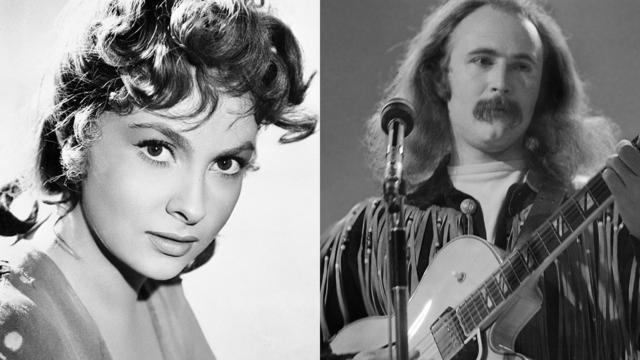
"Sunday Morning" looks back at the Italian film star once called "the most beautiful woman in the world," and the singer-songwriter who helped form the folk-rock supergroup Crosby Stills & Nash.
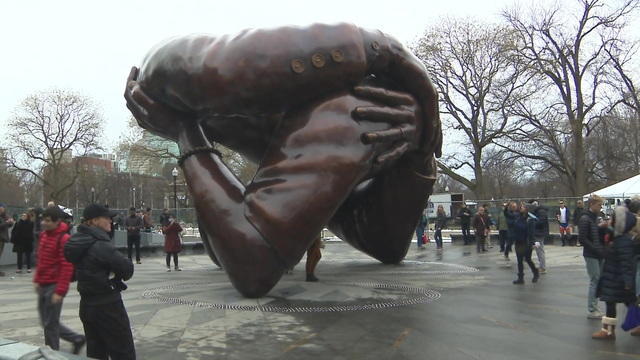
A 22-foot-tall bronze sculpture of arms hugging, inspired by a photograph of Dr. Martin Luther King Jr. and Coretta Scott King, was unveiled at Boston Common on January 13. But some of the reactions – from the public, comedians, and social media – have been harsh. Correspondent Nancy Giles talks with sculptor Hank Willis Thomas about the response to his public art honoring love.
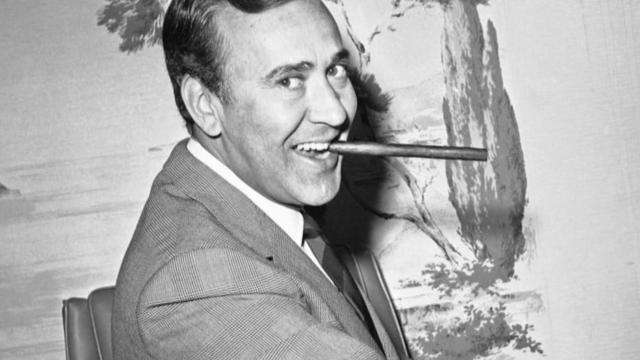
The National Comedy Center, in Jamestown, N.Y., has named its extensive comedy archives in honor of the legend who created "The Dick Van Dyke Show," partnered with Mel Brooks, and generated laughs that spanned generations.

Carl Reiner's comedy – from creating "The Dick Van Dyke Show," to directing films and sharing the stage with friend Mel Brooks – shaped our culture with humor that spanned generations. Now, two years after his death, the National Comedy Center, in Jamestown, New York, has named its extensive comedy archives in his honor. Correspondent Jim Axelrod talked with the funnyman's children – actor and director Rob Reiner, psychoanalyst Annie Reiner, and artist Lucas Reiner – about their dad's museum-quality legacy.
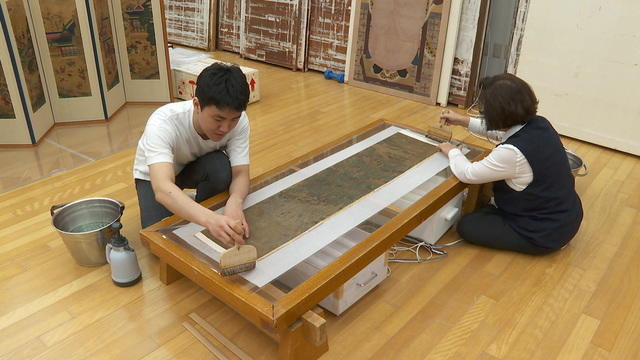
The art of making hanji, or paper, derived from the inner bark of a tree native to Korea, helps continue a treasured cultural tradition. Correspondent Seth Doan explores the labor-intensive process of creating hanji, used for writing, artwork and official documents, and strong enough to last a thousand years.
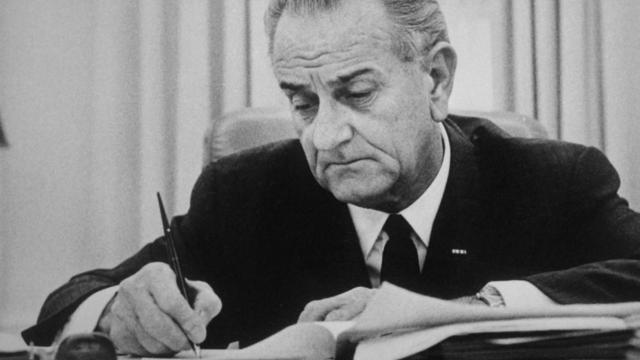
Fifty years after the death of Lyndon Baines Johnson, biographer Robert Caro, historian Mark Updegrove, and Luci Baines Johnson (LBJ's youngest daughter) discuss one of the most consequential, yet underappreciated presidencies in U.S. history.

Fifty years after the death of Lyndon Baines Johnson, correspondent Rita Braver looks at the legacy of the 36th President, who came into office through the tragic death of his predecessor, and whose own presidency would become one of the most consequential, yet unappreciated in American history. Braver talks with biographer Robert Caro, historian Mark Updegrove, and Luci Baines Johnson (LBJ's youngest daughter) about how Johnson harnessed the power of government (and his own powers of persuasion) to change the nation.

OpenAI's artificial intelligence writing program can, with a few prompts, compose poetry, prose, song lyrics, essays, even news articles. And that has ethicists and educators worried about the program's ease at replacing human ideas with chatbot-generated words.