Invasive fish that can walk across the street found in Long Island pond. Why state officials say they're a threat

A predatory invasive fish that can survive out of water and even cross the street has been found in a Long Island pond.
State officials want to get rid of them, but some fishers are welcoming the find.
About the northern snakehead fish
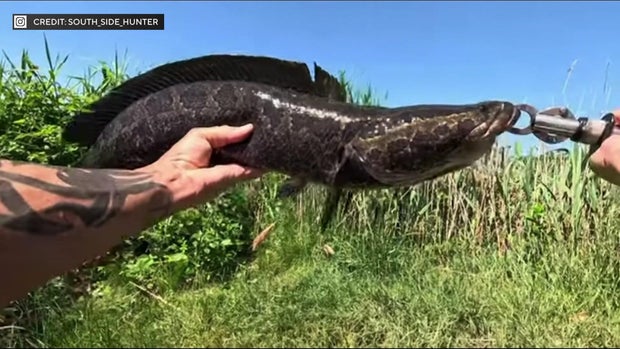
The northern snakehead fish is aggressive, predatory, native to Asia and federally classified as invasive. They can breathe air and survive out of the water for days.
"These fish can walk on land," said Heidi O'Riordan, regional fisheries manager for the state DEC. "They can cross the road."
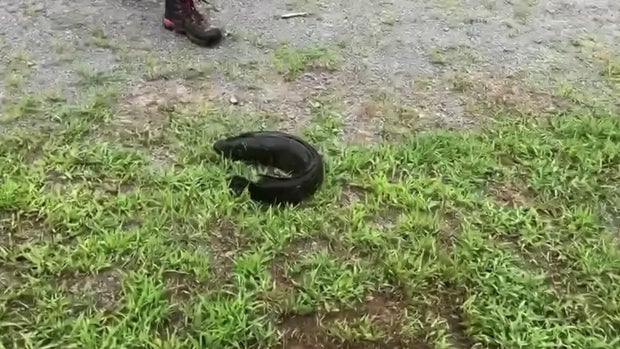
Their python-like markings and dagger-like teeth have made them a bucket-list catch for some fishermen.
"These fish are so awesome – the fight, everything about them is great," said Vinny Conwell, who travels the East Coast seeking out the fish. "It's a shame that they've gotten the reputation they have."
For the Department of Environmental Conservation (DEC), however, they're a threat to Long Island's largest lake, Lake Ronkonkoma.
Under New York law, if you catch a northern snakehead fish, you have to kill it and report it to the DEC.
Rare catch near Lake Ronkonkoma
Last week, Conwell caught three northern snakehead fish in Lily Pond, right next to the lake – a first-of-its-kind catch in Suffolk County.
"These fish are not going to cause any kind of problems to the general public," he said. "Yes, they do eat fish, they do eat other species, but what fish in these ponds are not eating fish?"
The species that spawned horror films has New York state officials knee-deep in the pond, trying to catch and kill them.
"We really want to be on top of it and get rid of them quickly because we have Lake Ronkonkoma['s] bass wildlife, so having the snakehead move in there would not be a good situation," O'Riordan said.
The DEC is electro-fishing to locate and destroy any snakeheads in Lily Pond.
"I do see the point of the fishermen having a very exciting catch, but it's not something we're going to take lightly," O'Riordan said.
The DEC said the fish most likely got into the pond in the first place through aquarium dumping or from fish markets, adding it's crucial to stop the spread.


