Most World Cup stadiums have Rutgers turfgrass, which is tested for toughness at a research farm in New Jersey

While millions of soccer fans are focused on the world's best players during the 2026 Men's World Cup, a big piece of New Jersey is also taking centerstage.
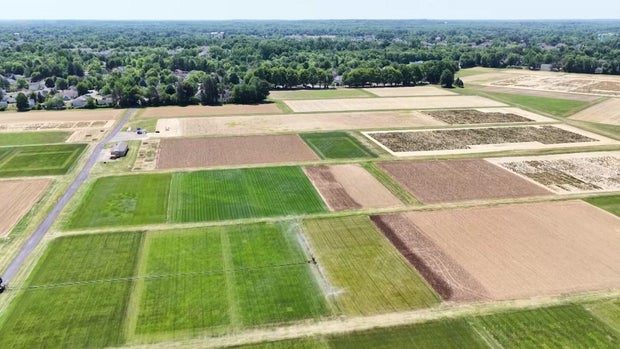
Ten of the 16 stadiums hosting matches across North America have pitches made of Rutgers turfgrass, which is bred at a sprawling 300-acre research farm in Freehold, Monmouth County.
Years of testing and selective breeding
The Rutgers research farm is where the soccer pitch starts as an experiment, using around 51,000 test plots to evaluate and find the perfect grass.
"It has to have good drought tolerance, good heat tolerance, good disease resistance," said Stacy Bonos, with the Rutgers turfgrass breeding program.
Rutgers researchers say years of testing and selective breeding have produced turf that's tough enough for the world stage.
A machine that imitates cleats is used on the test plots and beats them up, literally, to find the toughest grass.
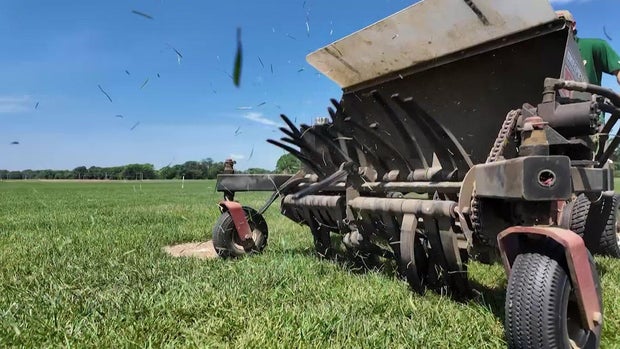
"This machine will find the weak grasses really fast. The weak grasses just fall apart real quickly," said Jim Murphy with the Rutgers plant biology department, who oversees the tolerance tests.
Not at MetLife Stadium
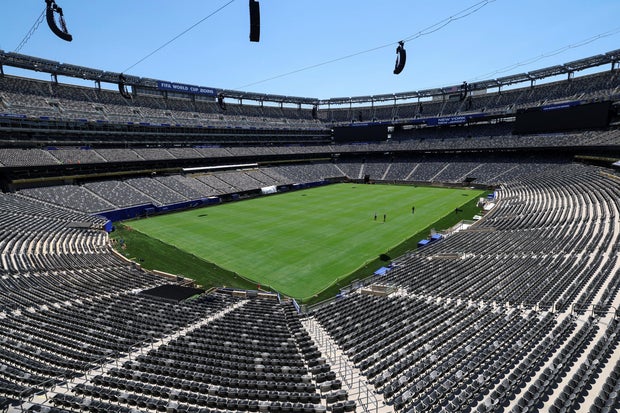
Rutgers specializes in cool-season grass, which is better for northern regions, but New Jersey's MetLife Stadium is one of the World Cup venues that chose to go in another direction.
"Some of the stadiums have chosen to go with a warm-season grass. In particular, Bermuda grass. So that's what they chose at MetLife," Bonos said.
The World Cup Final will be played at MetLife Stadium on July 19.
Still, from Philadelphia to Mexico City, Rutgers turfgrass will be under players' feet in most of the other stadiums.
"It is really rewarding to see your hard work be useful on the world stage," Bonos said.


