How Mayor Fiorello La Guardia made New York the greatest city in the world
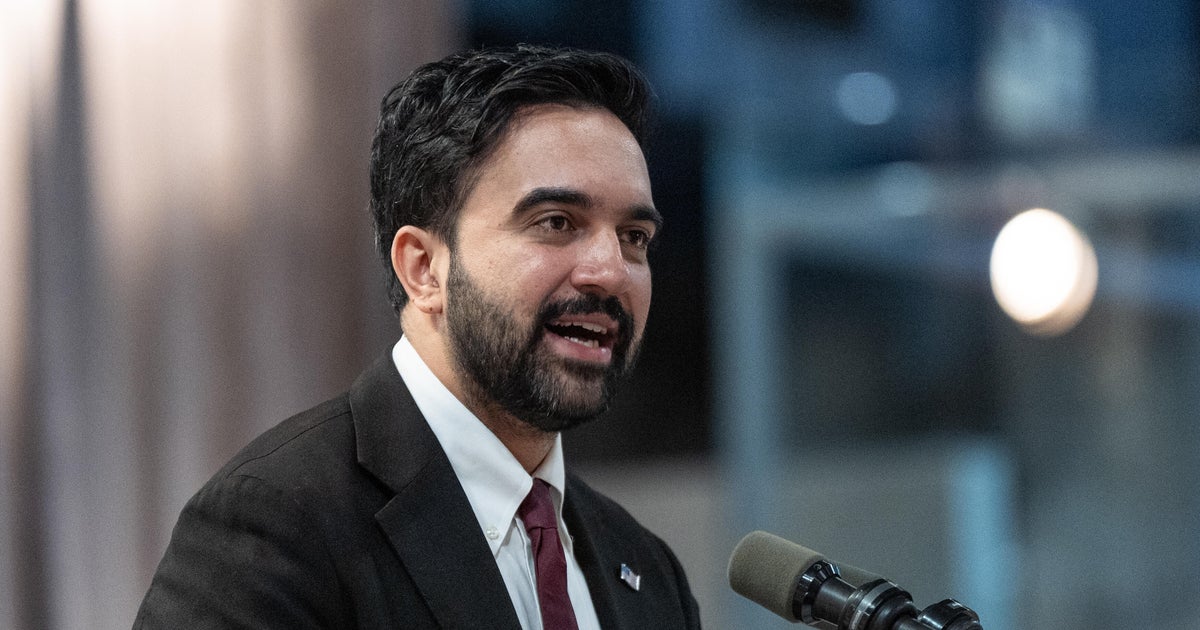
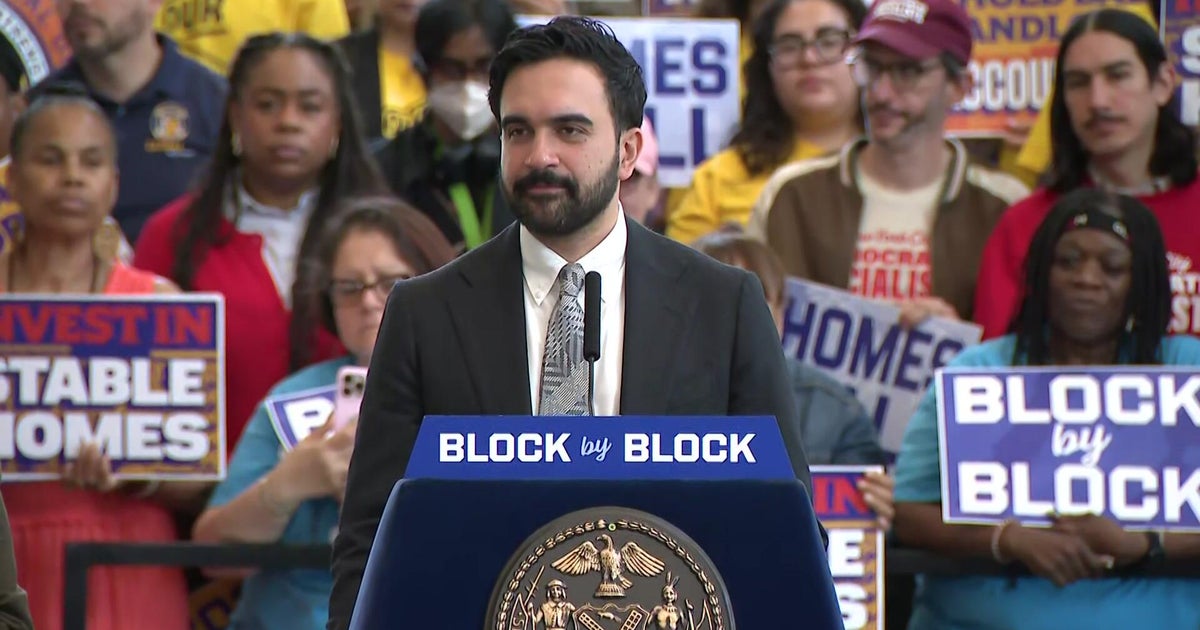
Hear the name La Guardia and you probably think of the airport, and your associations may not be all that happy. But the airport – and much of modern New York's spectacular rise – are the legacy of a five-foot-two bundle of dynamite, former three-term Mayor Fiorello La Guardia. Among his devotees: newly sworn-in Mayor Zohran Mamdani who, on Election Night, promised "the most ambitious agenda to tackle the cost-of-living crisis that this city has seen since the days of Fiorello La Guardia."
And what an agenda that was. During the La Guardia era, New York built bridges, tunnels and highways, schools and hospitals, playgrounds, pools and beaches.
According to Kenneth T. Jackson, a professor emeritus at Columbia University, and the editor of the two-million-word "Encyclopedia of New York City," under La Guardia's watch, New York City became the greatest city in the world.
"He took office in the middle of the Great Depression, January 1, 1934," Jackson said. "It was a horrible time. That's when La Guardia becomes mayor. Talk about a bad hand to be playing. He's got his work cut out for him."
"He knew how to get publicity"
Fiorello La Guardia was known as "the Little Flower" – the literal translation of his first name. But he was no shrinking violet. Despite his short and stocky appearance, garnering comparisons to a fire plug, La Guardia was loud and brash. Long before the advent of social media, he knew that image meant influence. And so, he brandished a baton to conduct musical performances, wore costumes, threw baseballs, held babies, and mugged with the biggest names of the day: Judy Garland and Mickey Rooney, Albert Einstein, singer Marian Anderson, and Abbott & Costello. If there was a fire, he'd be there. And he took a tough stance on vice and organized crime, wielding a sledgehammer to a bunch of slot machines. "Let this be notice to the gangsters, that they'll be treated just as rough as we're treating their implements here," he warned.
Jackson said, "He knew how to get publicity. He knew how to do it, and he wanted to do it."
And he knew where the cameras were. "In fact, if you don't have that instinct, you're not gonna have that job very long," said Jackson.
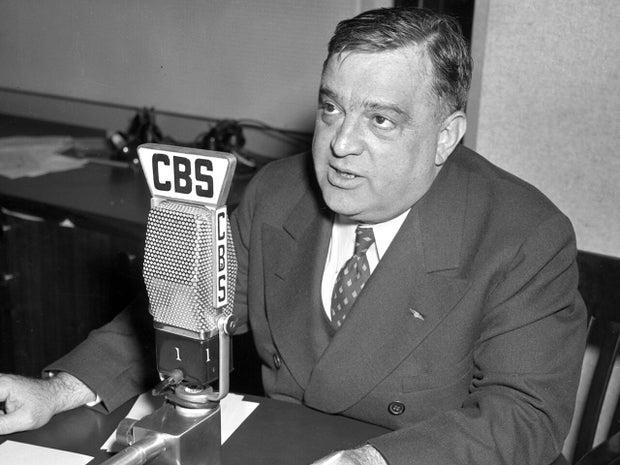
In one of his most storied moments, the mayor took to the airwaves in the midst of a newspaper strike to read the funny pages to children, throwing in some politics while he was at it: "Say, children, what does it all mean? It means that dirty money never brings any luck!" La Guardia said.
"A one-man melting pot"
Fiorello La Guardia was born in New York to Italian immigrants. His father was raised Catholic; his mother was Jewish. Fiorello himself became a practicing Episcopalian. "La Guardia in some ways is the quintessential New Yorker, a one-man melting pot," Jackson said.
But he actually grew up in the American West (his father was a band leader in the U.S. Army). By age 24, he was back in New York, working as an interpreter at Ellis Island while he attended law school.
As mayor, La Guardia championed immigrants and the working class, while reshaping the city through massive public works. But he could never have pulled off his ambitious agenda without two allies: his visionary and polarizing parks commissioner, Robert Moses; and Democratic President Franklin Delano Roosevelt, whose New Deal bankrolled much of what was built. La Guardia was a Republican, but the two shared the same progressive ideals.
Jackson said, "Under La Guardia, we built our first public housing. That's an important thing, because for the first 300 years of American history, housing is your problem, not my problem, the government's. That's a huge governmental shift."
I asked, "Does La Guardia help redefine what a city should do for its citizens?"
Jackson replied, "He's the most powerful public official, short of the president, to say, what higher obligation do we have than keeping our citizens alive? What higher obligation do we have than keeping them out of the cold in January? What higher obligation do we have than to feed their children when they're hungry?"
Patron of the arts
Michael Rosenberg, the president and CEO of New York City Center, one of the city's premier and most beautiful theaters, said that without La Guardia, City Center would not exist: "This would now be a parking lot."
Originally built by the Shriners, the building was taken over by the city when the Shriners couldn't pay their taxes. La Guardia proposed turning it into a temple for music, dance and theater, for the average, everyday working man of New York City. Tickets on opening night were just $1, compared to $10 at the Metropolitan Opera.
"He also made the curtain times earlier," Rosenberg said. "They would do curtain times at 5:00 o'clock." The schedule catered to the working classes, who would have to get up very early for work the next day.
"La Guardia's a great example of a mayor using the power and majesty of his office to support ideas that are important to him," Rosenberg said. "And this is a great example. He believed in the arts. And he saw this as a way of bringing that belief to life."
Jackson said, "He was quite a person. And I think that not only did he deserve New York, but New York deserved him. They fit together. They needed each other. And by the grace of God, or whomever, it happened."
For more info:
- Kenneth T. Jackson, professor emeritus of history, Columbia University
- "The Encyclopedia of New York City (Second Edition)," edited by Kenneth T. Jackson (Yale University Press), in Hardcover and eBook formats, available via Amazon, Barnes & Noble and Bookshop.org
- New York City Center
- La Guardia and Wagner Archives, CUNY
Story produced by Wonbo Woo. Editor: Jennifer Falk.