Club Calvi has three books for you to consider for your holiday travel
Please consider joining our Facebook group by CLICKING HERE.
Find out more about the books below.
Listen to the Club Calvi podcast by CLICKING HERE.
I talked with Mary Calvi about three books you might want to consider for your holiday getaways. The books are of different genres and are fairly quick reads at roughly 300 pages each.
"Good Joy, Bad Joy" by Mikki Brammer is about a long female friendship of more than 80 years, with the titular character named Joy undergoing a compelling arc.
"Miss Bates" by Catherine Cliff is a reimagining of a character from Jane Austen's "Emma" who is fiercely loyal and deliciously devious in this novel.
"The Broken Hearts Agency" by Clarence A. Haynes is an urban fantasy with romance, loss, alluring characters and a demon who preys on people's desires.
You can read excerpts, and get the books, below.
Club Calvi books may contain adult themes.
________________________________________________________________________________________________________
"Good Joy, Bad Joy" by Mikki Brammer

From the publisher: For over eighty years, Joy Bridport has played by the rules: she's been a devoted wife and mother, contributing to the community in her small Hudson Valley town. But her quiet existence is jolted when she learns that her best friend, Hazel, only has months left to live. Hazel has always been the more adventurous one of their duo, and she seems at peace with all that she's squeezed out of her long life. Yet Joy realizes she can't say the same.
Determined to live boldly and make the most of the time that she and Hazel have left together, Joy steps outside of her comfort zone—and into a bit of trouble. But as her foray into rule-breaking escalates into committing petty crime, Joy must consider what kind of legacy she wants to leave behind, and whether there's a way for her to embrace the liberation that "Bad Joy" offers without losing all that she holds dear.
Mikki Brammer lives in New York City.
"Good Joy, Bad Joy," by Mikki Brammer (ThriftBooks) $21
"Miss Bates" by Catherine Cliff

From the publisher: Henrietta Bates, the iconic bore of Emma, is the opposite of handsome, clever, and rich Emma: she is plain, ill-educated, and impoverished. An unmarried woman of quite a different order from that novel's proudly single heroine, she is an object of scorn and pity, whose survival depends upon the generosity of her neighbors which she barters for with an unrelenting shower of banal and grateful chatter.
But what if the woman we see in Emma were actually deliberately assuming a role, donning a mask, as a means of managing an untenable situation? What if there was a world of difference between her inward and outward voice? What would the Woodhouses's Highbury look like from her perspective?
Catherine Cliff lives in Massachusetts.
"Miss Bates" by Catherine Cliff (ThriftBooks) $23
"The Broken Hearts Agency" by Clarence A. Haynes
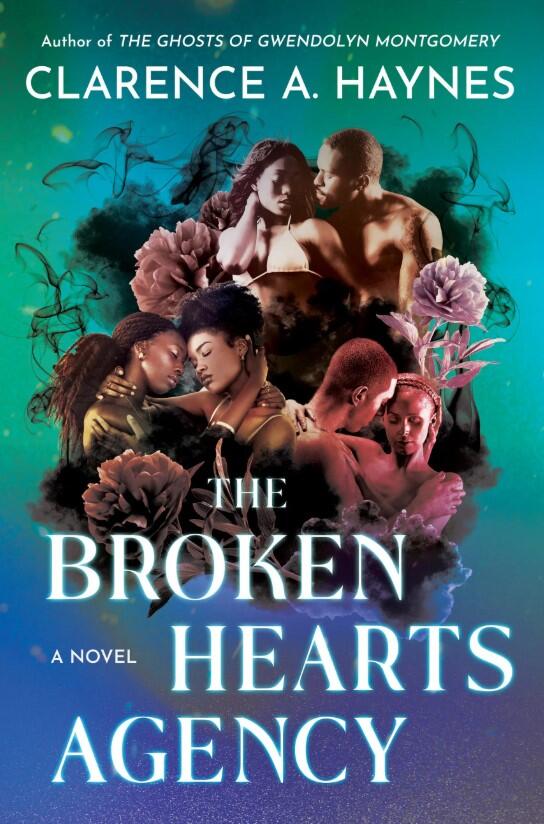
From the publisher: Evelyn Kendricks is having a day. An overworked manager, she's been dumped by her toxic boyfriend while struggling to cope with the recent ghost invasion that's shocked the world. Devastated, she is mysteriously summoned to an eerie townhouse where she meets Linda Villaneuva, a private investigator who runs a secret mystical detective agency. She's able to sense the emotions of others, especially those suffering from heartache.
Linda would like nothing more than to help her latest client, but she soon makes a gruesome discovery: People are losing their memories and wandering DC streets in a zombie-like daze. Their eyes, demon red. Their skin, blistered, burning… and no one understands why. Panic has begun to consume the city as more folks succumb, putting Evelyn and other residents at risk.
In the biggest case of her life, Linda follows a trail of clues to unearth an evil force far deadlier than anything she could've imagined. And all the while, she must reckon with the tragedies of her past and the price she's paid for her supernatural gifts.
Clarence A. Haynes lives in Brooklyn, New York.
"The Broken Hearts Agency" by Clarence A. Haynes (ThriftBooks) $19
________________________________________________________________________________________________________
Excerpt: "Good Joy, Bad Joy," by Mikki Brammer
It starts with the gentle tittering of birds outside my window. The warm, filtered sunlight nudging my cheeks. Then a smile spreads across my face.
I am awake.
I am alive.
For most people, these are not mind-blowing revelations. But when you're eighty-nine years old, each morning your eyes flutter open again is a pleasant surprise.
I don't say that to be flippant. It's just that, in the past twenty years, I've endured the loss of my husband and most people I've known from my generation. I sometimes think of those intrepid adventurers ascending Mount Everest who have to persevere in spite of their fallen
companions. If they are still alive, they're expected to keep climbing. It's the same for me. I am alive and so it's my duty to continue living.
My cell phone dings merrily on my nightstand. More a relief than a surprise—it means that Hazel, my one remaining contemporary and my best friend since childhood, is still climbing too.
I fumble for my glasses wedged between the pages of a book. Hazel's message is to the point, as it is every morning.
Still kicking.
Grinning, I peck my response with my pointer finger.
That makes two of us!
Most days, that's the extent of our morning check-in. But today my phone dings again.
Hallelujah. (Intended in the secular sense—Hazel's not a fan of religion.) Looking forward to seeing you on Sunday. I send back a flurry of hearts and flowers.
Me too!
When it's clear no further response is coming, I lie back down and stretch my limbs one at a time in my daily assessment, checking for anything of concern. Knees: not as flexible as they used to be, but not painful. Lower back: a small twinge, but that's to be expected when you spend most of your days gardening, isn't it? Heartbeat: strong, steady, and reassuringly rhythmic.
Compared to most aging bodies, mine is in great shape. I can walk several miles unaided, minus the supportive inserts in my orthopedic sneakers. I do my stretches every day, along with a few sun salutations. I can easily lift a bag of soil and carry my own groceries. I drive wherever I please (except for highways, but I've always avoided those) and live by myself in the house I've called home for more than sixty years. Every annual checkup, I brace myself for that inevitable bad news almost everyone else my age has received—cancer or, worse, Dementia—and yet it still hasn't come. High cholesterol and blood sugar are my only health blemishes.
In the grand scheme of things, I know I'm not that old. I read about a woman in the Amazon who is 107 and still walks miles through the forest each day. And another who took up running in her hundredth year and set world records. But for whatever reason, my particular generational cohort was dealt shorter life straws. I never imagined I'd grow accustomed to losing people, but when you've mourned the majority of humans you've known in your life, well, it becomes inexplicably bearable. Or perhaps you just become resigned to the inevitable. So I do my best to focus on the bright side.
As the tittering of birds grows louder, I roll out of bed, open the curtains, and revel in the sunshine, summoning deep gratitude for the fact that I am here another day. Not many of us get to live this long, so I try to squeeze everything out of every extra moment I'm given—it would be disrespectful if I didn't, now wouldn't it? In honor of those who can't, I make sure to savor the small pleasures of being alive, capturing them like a sensory photograph to tuck away in my memory for safekeeping.
The refreshing coolness of the kitchen tiles beneath my bare feet.
Just as I have every morning for the past sixty years, I gaze out the window as I wait for the coffee maker to warm up. I'll admit it took me a while to get used to making one cup instead of two. For a long time, I kept Thom's khaki-green mug lined up on the counter next to my sunflower cup, even though I only ever filled one of them. Now I just keep it at the back of the cupboard in tribute.
The sparkle of sunlight through the crystal vase on the windowsill.
As is my habit, I check the wall calendar for significant dates, in case I need to send someone a card. It used to be filled with birthdays and wedding anniversaries, but those have slowly been replaced with sadder reminders, the people I send them to increasingly younger. Sometimes I wonder if they feel I'm rubbing it in somehow, as if to say, "I'm still here when your parents aren't." But hopefully they just feel comforted that someone is thinking of them on an especially painful day. I hope someone will do that for my daughter, Elizabeth, when the time comes.
I make a note to send a card to Audrey Michaels—her mother, Esme, was a lovely, generous woman who made a spectacular blueberry cobbler. I miss her.
My first triumph of the day: managing to carry my coffee out to the porch without spilling a drop.
I settle in the rattan armchair that has miraculously endured decades—it creaks more than it used to, but then so do I. Goodness, how much time have I spent in this chair? Those increments of minutes, hours, must add up to a significant portion by now—months, years?
The bees buzzing happily over the hydrangeas.
When you're old—and I've been old for a while—you have plenty of time to watch the world go by. You have nowhere to be, no need to rush. So I adjust the cushion and relax into the chair to watch the neighborhood I've known for more than half a century slowly come to life, just as I do every morning.
From Good Joy, Bad Joy © 2026 by Mikki Brammer and reprinted by permission of St. Martin's Publishing Group.
Excerpt: "Miss Bates" by Catherine Cliff
PROLOGUE
June 1812
As if she were bending a large iron rod with sheer force of will, Henrie curved her lips upward into a pleasant smile. She had used all her powers to refuse Mrs. Elton's hospitality.
"You must come back with us to the vicarage for a cold supper. The dining room is perhaps not as spacious as I might have wished, but there will certainly be room for our little party of intimates to gather and have some pressed tongue and cheese. And you will find the drawing room, I believe, much improved since your last visit there," that lady had said to the gathered group.
Henrie's last visit there was when it had been her own home, of course, more than twenty years ago. "I have had all the windows refitted against those terrible drafts and I got rid of that hideous blue wallpaper," Mrs. Elton continued on. "I declare it made me quite seasick every time I entered the room—so dowdy. I said to Mr. E, my dear, I don't ask for much, but I do ask for flocked silver papers in the drawing room. For that indispensable sense of gaiety and elegance. You will all have to tell me what you think, and be honest, mind—I have no patience with toadeaters. What I like is honest discussion on matters of taste between friends!"
As a matter of taste, pressed tongue was one of Henrie's favorites, and she hadn't had it in a long time. But to go as a guest to this of all places, in her current state, the state of having been flayed alive in public, placed, skin aflap, bleeding beneath the microscope of derision, she did not, on this particular afternoon, think she could bear it.
Instead, against all her self-imposed rules to accept with effusions whatever charity was offered, she asked to be let down from the carriage at any convenient spot. They were on the road from Box Hill, now entering Highbury. Straight ahead would lead them to the vicarage; a left detour would drop Henrie home.
"Just here is fine, I can certainly walk through the village to our little refuge—please, I must beg you do not go out of your way, there's certainly no reason to put your kind coachman to any trouble—And I would hate to think I had caused any delay to your entertainment—Now, I must positively insist—ah, you are stopping just here, exactly right. It is nothing but a brief step to our humble home. You have been too kind. Jane, I will see you after your lovely supper. Mrs. Elton, thank you so much for a wonderful—" At this point in her discourse, Henrie was tumbled from the carriage like a bale of hay by Mr. Elton, who did not pause his conversation nor break eye contact with his wife as he handed her out, merely raising a hand in absent salute over his shoulder as he climbed back in. No microscope here, then. She would slowly and discreetly make her way through the village, balancing her self-possession like an overfull glass of water, a trembling convexity at the top, being careful not to weep on the street. Weep on the street. Was that amusing, a rhyme? She must remember to tell Jane. Or maybe not; Henrie worried she was losing her sense of judgment. She nodded and smiled at the few people she met, "How do you do, dreadfully hot." No more. Her throat was so tight with holding back her sobs that it felt like there were ribbons wound all around it, like she was choking.
Excerpted from MISS BATES by Catherine Cliff. Copyright © 2026 by Catherine Cliff. Reprinted with permission from Pegasus Books.
Excerpt: "The Broken Hearts Agency" by Clarence A. Haynes"
The wisps of half smoke left Evelyn as she strolled past the eatery and walked under the awning of the Lincoln Theatre. She glanced back at the sidewalk mural of Harriet Tubman in a green cloak holding a lantern above an afroed Prince, the Obamas to his right, all smiles, encircled by the American flag. She glimpsed the True Reformer Building across the street on Twelfth with its mural of a somber Duke Ellington flanked by piano keys. The art and its connection to U Street history usually gave Evelyn a surge of pride and confidence. Today, nothing She reached Vinnie's Vintage, a local secondhand clothing boutique, and saw herself reflected in the store's large glass window. She was sup-posed to be all glowed up with her bobbed wig and teal suit a size too small and black stilettos that were torture on her arches.
Evelyn stopped and looked at herself. Really looked at herself in the clear glass, as if she were in front of Renaissance mirrors. The truth too clear.
Kent had gotten with her based on what she could do for him. Had slept with her because she would help him get promoted, would put his projects before her own. What she could finally admit because she couldn't do the mental gymnastics anymore. She was too tired.
Their relationship had been a total lie. Like so many of her other campaigns.
S***.
Evelyn clutched her handbag and tucked in her chin as tears filled her eyes. She was going to break down, felt like she might crumple to the street right then and there. She had to get home and be a wreck in private. She made a right onto Fifteenth Street. A town house entered her line of sight. It was nestled off the sidewalk in the alleyway that appeared a few feet before Sixteenth. The brick exterior, the richest, deepest sienna she'd ever beheld.
Everything else in the world turned gray. Dead and lifeless, silent. The city's evening noise disappeared. But the town house, its brightness remained, its color so rich and inviting that it somehow held sound. A soft, steady hum. A woman's whispering voice. The words were indeci-pherable but also gentle, firm. Sound that lifted the fatigue from Evelyn's shoulders. Something about the voice promised safety, which she needed so very much.
Home felt too out of reach, too far away.
Evelyn wiped sweat from her forehead with the sleeve of her blouse. She drew closer, walked up the town house's narrow steps. To the left of its entrance, in golden letters, nueva investigations. Underneath, welcome.
The whispers continued, soothing, beckoning. Yes, she'd be okay if she could get inside. Safe and okay. Evelyn looked for a buzzer or knocker, only to find nothing, just a thick wooden door covered in gleaming white paint. Beautiful.
She stopped, breathed, placed her hand against the door, pushed it open.
The hum enveloped her, as did a sense of relief. She passed through the foyer and entered a sprawling space set up as a living room. The air was breezy, cool. A large velvet couch was covered in rust-and-mustard pillows. The aroma of soap and sandalwood all around her, thick, a tad cloying.
She walked deeper into the space. Portraiture adorned the walls. A jumble of hues and textures that blurred. Evelyn grew dizzy and closed her eyes. The smell of sandalwood was overpowering. Then it hit her, the scent, so like her grandmother's drugstore perfume. Grandmama, who passed away when Evelyn was seven, who used to sit with her for hours as the little girl arranged the old woman's glued-up figurines into a grand porcelain court. Who would tell her, "Look what you can do, little girl."
An ache bloomed in Evelyn's body in the middle of the town house. Tears brimmed. She hadn't thought about her grandmother for a long time.
What was she thinking? She'd made a mistake. Was crazy, walking into somebody's house she didn't know unannounced. Was actually out of her damn mind.
Evelyn opened her eyes, vision blurry, ready to make a beeline for the door. She took in the art on the wall, zoomed in on a watercolor of a thorny forest. In its center stood a scowling, gnarled man pointing at her with a crooked finger. An impossibly long finger. The face, for a moment, looked like her grandfather. She peered closer.
The man was Kent. An ancient, warped Kent, as if he'd aged sixty years overnight. He was stooped, no longer able to reach the sky, no longer an eclipse. His misshapen, droopy limbs covered in melting flesh. Foul, old.
She stepped closer to the portrait. There beneath him was another person, an elderly woman. Evelyn gasped. It was her, senescent and stooped.
The image of Kent moved, ready to pounce upon the woman in the painting. Evelyn lurched back.
She wiped her eyes and blinked hard. "Hello."
The voice was gentle and firm and feminine. The whispers, the indecipherable words . . .
Evelyn spun around. She couldn't breathe.
There in front of her was an angel dressed in white.
She focused, blinked again. No, not an angel, but a woman in a white suit with a crown of curls. A sliver of smoke snaked through the air. A stick of incense jutted from a wooden holder perched on a mahogany desk. A portrait of a man in a red knit hat loomed above. His midnight skin was majestic, marked by white paint. He stared directly at Evelyn. His feline yellow eyes were captivating.
The image . . . something was off. His gaze was too penetrating, too intense. As if he were demanding something of her.
Evelyn suddenly remembered once again what had happened in New York with the spirits, what she saw on so many reels. How it made her feel. What she was feeling now, in this space . . .
Dread. Abject, unmistakable. Something wasn't right.
"Don't be frightened of what's in your mind and heart," the woman in white said. Her face was stoic. "You're here because you need to be here. Because you want to be here."
The woman walked up to Evelyn and extended her hand. "I'm Linda Villanueva. Have a seat. Welcome to my agency."
Excerpted from THE BROKEN HEARTS AGENCY by Clarence A. Haynes. Published by Legacy Lit, an imprint of Grand Central Publishing. Copyright © 2026 by Clarence A. Haynes. All rights reserved.