Flesh-eating bacteria concerns in Long Island waters are growing. Here's why.

Scientists say New York's coastal waters are experiencing some of the most severe threats on record, and not just environmental.
There are now concerns about flesh-eating bacteria.
Harmful algae blooms and dead zones
In the waters of the Western Shinnecock Bay, shellfishing is banned because of a toxic algae bloom, and across Long Island, the blooms are getting more intense.
"It's scary because summer season is coming. Everyone wants to get in the water to fish and boat," East Quogue resident Roy Gardner said.
- Flashback: Early 'Mahogany Tide' algae bloom in Great South Bay has environmental experts greatly concerned
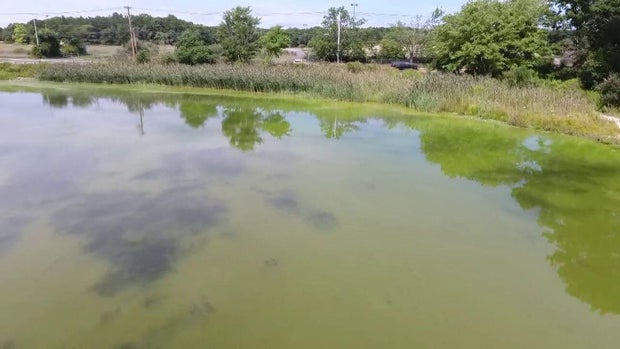
Scientists say the state's coastal waters weathered some serious environmental and public health threats last year.
"A record number of spots with low oxygen," said Christopher Gobler, a professor of coastal ecology and conservation at Stony Brook University.
"No Time to Waste" research
Gobler's research, called "No Time to Waste," is a call to action and also a warning not to swim with an open wound in waters where salt and fresh water meet. He says harmful algae blooms and dead zones are not just harming marine life, but also endangering pets and humans. Flesh-eating bacteria that used to be confined to southern states is now here.
"In 2023, it showed up in New York. There were three people who died on Long Island Sound. And in doing monitoring, we are finding it in most water bodies, [with the] highest levels in the heat of summer," Gobler said.
Gobler says the culprit is our area's warming waters and too much nitrogen, mostly from underground aging and leaking cesspools.
However, there is funding available to homeowners to upgrade them.
"It's critically important, especially if you live close to the water. And the state and the counties are actually giving people money. They're giving grant money -- you don't need to pay it back -- to change out your old antiquated septic and cesspool," said Adrienne Esposito of the Citizens Campaign for the Environment.
Not all the news is bad
There are some bright spots in Gobler's annual research. For instance, the western Long Island Sound saw its dead zone shrink by 90% in two decades, due to upgrades in sewage treatments plants.
"They reduced nitrogen by 60% and the dead zone has been shrinking. It's really a great success story. When action is taken, conditions can improve," Gobler said.
Oysters, clams and kelp put into the waterways also pull nitrogen out of the water.


