NYC prosecutors face many hurdles as they try to crack down on crimes involving cryptocurrency
Prosecutors across New York City say they're fighting back against an increase in crimes involving cryptocurrency.
One wants to change state law, while another is asking for funding to launch a crypto crimes unit.
But as CBS News New York Investigates found out, they have their work cut out for them.
Dark web marketplace DrugHub
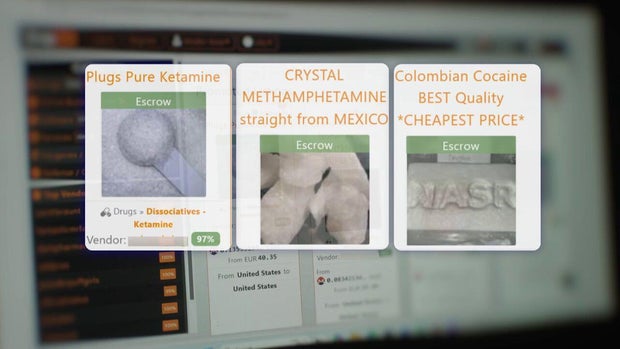
Active listings for "pure ketamine," crystal meth "straight from Mexico," and Colombian cocaine with "orders [that] go out same day" are just a few of the 21,000 investigative reporter Tim McNicholas found on the dark web marketplace DrugHub.
Similar sites have been popping up for years with deadly consequences, including a drug-induced robbery scheme at Hell's Kitchen bars.
Linda Clary and the NYPD say the three men convicted last year of fatally drugging and robbing her son, John Umberger, used drugs bought on the dark web.
"John's death was, you know, catastrophic," Clary said. "This was done to him. This is continuing to be done to other people, and, sadly, until it happens to you you don't realize how horrible it is, and how deadly it is, and how these crimes are going on."
The currency of choice on dark web markets is crypto.
"More and more, we are seeing people use cryptocurrency," Manhattan District Attorney Alvin Bragg said.
Prosecutors often run into roadblocks on the dark web
A few weeks ago, in a separate case, Bragg charged two people with shipping more than 2,600 packages of cocaine or MDMA in exchange for crypto on dark web markets, including DrugHub.
McNicholas pointed out that there are still listings for things like Colombian cocaine, and wondered if law enforcement can shut them down.
"We're prosecuting and we've charged people who are using that," Bragg said. "We are constantly looking at trying to get systemic accountability. Sometimes, were stymied because the conduct is based, the servers are based, outside of certainly Manhattan, but in many instances outside the United States. Other times, the levels of obfuscation may make it challenging to hold an individual actor accountable."
New York City Special Narcotics Prosecutor Bridgette Brennan said she's asking the city for $600,000 to launch a crypto crimes unit. Her request has not been approved, but she said it's needed to fight the increase in crypto crimes.
"There are ways to trace crypto. It has a blockchain, and that blockchain has the address of every place it has been. But in order to track that, you need special equipment, you need special training, you need skills, and you probably need dedicated analysts. Right now, we don't have that," Brennan said.
The Drug Enforcement Administration does have those tools, and sometimes works with Brennan's office to investigate cases.
The push to change existing laws
The Manhattan DA has been pushing to change state law since January to make it a criminal offense to operate a virtual currency business without a license.
"And if you're licensed, then you have to do the kind of things that a bank would do -- find out who are your customers, do some interrogation into what are they doing?" Bragg said.
Prosecutors say their goal it to reduce the financial incentives for online drug dealers, like whoever sold the drugs that eventually killed Umberger.
"I believe that there's a whole lot of crimes that could be prevented by further tracking crypto expenditures on the dark web, and using that, I think, we would all be a lot safer," Clary said.
The bill Bragg is pushing for was referred to a committee early this year but never voted on. As for Brennan's funding request, a City Council spokesperson said the council is reviewing it.
Mayor Zohran Mamdani's Office did not get back to CBS News New York Investigates.
Dark web markets are shrouded in secrecy, but admins of dark web marketplaces have been identified by law enforcement and arrested before.
DrugHub is still operating.


