Caring for special needs adults requires careful planning, experts say. Here are some ways to find help.

Autism prevalence in the United States has reached a record high, according to the Centers for Disease Control and Prevention.
One in 31 children across the country have some form of autism, with New Jersey having one of the highest rates.
"I don't wish these difficult decisions on anybody"
Spencer Schiavo, 21, has profound autism and needs care 24/7. Under federal law, students with disabilities are entitled to special education services until they turn 21. What happens next is what many caregivers call "the transition cliff," moving from a structured school system to an adult service system.
"The hardest part of that transitional time was not knowing where to go, where to look," Spencer's stepmother Julia Schiavo said. "As we age as parents, the day will come when he is in the world without myself and my husband, who are the ones who look out for his best interest, and it's terrifying."
She's concerned about the future.
"He will outlive us by decades and has the survival skills of a 3-year-old," she said. "When he is 60 years old, he will need someone to hold his hand to cross the street ... I don't wish these difficult decisions on anybody."
"A life that we could not have given her at home"
Spencer Schiavo was accepted into a dry program at New Concepts for Living in New Jersey, and now lives with a circle of support. While they miss having him at home, they say he's happy and thriving with his extended family in his new college-like home, and they're still able to spend time with him regularly.
"We provide housing through our group homes. We provide day programs. We provide therapeutic, services," New Concepts for Living CEO Steve Setteducati said.
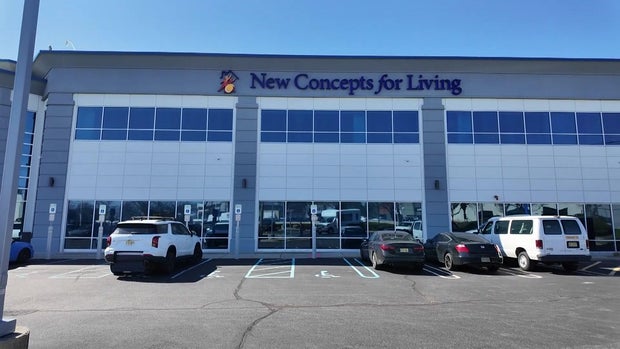
The money comes from state and federal funds, at no cost to families. The facilities, Setteducati said, fulfill the obligation for affordable housing in communities across the state.
"If something happens, it's reported and it's taken care of, and it's addressed in the appropriate manner. We have cameras throughout the organization," Setteducati said.
Special needs planning and education attorney Adrienne Arkontaky helps parents navigate the often challenging process to get their special needs child into adult services. Her daughter Jordan, 34, has profound intellectual disabilities and is medically fragile. Jordan has been living in a specialized group home in New York for over a decade.
"It is hard living without her home, but I also know that she has this incredible life," Arkontaky said. "A life that we could not have given her at home."
Arkontaky says she went to law school after Jordan was born to help families like hers. Her firm, which is based in Westchester County, is dedicated to helping caregivers with everything from navigating the system to finding adult housing and placement for their children.
"People do not understand there are benefits available - regardless of your resource level," Arkontaky said.
"A dark cloud that follows you every single day"
Health data shows that there 4,000-7,000 individuals with intellectual and developmental disabilities who live in structural residential settings in New Jersey. There are over 130,000 in New York. Still, waitlists to get into homes and day programs in both states keep growing because of rising autism rates and not enough facilities, experts say.
"I think there needs to be more funding filtered toward these programs," Arkontaky said.
She says planning early helps.
"We make sure this letter of intent, roadmap is available, so if my husband and I are not available to take care of Jordan, people involved in her life at the center, or my daughter, have memorialization," Arkontaky said.
"If you wait until the point where you can no longer take care of them, your child may end up in a place that's not appropriate or, God forbid, not safe," Julie Schiavo said.
The Schiavos are still waking up every day with an aching heart.
"These choices, having to plan for your child's future like you're planning for the future of a 4-year old in the world without you, it's a dark cloud that follows you every single day," Julie Schiavo said.
But support and resources help make every day a little brighter.
Additional links and resources: