By The Numbers: Is the Stolen Base Worth It?
By Father Gabe Costa
» More Columns
In our last blog we briefly discussed the value of the bunt and, essentially, whether a base advancement was worth an out.
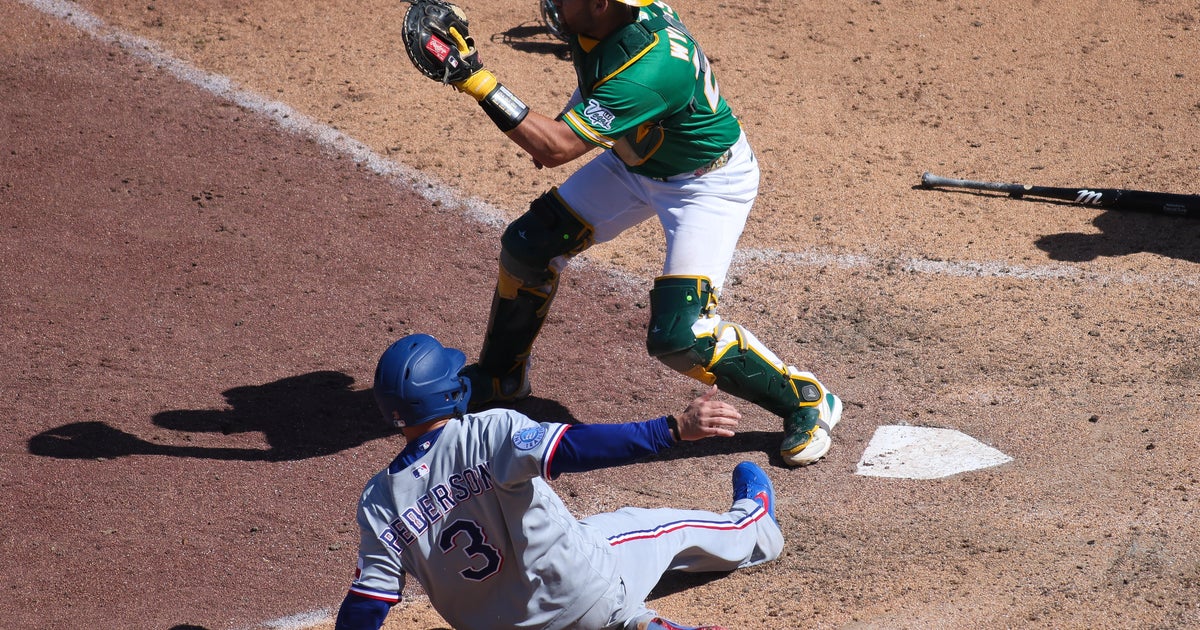
Continuing with this thought, we now turn our attention to a related question considering the value of a stolen base (SB). Is a SB worth the risk of being caught in the act of attempting to steal a base (CS)?
To simplify matters, we will start by considering four quantitative measures, in the hope of shedding light on this issue. Toward the end of this blog, we will pose some questions which can also be taken into account.
In addition to the raw figures of SB and CS mentioned above, we will also look at Stolen Base Percentage (SBP), which is defined as follows:

Lastly, we will appeal to a metric known as Stolen Base Runs (SBR), which appeared in, among other places, The Hidden Game of Baseball, a classic work by John Thorn and Pete Palmer, written about a quarter-century ago. This statistic is primarily used in the so-called Linear Weights system, which Thorn and Palmer introduced. It is defined as:

For SBR we note that this measure can easily be negative; this is because the "negative" CS term has twice the weight as the "positive" SB term. This means that a player must successfully steal at least twice as many times as he is caught stealing, not to have this statistic reflect negatively on his, or his team's, record. In other words, at the minimum, a base runner should be able to steal two bases for every time he is caught stealing (that is, SBP = 66.67%) to avoid the detrimental effects of base stealing.
At this point we would now like to look at the career leaders in SB and assess their performances in light of these four numbers. However, we cannot consider the ten top lifetime SB leaders with regard to these measures because CS statistics are simply not available for many players from the earliest times (1876) through the first few decades of the 20th Century. For example, Ty Cobb is fourth in the all time ranking of SB with 897; however we have no way of knowing how many times he was caught stealing in his career, although we do have his yearly CS totals for some seasons. We are therefore forced to look at the "top ten" SB leaders with a complete set of statistics. Note that we have used http://www.baseball-reference.com/ to complete the following table:
| PLAYER | SB | CS | SBP | SBR |
| Rickey Henderson | 1406 | 335 | 88.76 | 220.8 |
| Lou Brock | 938 | 307 | 75.34 | 97.2 |
| Tim Raines | 808 | 146 | 84.70 | 154.8 |
| Vince Coleman | 752 | 177 | 80.95 | 119.4 |
| Joe Morgan | 689 | 162 | 80.96 | 109.5 |
| Willie Wilson | 668 | 134 | 83.29 | 120.0 |
| Bert Campaneris | 649 | 199 | 76.53 | 75.3 |
| Kenny Lofton | 622 | 160 | 79.54 | 90.6 |
| Otis Nixon | 620 | 186 | 76.92 | 74.4 |
| Maury Wills | 586 | 208 | 73.80 | 51.0 |
By the way, Barry Bonds, with 514 SB and 141 CS had a SBP = 78.47 and a SBR = 69.6.
All in all, it seems that the accumulation of SB and SBR, and keeping the SBP measure greater than or equal to 66.67%, are positive indicators. Yet, while the numbers in this chart give us comparisons, they are, unfortunately, not particularly revealing with regard to evaluating the SB.
Seasonal numbers may give us a little more perspective. For example, in 1915, Ty Cobb had 96 SB with 38 CS; this translated to a SBR of 6.0. Vince Coleman, on the other hand, stole 107 bases in 121 attempts in 1986, which give him a SBR of 23.7, nearly four times better than Cobb's SBR. When Rickey Henderson set the SB record in 1980 with 130 SB, his SBR was 13.8, due to the fact that he had 42 CS.
So, where do we go from here?
We are pretty much forced to round out this little discussion by considering some other ways to look at the SB. As you can see, I have put these comments in the form of questions:
- Can we measure how a SB attempt can "run" a team out of an inning when the runner is caught attempting to steal a base?
- As a follow up, is the Double Steal or the Triple Steal much too dangerous in the sense of potentially killing a rally?
- Can we quantify to what extent an "annoying" base runner, threatening to steal a base, distracts a pitcher while the hurler is facing a batter?
- Is the Hit-and-Run (or the Run-and-Hit) play "safer" than attempting the straight SB?
- What is the connection between this issue and the question of Sacrifice bunting (see our previous blog)?
- Is the Safety Squeeze "better" than the Suicide Squeeze?
My own opinion is that I am not a big fan of the Stolen Base. I say this because I feel a team can generally lose more than it can gain with this strategy. In this sense, I prefer it just barely over the Bunt. Oddly enough, though, I could see myself calling for the Safety Squeeze, given the right situation, with the right runner on base and the right batter at the plate.
This episode of By The Numbers was meant to elicit a discussion. What do you think?
Next Blog: Numbers and Poetry